'Collapse from within': Bessent says US seeing defections in Iran at all levels


"We are seeing defections [in Iran] at all levels as they're starting to sense what's going on with the regime," US Secretary of Treasury Scott Bessent told reporters.
"It doesn't get reported here in the US very well, but we are trouncing them from the air, and the regime will probably collapse within itself."
"At treasury, we've seen where they've wired their money out of the country. We're coming for that. We're going to get it back to the Iranian people," Bessent said.




Qatar's prime minister and foreign minister Sheikh Mohammed bin Abdulrahman Al Thani in a joint press conference with his Turkish counterpart condemned what he called Iran's "continuous attempts to drag the region into this confrontation."
He strongly denounced the Iranian attacks on regional energy facilities and called for its immediate cessation, rejecting Iran's claims that the attacks were aimed at US-linked sites.
"We also stress the need for the full implementation of the relevant UN Security Council resolutions, which explicitly call on Iran to halt these attacks and its approach of escalating the conflict in the region."
He said diplomacy must be based on mutual respect, but Iran has destroyed trust with its 'aggression'.
European nations and Japan said on Thursday they were ready to join efforts to ensure safe passage through the Strait of Hormuz and to help stabilize energy markets.
In a joint statement, Britain, France, Germany, Italy, the Netherlands and Japan condemned Iranian attacks on commercial vessels and civilian energy infrastructure, as well as the “de facto closure” of the strait.
They called on Iran to “cease immediately” threats, mining, and drone and missile attacks targeting shipping.
The countries said freedom of navigation is a fundamental principle of international law and warned that disruptions to energy supplies pose a threat to global security.
They also said they were prepared to support affected countries and welcomed coordinated actions, including the release of strategic oil reserves, to stabilize markets.
US Director of National Intelligence Tulsi Gabbard said on Thursday that American and Israeli objectives in Iran are not the same.
“The objectives… laid out by the president are different from the objectives… of the Israeli government,” she said.
Gabbard said Israel has focused on targeting Iran’s leadership, while US goals include destroying missile capabilities and naval forces.
When asked whether the US had been forced into the Iran war by Israel, both Gabbard and CIA Chief John Ratcliffe responded negatively.
Iran said on Thursday its response to Israeli strikes used only a “fraction” of its capabilities and warned of a stronger reaction if its infrastructure is hit again.
“Our response… employed FRACTION of our power. The ONLY reason for restraint was respect for requested de-escalation,” Foreign Minister Abbas Araghchi said in a post on X.
“ZERO restraint if our infrastructures are struck again,” he added.
Araghchi said any end to the war must address damage to Iran’s civilian infrastructure.
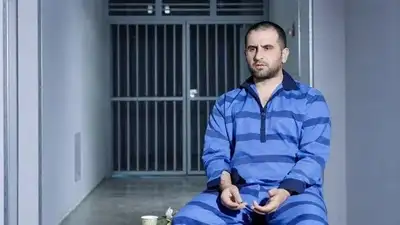
The hanging of a 19-year-old wrestler on Thursday intensified concerns over the fate of other detained athletes, with fears growing that more executions could follow in cases linked to protests earlier this year.
Three protesters – Mehdi Ghasemi, Saleh Mohammadi and Saeed Davoudi – were executed on Thursday after being accused of killing two police officers during unrest in January, according to the judiciary-linked Mizan news agency.
Mohammadi, a national-level wrestler who had competed internationally, denied the charges in court and said his confession had been obtained under torture, according to accounts from those close to him. Members of Iran’s wrestling community had also defended him, saying he had no history of violence.
Mohammadi had represented Iran in international wrestling events, including the 2024 Saitiev Cup in Russia, where he won a bronze medal.
His execution has drawn comparisons to wrestler Navid Afkari, whose case became a symbol of the use of capital punishment following protests.
Afkari was sentenced to death and executed in Shiraz after being accused and convicted of murdering a security guard during the 2018 Iranian protests.


Athletes remain in custody
A growing list of athletes, coaches and referees remain detained, many linked to the recent wave of protests as well as earlier unrest.
Among those named are footballer Mohammad Hossein Hosseini, water polo goalkeeper Ali Pishevarzadeh, marathon runner Niloufar Pas, kickboxing champion Benjamin Naghdi, teenager footballer Abolfazl Dokht, and boxer Mohammad Javad Vafaei Sani.
Others include basketball coach Payam Vahidi, billiards coach Hamzeh Kazemi, aerobics coach Narges Heidari and former footballer Amir Reza Nasr Azadani, whose earlier arrest had already drawn international concern.
Several detainees are young athletes, including Amirhossein Ghaderzadeh, 19, and Abolfazl Dokht, raising alarm among campaigners who say they face similar charges and judicial processes.
Boxer Mohammad Mahshari, a bronze medalist at the 2024 Asian youth and under-23 championships, is also reported to be in custody.
The list extends to referees and lesser-known competitors, showing how deeply the crackdown has reached into Iran’s sporting community.
Pattern of executions after protest trials
Authorities accused those executed of acting on behalf of Israel and the United States, an allegation frequently used in cases linked to protests.
Cases linked to protest-related violence have repeatedly raised concerns over due process, including forced confessions, lack of access to legal representation and the exclusion of defense witnesses.
Saleh Mohammadi’s case followed that pattern, with those close to him saying CCTV evidence did not identify him and that alibi witnesses were not allowed to testify.
Sporting community under pressure
The crackdown has reverberated across Iran’s sporting world, where athletes have increasingly become visible participants in protests.
There is no single confirmed, comprehensive number specifically for athletes killed in the January 2026 protests. However, according to compiled lists from activists and sports networks, at least 65 athletes, coaches and referees have been identified among those killed during a crackdown in January.
The scale of the violence remains contested. Iran International reviewed documents proving that more than 36,500 Iranians were killed by security forces during the January 8-9 crackdown on nationwide protests, making it the deadliest two-day protest massacre in history, while other estimates suggest it could be significantly higher.
Earlier, more than 200 athletes signed open letters urging the International Olympic Committee to take stronger action and questioning its continued engagement with officials they say are tied to Iran’s security apparatus.
For those still in detention, Mohammadi’s execution has deepened fears that similar cases could be pushed rapidly through the courts.
The combination of protest-related charges, allegations of foreign links and the use of forced confessions has left many families fearful and uncertain about the fate of detained athletes.

