Iran military adviser says Tehran knows location of Netanyahu meetings
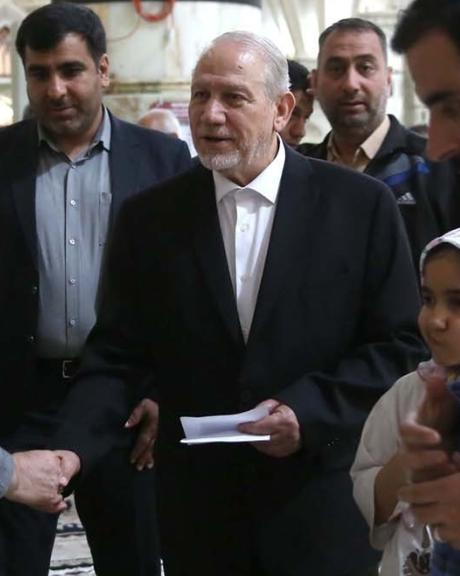
Senior Iranian military adviser Major General Yahya Rahim Safavi said Tehran knows the location of Israeli Prime Minister Benjamin Netanyahu’s meetings and has a complete intelligence database.
Safavi added that Iranian intelligence has full oversight of US and Israeli targets and that Iran has strengthened its missile and drone capabilities.





“I think that is a big miscalculation on the part of Iran,” Petraeus told 24 with Fardad Farahzad Show, arguing that striking Arab countries that had sought to avoid direct involvement could push them to contribute more directly to regional defense efforts.
US and Israeli forces, Petraeus said, have already “dramatically degraded” Iran’s retaliatory capabilities, though he cautioned it was too early to determine whether the decline in attacks over the past 12 to 24 hours signaled a lasting shift.
“I think it's premature at this point to judge whether or not that will degrade further or if the volume can pick back up,” he said.
Coalition dynamics shift
Petraeus said Tehran’s decision to target regional states – including those that did not allow their bases to be used for operations – may alter the strategic calculus across the Persian Gulf.
Many countries in the region, he said, are already contributing to an integrated air and missile defense network that includes US-supplied Patriot and Terminal High Altitude Area Defense systems, along with naval assets and aircraft capable of intercepting incoming projectiles.
While he stopped short of predicting expanded offensive participation, Petraeus said additional Western powers could also align more closely with the effort. “I’m confident they are all taking part in the defensive efforts that are ongoing,” he said.
Uncertain path to political change
Addressing whether military pressure could lead to political transformation inside Iran, Petraeus said any lasting shift would depend primarily on internal fractures within the security forces and leadership.
“The sad reality in such cases often is that the most guys with the most guns and the most willing to be brutal to the people prevail,” he said, cautioning against assumptions that external air campaigns alone can bring about regime collapse.
Petraeus described exiled Prince Reza Pahlavi as a symbolic presence who has outlined a transition toward an elected government rather than dismantling all existing institutions.
Ultimately, he said, momentum would hinge on whether influential insiders conclude that continued confrontation has become unsustainable, shaping not only Iran’s future but the broader balance of power across the Middle East.

