Kazem Gharibabadi, Iran’s deputy foreign minister for legal and international affairs, spoke before the council in Geneva as most delegates remained seated, despite calls from campaigners urging democratic governments to walk out.
For many Iranians, the moment underscored what they see as a stark reality: while families continue to mourn the thousands killed in the protests, representatives of the same government accused of carrying out the violence were again granted an international platform at the world’s leading human rights body.
“Several UN Human Rights bodies have found that the Islamic Republic is committing crimes against humanity. The regime’s perpetrators should be punished rather than given a platform,” Brandon Silver, director of policy and projects at the Raoul Wallenberg Centre for Human Rights, told Iran International.
Walkout campaign falls short
In the days leading up to the session, human rights advocates and Iranian activists urged democratic governments to leave the chamber during the speech.
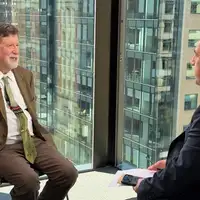
In an interview conducted before Gharibabadi was set to speak, UN Watch executive director Hillel Neuer called on governments to refuse participation, warning that granting Tehran a podium would send a devastating message to victims and their families.
“You cannot grant a false badge of international legitimacy to a regime that just murdered tens of thousands of its people,” Neuer told Eye for Iran, adding, “Shame on the UN for inviting the murderers who try to wound and kill innocent people.”
A global petition supporting the walkout effort gathered more than 360,000 signatures. But video from Monday’s session showed that most delegations remained in place as the Iranian official delivered his remarks.
Tehran’s narrative
During his speech, Gharibabadi dismissed reports of large-scale killings and instead accused the United States and Israel of orchestrating unrest inside Iran.
He claimed “enemies of Iran” had diverted economic protests into “riots and chaos,” alleging that demonstrators committed “Daesh-like atrocities,” while asserting official figures showed 3,117 total deaths — far below estimates reported by rights groups.
He further accused supporters of the protest movement abroad of spreading “fabricated casualty figures,” while insisting Iran itself was a defender of human rights.
The claims closely mirrored messaging that has circulated across state media and official channels since the crackdown.
A recent joint investigation by Iran International and The Free Press documented what it described as a coordinated international information campaign launched alongside the repression, blaming the domestic uprising on foreign conspiracies and amplifying those narratives through media personalities and social media networks.
Diplomacy over grief
For families of victims, the speech stood in sharp contrast to testimonies emerging from inside Iran.
One father told Eye for Iran that his 17-year-old son, wounded during demonstrations, was later killed inside a hospital while doctors were attempting to save him — one of many accounts shared by families seeking international recognition and accountability.
Activists say allowing such narratives to be delivered at the Human Rights Council risks amplifying disputed claims while survivors continue to demand justice.
Politics over principles
Later the same day in Geneva, Gharibabadi also appeared at the UN Conference on Disarmament, where images captured him greeting and shaking hands with UN Secretary-General António Guterres following the session.
For critics, the optics reinforced what they see as a rapid return to diplomatic normalcy despite the recent crackdown.
“The UN either stands for something or it doesn’t,” Hillel Neuer told Eye for Iran, arguing that international institutions cannot claim to defend human rights while granting legitimacy to officials accused of mass repression.
For many Iranians watching from inside the country and across the diaspora, the sequence—a speech at the Human Rights Council followed by diplomatic handshakes—symbolized the uneasy coexistence of international diplomacy and unresolved domestic trauma.