Iranian President Masoud Pezeshkian said the January unrest was “unimaginable,” arguing that authorities cannot solve the crisis by papering over the problem.
Using a medical metaphor, Pezeshkian said Iran must “treat the disease,” adding that his administration came to solve people’s problems rather than add to them.
He said public sentiment has been deeply harmed, saying the prevailing mindset in society has “taken a wound.”
Families of slain protesters are increasingly turning Iran’s 40th-day mourning ceremonies into acts of open defiance, replacing religious rites with dancing, music and wedding-style symbolism.
Relatives at Mohammad-Hossein Alikhani’s 40th-day ceremony at his graveside performed a mourning dance rather than holding a conventional Islamic service.
Video received by Iran International showed chanting and rhythmic movement instead of prayer recitations.
Alikhani, 25, was shot dead by security forces on January 8 in Tehran’s Fallah neighborhood.
At the memorial for 22-year-old athlete Erfan Bozorgi, family members carried symbolic wedding trays used in engagement ceremonies.
The ritual, known as tabagh-keshi, is typically associated with celebration, not mourning.
Bozorgi was killed by a gunshot wound to the head early in January in Marvdasht, Fars province.
Footage from Khorramabad showed drums and wind instruments played at Amirhossein Shakerami’s graveside, accompanied by a mourning dance.
Clapping and upbeat rhythms replaced the mournful tone that normally defines Iranian funerals.
Shakerami, 20, was shot in the abdomen during protests in Karaj on January 8 and later died of his injuries.

Iran will allow importers of basic goods to receive and sell oil cargoes from next year under an expanded barter scheme aimed at securing essential supplies, Agriculture Minister Gholamreza Nouri Ghezeljeh said on Sunday.
Under the new arrangement, companies that import staple goods will be introduced by the Agriculture Ministry to the Oil Ministry to receive oil shipments, which they will sell in order to finance their imports, he said.
“One of the good methods of supplying goods is barter with oil, and we have increased the ceiling for oil barter with basic goods imports,” Nouri Ghezeljeh said, according to IRIB.
He said the value of oil bartered for basic goods imports this year had been raised from $1 billion to $1.5 billion by year-end. The share allocated to basic goods and animal feed imports will increase further next year, alongside changes in the implementation method.
Previously, the Oil Ministry provided cargoes to oil traders, who sold the shipments and then arranged imports. From next year, importers themselves will be introduced to receive oil cargoes directly, he said.
Iran has increasingly relied on barter arrangements to secure essential goods amid US sanctions restricting its access to the global financial system.
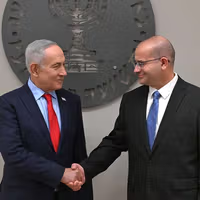
US President Donald Trump and Israeli Prime Minister Benjamin Netanyahu agreed at a White House meeting this week to increase economic pressure on Iran, including efforts to curb its oil exports to China, Axios reported.
The understanding, reached during talks on Wednesday, would form part of a renewed “maximum pressure” campaign running alongside indirect nuclear negotiations with Tehran, according to two US officials briefed on the discussions.
“We agreed that we will go full force with maximum pressure against Iran, for example, regarding Iranian oil sales to China,” a senior US official said.
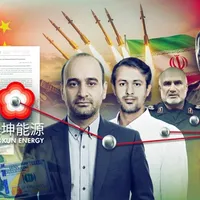
China buys more than 80% of Iran’s oil exports, making it Tehran’s main source of crude revenue. Any significant reduction in those purchases would sharply increase economic strain on Iran and could affect its calculations in nuclear talks with Washington.

US President Donald Trump and Israeli Prime Minister Benjamin Netanyahu agreed at a White House meeting this week to increase economic pressure on Iran, including efforts to curb its oil exports to China, Axios reported.
The understanding, reached during talks on Wednesday, would form part of a renewed “maximum pressure” campaign running alongside indirect nuclear negotiations with Tehran, according to two US officials briefed on the discussions.
“We agreed that we will go full force with maximum pressure against Iran, for example, regarding Iranian oil sales to China,” a senior US official said.
China buys more than 80% of Iran’s oil exports, making it Tehran’s main source of crude revenue. Any significant reduction in those purchases would sharply increase economic strain on Iran and could affect its calculations in nuclear talks with Washington.
An executive order signed by Trump earlier this month allows the administration to expand economic measures against Iran. The order authorizes the secretaries of state and commerce to recommend tariffs of up to 25% on countries that conduct business with Iran.
Such steps could further complicate already tense US-China relations. Beijing said on Sunday that “normal cooperation between countries conducted within the framework of international law is reasonable and legitimate, and should be respected and protected,” when asked about the reported discussions.
US officials said the pressure campaign would proceed in parallel with diplomacy and a US military buildup in the Middle East, as Washington prepares contingency plans in case negotiations fail.
Behind closed doors, Trump and Netanyahu agreed on the objective of preventing Iran from acquiring nuclear weapons capability, one US official said. However, they differed on strategy.
Netanyahu argued that it was impossible to secure a reliable agreement with Iran and that Tehran would not abide by any deal, the official said.
Trump said he believed there was still a chance to reach an agreement.
“We’ll see if it’s possible. Let’s give it a shot,” Trump said, according to the official.
Trump has tasked advisers Steve Witkoff and Jared Kushner with leading the talks. The two are scheduled to meet Iranian officials in Geneva on Tuesday for a second round of negotiations, after earlier contacts mediated by Oman.
A US official said Witkoff recently conveyed messages to Tehran through Oman’s foreign minister and that Washington expects an Iranian response at the Geneva meeting.
“We are sober and realistic about the Iranians. The ball is in their court. If it is not a real deal, we will not take it,” one US official said. Another said he believed there was “zero chance” that either side would accept the other’s core demands.
US and Iranian diplomats held indirect talks through Omani mediators last week in an effort to revive diplomacy over Iran’s nuclear program.
An Iranian lawmaker has questioned why authorities did not cut internet access earlier during unrest on January 8-9.
Hamid Rasaei, a Tehran MP, said it should be examined why the internet was not disconnected sooner during the nationwide protests that month.
During the January 2026 unrest, authorities imposed a near-total internet shutdown and disrupted access to satellite service Starlink, halting the flow of information.