German energy firm probes executive over alleged Iran regime ties – report


Germany’s major energy company EnBW is investigating a senior executive - an Iranian-born woman in a key strategic role - over allegations of possible links to Iran’s government, Focus reported on Tuesday.
The executive has a brother serving in Iran’s parliament, her father is a former Islamic Revolutionary Guards Corps (IRGC) agent, and she is allegedly involved in ongoing business ties with her family, the report said.
The probe was triggered by an anonymous email tip.
EnBW said it takes the accusations very seriously, has launched an internal review, and is cooperating with German security authorities, including the Federal Office for the Protection of the Constitution and the BND intelligence service.
The executive holds German citizenship, according to the report.
Senator Lindsey Graham once again voiced support for protesters in Iran on Tuesday, warning that US action could follow if the Islamic Republic resists change.
“To the brave people of Iran: President Trump has always heard your cries and demands for justice. The regime has proven yet again it’s incapable of real change,” Graham posted on X.
“If this regime continues the course they are on, then I believe President Trump’s statement that help is on the way is becoming more real by the day,” he added.
The European Union on Tuesday condemned Iran’s latest prison sentence for Nobel Peace Prize laureate Narges Mohammadi and called for her immediate release.
In a statement issued by the EU spokesperson, the European Union said it was "appalled by the latest sentencing to yet another prison term of Iranian human rights defender and Nobel Peace Prize laureate Narges Mohammadi, a long-standing human rights defender."
Brussels described the seven-year prison term as "another example of systematic repression against human rights defenders and women’s rights activists in Iran."
“The charges against Narges Mohammadi are based solely on her peaceful advocacy for human rights. The EU urges Iranian authorities to release her immediately and unconditionally, taking also into consideration her fragile health,” the statement said.
“Iran is bound by its obligations under international human rights law, including the International Covenant on Civil and Political Rights, to respect freedom of expression, association and peaceful assembly,” the statement said.
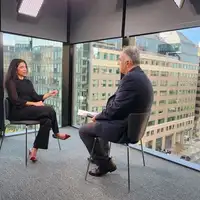
"Listen to what President Trump says. He's a man who when he makes a promise he keeps it. And pay close attention to what he says, because what he says is what he will do," US Ambassador to Israel Mike Huckabee told Iran International.
He made the remarks when asked about Trump's promise of help to Iranian protesters last month.

"We have not negotiated with the United States on any issue other than the nuclear matter," Iran's top security official Ali Larijani told Oman's state TV on Tuesday.
"The American side has also come to the conclusion that the talks must focus on the nuclear issue," he said.
"In my view, this issue is resolvable. If the Americans’ concern is that Iran should not move toward acquiring a nuclear weapon, that can be addressed. But if issues beyond this are introduced into the negotiations, the process could face difficulties."
"At present, the American side is thinking more realistically. In the past, they linked military and missile issues to the nuclear file, but now they are speaking only about the nuclear issue, which is a rational approach. Military matters are unrelated to the nuclear dossier," Larijani said.

Iran’s January protests were the predictable result of years of ignored economic and social warning signs, according to one of the country’s most prominent economists, who says the state failed to recognize how close society had come to the brink.
In an op-ed published this week in one of Iran’s leading economic newspapers, Donya-ye Eghtesad, the economist Massoud Nili described the country’s current predicament as a failure of governance that left mounting problems and public grievances unaddressed.
“The current situation marks one of the saddest and most critical junctures in Iran’s history,” Nili wrote, “a moment in which thousands of Iranians — mainly young people — lost their lives in less than 48 hours.”
He argued that “a combination of poverty, unemployment, inequality, inflation, psychological insecurity under the looming shadow of war, and cultural conflict placed young Iranians at the center of the crisis.”
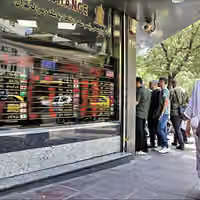
The unrest began in Tehran’s historic Grand Bazaar in late 2025, initially driven by slogans reflecting economic hardship. Over the following week, they broadened into nationwide demonstrations calling for the overthrow of the Islamic Republic.
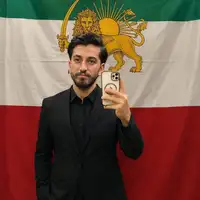
Protests peaked on January 8 and 9, following a call for coordinated actions by exiled prince Reza Pahlavi.
As many as 36,500 people were killed during the crackdown on those two days, according to an internal assessment leaked to and reviewed by Iran International.
Among the clearest warning signs, Nili noted, was the existence of nearly 12 million young Iranians who are neither employed nor enrolled in education.
Iran’s labor market, he wrote, has been effectively stagnant since 2009. While the working-age population increased by 4.4 million, the economy created only about 200,000 jobs, even as roughly 700,000 people lost employment.
Official figures suggest that net job creation has approached zero in recent years.
Other economists have echoed Nili’s assessment in the weeks since the protests and their violent suppression.
Speaking at Tejarat Farda’s economic forum in late January, Mohammad Mehdi Behkish described the protests as the product of “forty years of flawed governance and policymaking,” arguing that rigid political and economic structures had pushed society toward a breaking point.
Another prominent economist, Mousa Ghaninejad, pointed to the scale of the deterioration. In 2011, he said, fewer than 20 percent of Iranians lived below the poverty line. Today, that figure has risen to roughly 40 percent.
Declining oil revenues have further constrained the state’s ability to provide social support, while access to adequate nutrition and medical care has sharply declined.
Official data show inflation has exceeded 40 percent for at least two years, eroding purchasing power even among government employees and military personnel.
High inflation has enriched groups with preferential access to state-linked resources, widening inequality and deepening social resentment.
Nili concluded that a convergence of poverty, unemployment, inequality, psychological insecurity under the shadow of war, and cultural conflict had placed young Iranians at the center of the crisis.
Writing from inside Iran, Nili confined his analysis to economic and social indicators and avoided the political roots of the crisis—the deepening rupture between the state and a society that has come to resent the worldview and governing vision of its rulers.
He did mention “realities”, however, that if ignored, would steer the country toward “an extremely dangerous future.”