Iran's president appoints Shamkhani as secretary of defense council


Iran's President Masoud Pezeshkian in a decree appointed Ali Shamkhani as the Secretary of Iran's Supreme Defense Council.
Shamkhani, a navy admiral, was already serving as the Supreme Leader's representative at the Defense Council. He previously served as Iran's defense minister, secretary of Supreme National Security Council (SNSC), and a navy commander.
Iran established the Defense Council under the SNSC, aiming to centralize military decision-making and prepare for crises ranging from war to potential leadership transition following the June war with Israel.
According to a statement by the SNSC Secretariat in August 2025, the council’s core responsibility is to enable swift, centralized defense decisions in wartime or national emergencies.


As Iran and the United States reshuffle the format and venue of their talks amid military threats, deep mistrust, and hardline red lines, skepticism over a breakthrough appears widespread.
The talks, originally scheduled for Friday in Istanbul with several regional countries expected to attend, were moved to Oman at Iran’s request and narrowed to bilateral discussions between Tehran and Washington.
Tehran had also reiterated its insistence on indirect negotiations, with Foreign Minister Abbas Araghchi sitting in a separate room from Steve Witkoff and Jared Kushner, relying on Omani mediators to shuttle messages between the two sides.
State media further reported that the talks would focus exclusively on the nuclear issue, as in previous rounds.
However, The New York Times reported on Thursday that while Iran’s nuclear program would be the main focus, the two sides agreed that negotiations would also cover missiles and Tehran’s support for militant groups.
The newspaper cited three Iranian officials and one Arab official as saying the US agreed to hold the talks in Oman and exclude regional actors, while Iranian officials agreed to face their American counterparts.
Negotiations to avoid war—or merely delay it?
While diplomats maneuver, hardliners continue to float threats of preemptive strikes on Israel and closing the Strait of Hormuz, while claiming that Iran’s military posture has forced Trump to reconsider his repeated threats of military action.
Former foreign minister and lawmaker Manouchehr Mottaki said the likelihood of a US attack has dropped “from 100 percent to around 50 percent,” attributing the change to Washington’s doubts about achieving victory.
Journalist Hossein Yazdi, however, cited three developments over the past few days—the IRGC’s harassment of a US vessel in the Persian Gulf, the US downing of an IRGC Shahed-139 surveillance drone in the Arabian Sea, and Iran’s insistence on moving talks to Oman without Arab observers—as evidence that negotiations are not serious.
“Both sides have their hands on the trigger,” he wrote.
Iran’s red lines remain intact
It remains unclear whether Iran, facing Trump’s threats and the risk of war, is willing to reconsider positions that contributed to the collapse of previous negotiations.
Conservative analyst Hossein Qatib, who has previously advocated crossing the nuclear threshold, warned against surrendering Iran’s estimated 400 kilograms of enriched uranium.
“Any decision regarding these stockpiles must be designed with maximum distrust toward the other side’s intentions,” he wrote. “Handing them over in one go—under any title—is not goodwill or strategic rationality. It is voluntary disarmament under military threat.”
Others echoed familiar red lines. Esmail Kowsari, a member of parliament’s national security committee, said Iran’s missile capabilities and regional activities are “absolutely none of America’s business.”
Former deputy speaker Ali Motahari likewise cited enrichment rights, missile range, support for the so-called Axis of Resistance, and refusal to recognize Israel as all non-negotiable.
Few expect a breakthrough
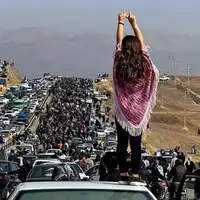
Given Iran’s insistence on these red lines, its past negotiating record, and recent mass killings of protesters that have plunged the Islamic Republic into a severe legitimacy crisis, few analysts express optimism.
Political analyst Ruhollah Rahimpour told Iran International that the Islamic Republic is, for the first time, confronting both a real external threat and a profound internal legitimacy crisis. “This combination is deadly,” he said, adding that Tehran can no longer assume it can cross Trump’s red lines and face only rhetorical consequences.
Former diplomat Nosratollah Tajik was blunt: “It is unlikely this round of mediation will go anywhere due to structural issues, the gap between goals and expectations, and the unfinished business of the previous two stages of Iran–US conflict.”
Mottaki also expressed doubt, saying: “These talks will not produce tangible results, but they may deter the US from imposing war.”
Yazdi argued there are no signs of serious negotiations, noting that Iran wants to resume narrow nuclear talks in Oman, while Trump and Israel seek far broader concessions. “From their perspective, destroyed nuclear facilities are no longer the top priority,” he wrote.
A user on X warned that failed talks would only make a Trump-led war against Iran appear more justified in the eyes of the international community.
Who really decides?
President Masoud Pezeshkian weighed in with a rare post on X on Tuesday, saying he had instructed the foreign minister to pursue talks “if there is a suitable, threat-free atmosphere.”
The wording sparked controversy, as few doubt that foreign policy is ultimately controlled by Supreme Leader Ali Khamenei. A community note was even added to the post.
"The person who makes the decisions in Iran is the Supreme Leader. The President doesn't really matter," US Vice-President J.D. Vance said on Wednesday.
"The Foreign Minister seems to talk to the Supreme Leader and that's mainly the person that we've communicated with. But it's a very weird country to conduct diplomacy with when you can't even talk to the person who's in charge of the country."
Researcher Abbas Gheidari interpreted Pezeshkian’s phrase “I instructed” as an attempt to preemptively assume responsibility for a potential nuclear concession to protect Khamenei.
Vice President Jafar Ghaempanah tried to soften the debate, writing: “No war is good, and not every peace is surrender.” Some conservatives such as Abdolreza Davari read this as a sign of an imminent deal. Ultra-hardline lawmaker Mehdi Koochakzadeh, however, warned that “the peace imposed by the architects of the JCPOA will bring humiliation worse than surrender.”
Protesters’ anger and pressure on Trump
Some Iranian activists and social media users have reacted angrily to what they describe as Trump’s flexibility, saying Tehran is once again buying time.
“This is what they’ve done for nearly 30 years,” one user wrote. “Trump prioritizes extracting concessions, not regime change—otherwise he wouldn’t have stopped Israel in the 12-day war.”
One image sent by a citizen to Iran International showed graffiti reading: “President Trump: Don’t negotiate with the killers of the Iranian people.”
Israeli security forces have arrested two Israeli citizens in their 20s on suspicion of carrying out missions for Iranian intelligence in exchange for digital payments, following a joint investigation by police and the Shin Bet, Israel’s domestic security agency, authorities said on Thursday.
The suspects, residents of the Jerusalem area, were arrested in January on suspicion of committing serious security offenses involving contact with Iranian intelligence operatives.
Israeli police said the investigation found the two had been in direct contact with Iranian intelligence elements for several months and carried out security-related missions while fully aware they were acting under Iranian direction. Authorities said the suspects allegedly received payments transferred to digital wallets.
Prosecutorial statements were filed on Thursday by the Jerusalem District Attorney’s Office at the Jerusalem Magistrate’s Court, and formal indictments are expected to follow.

Iran’s security forces planned in advance to deploy snipers and use shoot-to-kill tactics during the nationwide protest crackdown on Jan. 8 and 9, a former Iranian interior ministry official told Iran International.
The former official, who spoke on condition of anonymity and previously also served in the Islamic Revolutionary Guard Corps, said preparations dating back to 2022 included “marking and identifying elevated locations for sniper deployment” and “ideological theoretical training and psychological preparation to kill, including firing final shots at protesters.”
He said the planning also involved “training and educating criminal elements to play the role of leaders in gatherings, both to identify people and to steer street movements.”
Verified video of the protests showed security forces firing live ammunition from elevated positions, using pellet guns, raiding hospitals and shooting wounded protesters.
The former official said the Jan. 8-9 crackdown was not a short-term response but the result of long-term structural and operational preparation by security bodies.
A major US air base in Germany has moved to round-the-clock operations amid increased military activity, BBC Verify reported on Thursday.
Spangdahlem Air Base, a Nato facility operated by the US Air Force, is now operating 24 hours a day, according to a message sent to a US military aircraft monitored by BBC Verify.
A text communication to a USAF C-17 transport plane said the base “is currently open 24 7 due to tempo,” BBC Verify reported, citing aircraft communications data.
Talks between the United States and Iran set for Friday in Oman will focus mainly on Tehran’s nuclear program but will also include discussions on ballistic missiles and Iran-backed militant groups, officials familiar with the plans told i24NEWS.
The negotiations, which had appeared close to collapse earlier this week, will take place in Oman after last-minute diplomatic efforts by regional states, according to the officials.
Iran had warned it would walk away if Washington pushed to broaden the agenda beyond the nuclear file, but both sides agreed to what one official described as a compromise that would allow talks on missiles and regional activity alongside nuclear issues, with the aim of setting out a framework for a future deal.