Mowlavi Abdolhamid, the Sunni Friday prayer leader of Zahedan, described the killings of protesters in Iran as an “organized massacre.”
“Despite severe internet restrictions, scenes of the harrowing and brutal killing of protesters in various provinces are gradually being published by the media, indicating an organized massacre, with further aspects of it gradually coming to light,” Abdolhamid said in a post on X.
“This catastrophe has created a deep and irreparable rift between the people of Iran and the ruling establishment,” he added.

Iran said about 40 Iranian citizens will be returned from the United States to Iran on Sunday, after being held for months in US immigration detention centers.
The acting head of Iran’s Interests Section in Washington told state news agency IRNA that the group will depart from Mesa Airport in Arizona, make a brief stop in Egypt and return to Iran via Kuwait.
Abolfazl Mehrabadi added the office coordinated with US immigration authorities to issue return travel documents for the detainees.
The flight is the third to repatriate Iranian asylum seekers and others whose immigration cases were halted and who were detained by US immigration authorities for various reasons.
The planned deportation has drawn criticism in the United States, with Democratic Representatives Yassamin Ansari and Dave Min, citing human rights concerns in Iran.
Iran’s foreign ministry confirmed on December 7 that 55 Iranian nationals had been detained to be deported from the United States amid President Donald Trump’s tightened immigration policies.
On September 29, a plane carrying 120 Iranians including three women landed in Iran, an Iranian expelled from the United States told Iran International, adding that detainees had faced mistreatment in US facilities and that force was used during their transfer.
US Special Envoy Steve Witkoff said a US delegation met with Israeli Prime Minister Benjamin Netanyahu on Saturday to discuss progress on the second phase of President Donald Trump’s 20-point plan for Gaza as well as “broader regional issues.”
In a post on X Witkoff said the meeting included Jared Kushner, senior advisor Aryeh Lightstone and White House advisor Josh Gruenbaum.
"The discussion was constructive and positive, with both sides aligned on next steps and the importance of continued cooperation on all matters critical to the region," he said.
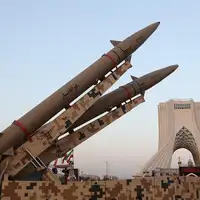
The United Arab Emirates, Jordan and the United Kingdom would provide logistical and intelligence support to the US military in the event of an attack on Iran, Israel Hayom reported.
The Israeli daily said the three countries would support US operations with intelligence sharing and logistical assistance if Washington moved ahead with military action against Iran.
According to the report, the UAE, Jordan and Britain would also be expected to take part in intercepting Iranian missiles and drones targeting Israel, US bases or strategic facilities in the region, Israel Hayom said.
Iranian authorities are still carrying out a chain of crimes linked to the protest crackdown, including extrajudicial killings, deaths under torture and the systematic mistreatment of detainees and their families, according to the executive editor of Iran International TV.
Asghar Ramezanpour said the violence has not ended with the suppression of mass demonstrations, warning that detainees face ongoing threats to their lives, denial of medical treatment and collective detention in unconventional holding facilities.
He also cited systematic harassment of families of those killed or detained, as well as continued efforts by authorities to block information from reaching the public.
Ramezanpour’s comments followed the release of a new report estimating that at least 36,500 people were killed in the crackdown on protests, with the deadliest violence concentrated on January 8 and 9, according to classified government documents seen by Iran International.

With tens of thousands killed and society still reeling, the Islamic Republic has turned to sport to project normalcy as matches return, but players’ muted celebrations and empty stadiums show how little of the script still holds.
Domestic leagues have resumed, fixtures have been brought forward, and state-aligned media have amplified claims that the country is returning to ordinary life.
That portrayal clashes with lived reality. Even under severely restricted internet access, videos of brutal crackdowns – particularly from January 8 and 9 – have circulated, showing the scale of violence used against protesters.
Much of society remains in mourning. Families are grieving thousands of young people, including dozens of athletes, and official claims of normalcy ring hollow. What disrupts the state’s carefully assembled image are unscripted gestures that resist being folded into the official storyline.
The match goes on but the joy does not
For the state’s project of normalcy to work, sport must deliver more than competition. It must deliver emotion. A goal is meant to be followed by celebration; a win is meant to bring release. Instead, a visible rupture has set in. Players score and walk away. The whistle blows and faces remain closed, expressions blank.
In recent weeks, many players have kept their celebrations muted as a gesture of solidarity with the uprising and a mark of respect for the dead, including fellow athletes – while stopping short of openly defying orders to play.
That tension has also fueled backlash against the few moments that look like unguarded celebration or emotion. After a Mes-e Rafsanjan F.C. victory and following Esteghlal F.C. staff reactions to a disallowed goal against Tractor S.C., criticism spread quickly across social media.
Former national team player Mohammad Taghavi voiced the sentiment plainly, arguing that players should not be taking the field at all.
“These footballers had no right to play under these circumstances. They could have claimed illness and avoided playing,” he told Iran International.

Sports journalist Mohsen Salehi described the resumption of matches as a staged display, even when players refrain from celebrating.
“The regime wants to turn footballers’ legs into tools of propaganda, projecting a false image in which life appears to be continuing as usual,” he wrote.
The question remains whether athletes – especially footballers – are willing to become props in that spectacle. When a country is in mourning, sport cannot remain a neutral island. Footballers are not only players; they are public figures with obligations to the communities that elevated them.
“Running on a field that reeks of blood is participation in a grand lie. Until the true scale of this repression is made clear and those who ordered and carried out these crimes are held accountable, what value does soccer really have? Players stand before the judgment of history. They must choose between being instruments of power or standing with the people,” Salehi added.
Taking such a position can carry consequences for the players.
though those costs pale in comparison with what the country is enduring. Tehran prosecutor has recently opened cases against 15 sports figures and actors for supporting the national uprising.
round the same time, reports emerged that Persepolis F.C. player Reza Shekari and Omid Ravankhah, head coach of Iran’s under-23 national team, were briefly detained on arrival at Tehran’s international airport over support for the protests.
Women’s soccer and foreign involvement
Signs that normalcy has not returned are also visible in institutional decisions. Farideh Shojaei, the federation’s vice-president for women’s football, announced the cancellation of two planned women’s national team friendlies against Uzbekistan and Belarus.
At club level, foreign participation has also thinned. Assistants to head coach Dragan Skočić at Tractor S.C., and one assistant to Ricardo Sá Pinto at Esteghlal F.C., have terminated their contracts. Several foreign Esteghlal players who left Iran during the mid-season break have yet to return.
The departures appear driven less by symbolic protest than by risk assessments. Matches continue, but confidence – especially among outsiders – has not been restored.
Tears as a counter-image
One of the most destabilizing moments for the state’s push for normalcy came in a single image: a women’s footballer scoring and then crying. In the visual economy of state messaging, it was the opposite of what is needed. A smile would complete the frame. Tears break it.

Last week, Maryam Mohammadhosseini, a player for the Esteghlal women’s team, did not celebrate after scoring and instead broke down in tears.
The image spread quickly because it showed what the official narrative tries to contain. Athletes can compete while remaining psychologically unsteady. Participation is not the same as emotional recovery. The body registers what the script denies.
Empty stadiums, louder signals
Matches continue, but spectators remain barred from stadiums, extending the same logic of control. The ban reflects authorities’ fear that protest chants and political displays could erupt on live broadcasts.
A match without a crowd may be technically possible, but for many it is drained of meaning. There is an image, but no collective response.
The limits of performative normalcy are even clearer beyond Iran’s borders.
The Asian Football Confederation has ruled that Iranian clubs cannot host certain continental matches at home, moving them to neutral venues. Under the decision, Esteghlal F.C. and Sepahan S.C. will stage Asian Champions League fixtures outside Iran, while Tractor S.C. will play on neutral ground.
If conditions were genuinely stable, those clubs would be allowed to host. A version of “normal” that holds only within domestic media does not withstand external assessment.
A growing list of athletes killed
Rights groups and media reports have documented the deaths of numerous athletes during protests so far, including former beach soccer national team goalkeeper Mohammad Hajipour; karate champion and referee Hassan Ghasemi; boxer Arshia Ahmadpour; mountaineer Sara Behboudi; women’s football assistant referee Sahba Rashtian; youth players Amirhossein Mohammadzadeh and Rebin Moradi; and former Tractor player Mojtaba Tarshiz, who was killed while shielding his wife.

The most recent confirmed case is Ahmad Ramezanzadeh, a catcher for the Iran national baseball team, who was killed after being shot with a handgun in eastern Tehran.

Other confirmed cases include soccer coach Milad Lavasani, futsal figure Amirmohammad Kouhkan, bodybuilder Masoud Zatparvar, taekwondo coach Afshin Mirkiani and arm-wrestling champion Erfan Bozorgi.
These are not the only athletes killed by the Islamic Republic. More names are likely to emerge in the future, as thousands of victims have yet to be identified.