• العربية
  • فارسی
Brand
  • Iran Insight
  • Politics
  • Economy
  • Analysis
  • Special Report
  • Opinion
  • Podcast
  • Iran Insight
  • Politics
  • Economy
  • Analysis
  • Special Report
  • Opinion
  • Podcast
  • Theme
  • Language
    • العربية
    • فارسی
  • Iran Insight
  • Politics
  • Economy
  • Analysis
  • Special Report
  • Opinion
  • Podcast
All rights reserved for Volant Media UK Limited
volant media logo

Teargas fired as Tehran Grand Bazaar strike continues

Jan 6, 2026, 09:15 GMT+0

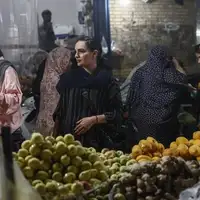
Security forces fired tear gas as shopkeepers continued a strike at the Tehran Grand Bazaar on Tuesday, according to videos sent by residents to Iran International.

Most Viewed

Abroad they talk, at home they hang
1
TEHRAN INSIDER

Abroad they talk, at home they hang

2

Islamic Republic puts another political prisoner to death

3

Iran's Hormuz toll plan bars Israeli ships, sets terms for US and allies

4
INSIGHT

War shadow lays bare divisions among Iran’s clerics

5

Internet shutdown drives Iranians to leave country for access

Banner
Banner

Spotlight

  • Abroad they talk, at home they hang
    TEHRAN INSIDER

    Abroad they talk, at home they hang

  • War shadow lays bare divisions among Iran’s clerics
    INSIGHT

    War shadow lays bare divisions among Iran’s clerics

  • Who speaks for Iran: What the public rift means, and what it hides
    INSIGHT

    Who speaks for Iran: What the public rift means, and what it hides

  • Tehran hardens stance on Hormuz as ‘non-negotiable’
    INSIGHT

    Tehran hardens stance on Hormuz as ‘non-negotiable’

  • ‘Permit for a terrorist’: Canada opposition asks who cleared ex-IRGC official’s entry
    PODCAST

    ‘Permit for a terrorist’: Canada opposition asks who cleared ex-IRGC official’s entry

  • Iran war cannot end with Revolutionary Guards still in control
    OPINION

    Iran war cannot end with Revolutionary Guards still in control

•
•
•

More Stories

Families, retirees report security force action in several Iran cities

Jan 6, 2026, 09:04 GMT+0

Families of people detained in recent protests gathered late on Monday outside detention sites in areas including Gohardasht to seek information about their relatives, but were dispersed by security forces, according to messages sent to Iran International.

In the city of Baghmalek, residents said security agents raided the homes of some protesters and made arrests late on Monday, with no official figures available.

Separately, retirees in Kermanshah held a rally on Tuesday in support of nationwide protests, chanting slogans before security forces moved to break up the gathering, according to messages received by Iran International.

Iran’s currency slides to new low, dollar at 1.47 million rials

Jan 6, 2026, 08:59 GMT+0

Iran’s rial fell to a fresh record low on Tuesday on unofficial markets, with the US dollar quoted at about 1.47 million rials as authorities seek to defuse public anger over soaring prices.

The euro was trading around 1.72 million rials and the pound at about 19.94 million rials, traders said.

The latest slide follows sharp swings since late December, when the currency’s plunge helped trigger protests in Tehran and other cities that have increasingly taken on a broader political edge.

The government has floated new relief measures after moving to curb access to subsidized foreign exchange used for importing basic goods, a system critics say has fueled distortions and rent-seeking while failing to contain inflation.

  • Iran says food prices to jump as currency subsidies end

    Iran says food prices to jump as currency subsidies end

  • Can Iran's plan for a $7 monthly cash handout calm the streets?

    Can Iran's plan for a $7 monthly cash handout calm the streets?

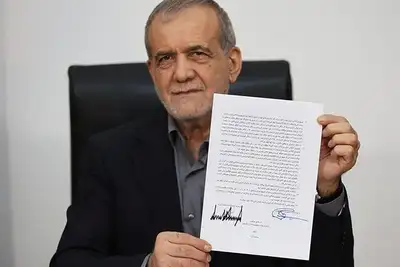
President Masoud Pezeshkian’s administration has signaled it will shift support toward households, including a proposed monthly electronic credit or coupon scheme aimed at cushioning low-income families from price rises as the subsidy regime is rolled back.

Iran’s economy has been hit by years of sanctions and chronic inflation, and many Iranians turn to hard currency and gold as stores of value during bouts of political and economic uncertainty.

Iran interior ministry labels protests as 'riots' in parliament briefing

Jan 6, 2026, 07:43 GMT+0

Iran’s Interior Ministry described recent protests as “riots” in a report to parliament and said about 85% of calls to take part were made through foreign platforms, according to lawmakers briefed on the report.

Ebrahim Rezaei, spokesperson for parliament’s national security and foreign policy commission, said Security Deputy Interior Minister Ali Akbar Pourjamshidian told lawmakers that “rioters destroyed government buildings as well as private and public vehicles,” and said “most of those injured were police, security forces and Basij members,” adding that forces had acted with “restraint.”

Rezaei said the deputy minister also told the commission that “security is established” and that the trend in incidents was “declining,” while some lawmakers urged officials to “speak with the people” and address the roots of protests.

It's the economy: grim livelihoods explain Iranian anger

Jan 6, 2026, 07:21 GMT+0

The fate of the Iranian economy is increasingly shaping debates about the country’s future, one that may prove decisive regardless of how its current political struggles unfold.

Public frustration over rising living costs has once again spilled into protests across the country, shining a harsh light on how state resources are allocated and managed.

Continue reading...

It's the economy: grim livelihoods explain Iranian anger

Jan 6, 2026, 07:06 GMT+0
•
Dalga Khatinoglu

The fate of the Iranian economy is increasingly shaping debates about the country’s future—one that may prove decisive regardless of how its current political struggles unfold.

Public frustration over rising living costs has once again spilled into protests across the country, shining a harsh light on how state resources are allocated and managed.

As demonstrations continue, economic indicators are emerging as a central measure of both state capacity and public confidence.

That tension is visible in Iran’s draft budget for the next fiscal year, beginning on March 22. The document offers a snapshot of priorities at a moment marked by military confrontation, diplomatic strain and widening economic pressure.

A budget shaped by security concerns

According to the draft, the government has projected just 1,850 trillion rials in oil export revenues for itself—equivalent, at the official exchange rate, to roughly $2 billion.

By contrast, allocations tied to military and security institutions account for at least 16 percent of total budgetary resources, while the share of oil export revenues linked to the Islamic Revolutionary Guard Corps is estimated to be several times larger than that of the civilian government.

Funding for religious institutions is projected at close to half of the government’s oil income.

At the same time, projected tax revenues have risen by 63 percent, signaling a heavier burden on households and businesses amid high inflation and weak purchasing power.

Taken together, the figures raise questions about how effectively state revenues are being translated into economic stability or improved living standards. They also complicate expectations that external relief alone—such as sanctions easing—would be sufficient to reverse economic decline.

An economy with untapped potential

Official data underscore the scale of resources involved.

Even under extensive sanctions, Iran’s crude oil export revenues over the past five years have totaled approximately $193.5 billion.

Yet over roughly the same period, Iran’s gross domestic product has contracted sharply, falling from around $600 billion in 2010 to an estimated $356 billion in 2025. The divergence between export earnings and overall economic output has become a central puzzle for analysts.

According to Iran’s Central Bank (CBI), the country earned $65.8 billion from exports of oil, petroleum products and gas in the last fiscal year, while total general government revenues projected in the new budget amount to about $45 billion.

Growth, allocation and the missing link

In purely arithmetic terms, current energy exports alone exceed projected state revenues, even before accounting for taxation, domestic fuel sales or other income sources.

The structure of Iran’s economy further complicates comparisons with other sanction-hit or conflict-affected states. Services account for more than half of GDP, and non-oil exports remain substantial, according to the CBI—a markedly different profile from countries such as Iraq, where non-oil exports account for less than 10 percent.

These figures suggest that Iran’s economic capacity, diversification potential and revenue base remain significant, even under constraint.

The unresolved question is not one of resources alone, but of how those resources are absorbed, allocated and converted into sustainable growth.

As protests continue and political outcomes remain uncertain, the condition of the economy—more than any single diplomatic or security development—is likely to shape Iran’s trajectory in the years ahead.