Khamenei pours cold water on US talks, doubles down on enrichment
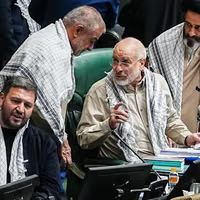
Iran's Supreme Leader Ali Khamenei
Iran's Supreme Leader Ali Khamenei on Tuesday ruled out talks with United States, saying President Donald Trump's demand Tehran end domestic enrichment of uranium was an insult which had earned him a "slap in the face" from the Iranian people.
Below are excerpts from Khamenei's televised speech:
"In the current situation, negotiating with the US government would, first and foremost, do nothing to help our national interests — it would bring us no benefit and would not avert any harm."
"Negotiations with the US under present conditions also entail serious harms for the country, some of which may even be irreparable."
"When we say it is not to our benefit, it is because the American side has already predetermined the outcome of negotiations. They have declared that the only talks they accept are those that end with Iran shutting down its nuclear activities and enrichment."
"That is not negotiation; that is dictation, it is imposition. To sit down and negotiate with a party that insists the result must necessarily be exactly what they want and say—is that negotiation?"
"They say: let us negotiate, and the result should be that Iran has no enrichment. And just days ago, one of their deputies declared that Iran must not have missiles either—not long-range, not medium-range, not even short-range. They are saying Iran must be left empty-handed, unable even to respond, if attacked, at an American base in Iraq or elsewhere."
"Such words are bigger than the mouth that utters them and are not worthy of attention. We have not and will not give in to pressure in enrichment or in any other matter."
Uranium enrichment
"Now this man, the American side, is insisting that Iran must have no enrichment at all. In the past, others said we should not have high-level enrichment, or that our enriched material should not be kept inside the country—things we did not accept. But now they are saying: no enrichment whatsoever, absolutely none at all. What does that mean?"
"Well, clearly, a proud nation like the Iranian people will slap the mouth of the one who says this and will not accept it. We will not submit to pressure in this matter (uranium enrichment) or in any other."
"The other side has threatened that if you do not negotiate, such and such will happen—whether it be bombing or other threats, sometimes vague, sometimes explicit. That is a threat. Accepting such negotiations would signal that Iran is vulnerable to threats. It would mean that whenever we face a threat, we immediately become afraid, tremble, and submit. That is what it would mean."
"And if such susceptibility to threats were to emerge, it would never end. Today they say: if you enrich, we will do this. Tomorrow they will say: if you have missiles, we will do that. Then they will say: if you maintain ties with such-and-such a country, we will act; if you do not maintain ties with another, we will act. It will all be threats, and we would be forced to retreat at every step."
"No honorable nation accepts negotiations under threat, and no wise politician endorses it."
"Ten years ago, we signed an agreement with the Americans, under which they were supposed to lift sanctions and normalize Iran’s nuclear file at the IAEA. The other side may now say, 'in exchange, we will give you such-and-such a concession.' They are lying. Whatever they claim to offer as a concession is false."
Outside the building of the General Directorate of Prisons of Semnan Province
A Swiss citizen Iran says died by suicide in prison was a 64-year-old tourist, a Swiss foreign ministry spokesman told Iran International, adding that Switzerland is seeking more details on his arrest and death from Tehran.
The foreign ministry added on Friday that the individual had been living in South Africa for the past 20 years and was traveling in Iran as a tourist.
The email response from the ministry said that the Swiss embassy in Iran was earlier denied access to the prisoner and now wants Tehran to provide full information about his arrest and death.
"Since Switzerland was informed of the arrest, the Swiss Embassy in Tehran has been in daily contact with the Iranian authorities to obtain more information about the circumstances of the arrest and to gain access to the detained Swiss citizen," the foreign ministry said.
"However, due to the accusations (espionage – national security), the requested consular access was not granted," it added. "Switzerland is demanding that the Iranian authorities provide detailed information."
The Swiss citizen who allegedly committed suicide in Semnan Prison on Thursday had been arrested while collecting soil samples in Iran’s central desert during an Israeli airstrike, media affiliated with Islamic Revolutionary Guard Corps reported.
Meanwhile, local media quoted unnamed Iranian official as saying that person was conducting espionage when he was arrested. The name of the Swiss citizen and the circumstances of his arrest and death remain unclear.
“This individual used prior intelligence training to take their own life during a specific opportunity,” Mashregh News, a publication affiliated with the Islamic Revolutionary Guard Corps (IRGC), reported late Thursday, citing an unnamed security official.
"Switzerland is demanding that the Iranian authorities provide detailed information on the reasons for his arrest and a full investigation into the circumstances of his death," the Swiss foreign ministry said.
The individual, detained by the IRGC Intelligence Organization, was accused of gathering information in a sensitive area during Israel's October air attack. The media report specifically said that this occurred during the Shahroud attack, which targeted an IRGC missile facility. Satellite imagery from Planet Labs later revealed significant damage to the site, known for building ballistic missiles and launching rockets as part of Iran’s space program.
After their arrest, the person was transferred to Semnan Prison, where they allegedly revealed information about their network and communication links, according to the outlet.
A local judiciary official confirmed the death on Thursday, saying that the Swiss national, facing espionage charges, had committed suicide in their cell.
Switzerland has also confirmed the death. "The FDFA confirms the death of a Swiss citizen in Iran," spokesperson Pierre-Alain Eltschinger told Iran International. "The Swiss Embassy in Tehran is in contact with the local authorities to clarify the circumstances of the death in an Iranian prison," he added.
According to Mizan, Iran's judiciary news website, the detainee asked their cellmate on Thursday morning to purchase food from the prison canteen. While alone in the suite, the detainee reportedly took their own life. "Prison officials immediately intervened to save the individual, but their efforts were unsuccessful," Mohammad Sadegh Akbari, a local judiciary official, was quoted as saying. “Suicide has been definitively confirmed.”
Iran has arrested dozens of dual nationals and foreigners in recent years, often on charges of espionage or security-related offenses. Some of these detainees have been released in exchange for deals involving Iranians held in foreign prisons.