China continues to import Iranian oil using 'dark fleet' – CBS

China is continuing to buy Iranian oil in defiance of US sanctions by using a clandestine maritime network known as the “dark fleet,” according to a CBS News investigation.
China is continuing to buy Iranian oil in defiance of US sanctions by using a clandestine maritime network known as the “dark fleet,” according to a CBS News investigation.
The report reveals how Iranian oil is transferred to ships bound for China through covert ship-to-ship transfers in international waters near Malaysia’s Riau archipelago, often with transponders turned off and identifying details concealed.
During a single day in the area, CBS recorded 12 such transfers—an unprecedented number that analysts say signals an expansion of the trade. China is believed to purchase up to 90% of Iran’s crude exports.
The report comes a day after the US Treasury announced sweeping new sanctions on what it described as a “shipping empire” allegedly controlled by Hossein Shamkhani, son of a senior adviser to Iran’s Supreme Leader.
The action, the largest of its kind since 2018, targeted more than 50 individuals and entities and identified 50 vessels.
CBS quoted former US Navy officer Charlie Brown, now an adviser to United Against Nuclear Iran, as saying the location near the Riau archipelago is the dark fleet’s “parking central.”
“As long as there’s a supply, there will be a demand for this discounted oil,” Brown said. “And both sides are willing to take the risk.”
Despite multiple rounds of US sanctions, smaller Chinese refineries—known as “teapots”—continue to buy Iranian crude.
Meanwhile, European powers are weighing whether to trigger the snapback of UN sanctions on Iran, which had been lifted under the 2015 nuclear deal.
It remains unclear how such a move would affect China’s energy trade with Iran or broader sanctions enforcement.













A Swiss citizen Iran says died by suicide in prison was a 64-year-old tourist, a Swiss foreign ministry spokesman told Iran International, adding that Switzerland is seeking more details on his arrest and death from Tehran.
The foreign ministry added on Friday that the individual had been living in South Africa for the past 20 years and was traveling in Iran as a tourist.
The email response from the ministry said that the Swiss embassy in Iran was earlier denied access to the prisoner and now wants Tehran to provide full information about his arrest and death.
"Since Switzerland was informed of the arrest, the Swiss Embassy in Tehran has been in daily contact with the Iranian authorities to obtain more information about the circumstances of the arrest and to gain access to the detained Swiss citizen," the foreign ministry said.
"However, due to the accusations (espionage – national security), the requested consular access was not granted," it added. "Switzerland is demanding that the Iranian authorities provide detailed information."
The Swiss citizen who allegedly committed suicide in Semnan Prison on Thursday had been arrested while collecting soil samples in Iran’s central desert during an Israeli airstrike, media affiliated with Islamic Revolutionary Guard Corps reported.
Meanwhile, local media quoted unnamed Iranian official as saying that person was conducting espionage when he was arrested. The name of the Swiss citizen and the circumstances of his arrest and death remain unclear.
“This individual used prior intelligence training to take their own life during a specific opportunity,” Mashregh News, a publication affiliated with the Islamic Revolutionary Guard Corps (IRGC), reported late Thursday, citing an unnamed security official.
"Switzerland is demanding that the Iranian authorities provide detailed information on the reasons for his arrest and a full investigation into the circumstances of his death," the Swiss foreign ministry said.
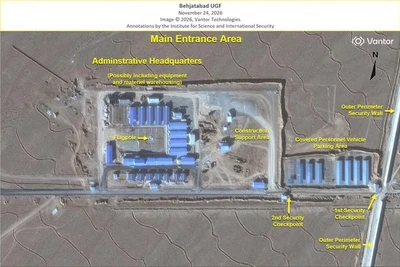
The individual, detained by the IRGC Intelligence Organization, was accused of gathering information in a sensitive area during Israel's October air attack. The media report specifically said that this occurred during the Shahroud attack, which targeted an IRGC missile facility. Satellite imagery from Planet Labs later revealed significant damage to the site, known for building ballistic missiles and launching rockets as part of Iran’s space program.
After their arrest, the person was transferred to Semnan Prison, where they allegedly revealed information about their network and communication links, according to the outlet.
A local judiciary official confirmed the death on Thursday, saying that the Swiss national, facing espionage charges, had committed suicide in their cell.
Switzerland has also confirmed the death. "The FDFA confirms the death of a Swiss citizen in Iran," spokesperson Pierre-Alain Eltschinger told Iran International. "The Swiss Embassy in Tehran is in contact with the local authorities to clarify the circumstances of the death in an Iranian prison," he added.
According to Mizan, Iran's judiciary news website, the detainee asked their cellmate on Thursday morning to purchase food from the prison canteen. While alone in the suite, the detainee reportedly took their own life. "Prison officials immediately intervened to save the individual, but their efforts were unsuccessful," Mohammad Sadegh Akbari, a local judiciary official, was quoted as saying. “Suicide has been definitively confirmed.”
Iran has arrested dozens of dual nationals and foreigners in recent years, often on charges of espionage or security-related offenses. Some of these detainees have been released in exchange for deals involving Iranians held in foreign prisons.