Israel’s defense chief warns Hezbollah after group signals support for Iran
Israeli Defense Minister Israel Katz warned Hezbollah on Friday to stay out of the Iran-Israel conflict, saying the group “has not learned the lesson of its predecessors.”
“The Lebanese proxy should be careful and understand that if there is terror – there will be no Hezbollah,” Katz wrote on X.
His comments followed a statement by Hezbollah’s leader Sheikh Naim Qassem, who said the group was not neutral in the face of Israeli and US aggression and backed Iran’s right to defend itself.
A building at the camous of the Weizmann Institute of Science remains damaged following an Iranian missile strike on Sunday, in Rehovot, Israel June 19, 2025.
Israel’s war against Iran entered its eighth day Friday, with mutual missile attacks continuing, diplomacy intensifying, and the fate of the underground Fordow nuclear site hanging in the air.
President Donald Trump is weighing a US strike, while Israel says it will act alone within days if necessary. Here's a brief summary of events leading to Friday.
Underground site in crosshairs
Trump is determined to disable Iran’s Fordow nuclear facility by force or diplomacy, CBS and Axios reported.
Trump will decide within two weeks whether to order a strike, the White House said Thursday.
Two Israeli security sources told Iran International that Israel will strike Fordow within 48–72 hours—with or without US support.
The Guardian reports Trump is unconvinced the GBU-57 bomb can destroy Fordow; Pentagon warned only a tactical nuke would guarantee success—something Trump is not considering.
CIA Director Ratcliffe reportedly described Iran as “on the one-yard line” of building a bomb.
NYT says Iran may seek a nuclear weapon if Fordow is hit or Khamenei is killed.
Israeli strikes continue
Israel targeted an industrial complex in Rasht and other targets in Gorgan
Satellite images confirmed heavy damage to Arak’s reactor dome.
Israeli officials’ remarks fueled the speculations that Israeli was poised to kill Iran’s supreme leader Ali Khamenei
Netanyahu said regime change in Iran is up to its people, but could result from the war.
A building housing top officials was targeted in northern Tehran.
Iran vows to retaliate, launches more missiles
Khamenei appeared in a defiant video rejecting Trump’s calls to surrender, saying any US attack would cause “irreparable damage.”
Tehran warned of retaliation on US soil if Washington intervenes, but left door open to diplomacy
Iran reiterated it may pursue nuclear weapons if Khamenei is assassinated or Fordow is hit.
New salvos Thursday hit a major hospital in southern Israel
IRGC media reported attempts to mobilize Qom clerics for compromise with Israel.
Tehran shaken, losses mount
Rights groups say more than 300 have been killed in Iran, including nuclear scientists and IRGC members.
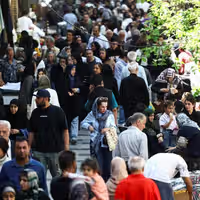
Strikes have hit almost every Tehran district, prompting mass flight.
Air defenses activated again Thursday night amid new Israeli strikes.
Targets included the Intelligence and Foreign ministries and key military sites.
Funerals and martyr posters are now common across the capital.
US prepares, denies offensive role
The USS Ford strike group and over 30 refueling tankers are in the region.
Satellite images show US military aircraft being removed from a base in Qatar.
Trump’s G7 exit and social media posts stirred speculation about imminent US action.
Diplomacy intensifies but stalls
US envoy Steve Witkoff and Iran’s Abbas Araghchi have held multiple phone calls.
UK foreign minister to deliver US message to Iran in Geneva Friday; France and Germany joining.
UN chief Guterres welcomed the talks but said violence must end now.
Iran told Guterres it will keep fighting until the UN acts against Israel.
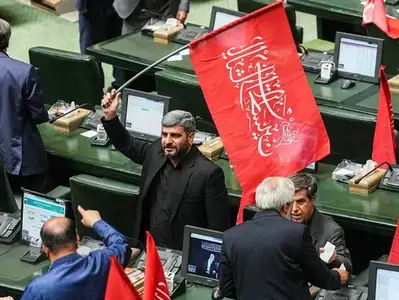
Hezbollah’s deputy chief said the group is “not neutral” and backs Iran.
Global fallout escalates
Russia evacuated nationals; Czechia closed its Tehran embassy.
Germany urged Israel to show restraint in military operations.
Oil prices spiked; Iran faces the worst internet blackout since 2019.
Iran threatened Israeli Channel 14 with military action.
Iran arrested over 160 people for alleged online support of Israel.
Nobel laureate Narges Mohammadi called for a ceasefire and international peace push.
Iran is hijacking private security cameras in Israel to monitor impact zones and collect real-time intelligence, Bloomberg reported on Friday, citing current and former Israeli cyber officials.
The report quotes Refael Franco, former deputy director of the Israel National Cyber Directorate, who warned that in the days following Iran’s missile strikes on Tel Aviv, Iranian operatives had been attempting to connect to private surveillance systems to improve targeting accuracy.
A spokesperson for Israel’s cyber agency confirmed the ongoing threat, saying such attempts had intensified during the current conflict. Iran’s use of hijacked cameras echoes similar tactics previously employed by Hamas and Russia.
Bloomberg notes that weak passwords, outdated firmware, and poorly configured systems leave many private cameras vulnerable, creating what experts call a “dual-use” risk for civilians and intelligence.
The Israeli military said on Friday it struck dozens of military and industrial targets in and around Tehran overnight, including the headquarters of SPND, Iran’s organization for nuclear weapons research and development.
Over 60 Israeli Air Force fighter jets carried out the strikes, guided by precise intelligence, and dropped around 120 munitions, the military said. The targets included missile manufacturing sites, facilities producing raw materials for missile engines, and key installations tied to Iran’s nuclear weapons program.
Among the sites targeted was the SPND building, established in 2011 by Mohsen Fakhrizadeh, regarded as the founder of Iran’s nuclear weapons project.
Tasnim News Agency, affiliated with Iran’s Islamic Revolutionary Guard Corps, reported earlier that SPND was among the sites hit in the initial wave of Israeli strikes on June 15.
Iran's state broadcaster HQ on fire after an Israeli airstrike, Tehran, Iran, June 16, 2025
Israel’s airstrike on Iran’s state broadcaster IRIB may raise legal questions for scholars of war, but for many Iranians, it felt like a long-overdue punch to the face of the Islamic Republic.
IRIB is seen by many not just as biased, but as a tool of repression—tied to psychological coercion, disinformation, and forced confessions.
“I’m filled with bizarre emotions about the destruction of IRIB,” wrote former political prisoner Nazila Maroofian on X.
She recalled being taken from Evin Prison, at 22, to IRIB’s headquarters and forced to record a confession.
“They sat me in front of the camera. ‘Say you were paid by Israel’—cut. ‘Say you were paid by the US’—cut. ‘Say you were instigated and now regret it’—cut,” she wrote.“But the video wasn’t aired because I was weeping the entire time.”
Programs like the 8:30 Special News Bulletin regularly air such confessions. The show has featured jailed activists, protesters, and even foreign nationals like French citizens Cecile Kohler and Jacques Paris.
In some cases, families of protesters killed by security forces were pressured to claim their loved ones died by suicide or illness.
The program’s producers, Ameneh Sadat Zabihpour and Ali Rezvani, were sanctioned by the United States in 2023 for working with intelligence agencies to stage confessions.
‘A dream came true’
“The strike was what all of us fantasized to bring upon this brutal, lie-ridden organization,” a user with the handle @_Alone_Crony posted on X. “I’m glad our dream came true.”
“A number of IRIB employees have sadly lost their lives due to underlying health conditions, falls from heights, and suicides caused by mental health issues,” another user, @ayazi_kamran, wrote, mocking state denials of violence.
Still, some warned of the precedent.
“I believe the state radio and television are damaging to the country. But that’s one thing—and Israel’s attack on the organization is another,” journalist Ehsan Bodaghi posted.“Today they say it was a military-linked media site; tomorrow they’ll use the same logic for hospitals, schools, sports clubs. Exactly like Gaza.”
A journalist preparing dissident Ruhollah Zam for "confessions" to be aired by IRIB days before his execution
A broadcast interrupted
The strike came about an hour after Israel’s defense ministry posted a warning on X, urging residents of Tehran’s upscale District 3 to evacuate. Israel’s military said the target was a facility used “to advance military operations under civilian activity.”
Among the most dramatic moments was the live broadcast by anchor Sahar Emami, reading a statement just as the building was struck.“What you heard,” she improvised, “is the sound of the aggressor [attacking], the sound of the aggressor that has attacked the truth.”Her delivery as dust filled the studio made her an instant hero for the government and its supporters—who called her a “lioness.”
Moments later, she had to flee live on air. The clip went viral—almost instantly iconic—and triggered a wave of mostly celebratory reactions online.
Echoes and aftermath
“I’m delighted because the IRIB was not the people's voice. It was the voice of those who rule,” said one viewer in a recorded message sent to Iran International within hours of the attack.
“Maybe now, with their propaganda apparatus and abominable voice silenced, they’ll feel the pain we felt—those of us with no voice and nowhere to be heard.”
“The IRIB is loathed by all Iranians except for a small percentage,” a user named Fatemeh Vallinia posted on X. “People would rejoice no matter who targeted it—whether it was a bolt from the sky or a strike from this usurping attacker!”
Despite the damage, literal and figurative, the state’s propaganda machine remains intact.
The day after the strike, state and IRGC-affiliated media aired a video of an alleged Mossad agent arrested in Alborz Province. The man claimed he had trained for ten years and built explosives in his workshop before being captured.