US special envoy Steve Witkoff and Iranian Foreign Minister Abbas Araghchi have held multiple phone conversations since the Iran-Israel conflict erupted last week, aiming to find a diplomatic solution to the crisis, Reuters reported on Thursday.
Citing three unnamed diplomats, the report said Araghchi told Witkoff that Tehran would not return to negotiations unless Israel halted its attacks on the Islamic Republic.
The talks also touched on a US proposal from late May to create a regional uranium enrichment consortium outside Iran, which Tehran has rejected.
Iran's Supreme National Security Council warned on Thursday that Tehran would adopt a "different strategy" if a third party were to join Israel in the ongoing conflict.
Israel's military campaign against Iran targets more than nuclear and missile infrastructure and aims to weaken Supreme Leader Ali Khamenei’s rule to the point of collapse, a Reuters analysis said.
The article cited Israeli, Western and regional officials as saying that Prime Minister Benjamin Netanyahu is seeking lasting concessions from Iran on enrichment, missiles, and regional militancy.
Israeli strikes have expanded to state institutions and top security officials, while US President Donald Trump weighs military involvement but remains open to talks.
Still, the collapse of the Islamic Republic establishment remains unlikely without a ground invasion or uprising, according to the officials.
Persian Gulf and Western powers fear that forced regime change could unleash chaos across the region, the report added.
"Iran isn't just facing Israel," said Alex Vatanka, director of the Washington-based Iran Program at the Middle East Institute. "It’s facing off the United States and European powers."
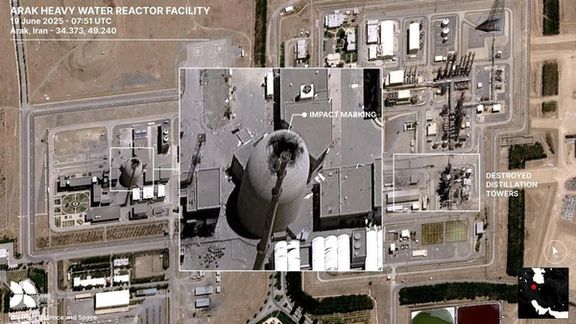
Iran, long seen as a rising regional power, is contending with a new Middle East reality marked by evolving alliances, according to a Time magazine analysis published on Thursday.
The analysis said that while Iran's "Axis of Resistance" and its opposition to Israel have been central to its post-1979 revolutionary ideology, the recent conflict with Israel has shown a different dynamic.
Time suggests Iran's leadership prioritized "the preservation of the system," leading to continued investment in its nuclear program for survival.
The analysis pointed to wealthy Persian Gulf states increasingly aligning with Israel due to a shared animosity towards Tehran, a development exemplified by the Abraham Accords and Saudi Arabia's signals towards normalization.
This shift, Time concludes, outlines a new regional landscape where Arab nations are actively participating in intercepting Iranian missiles targeting Israel.
German Chancellor Friedrich Merz called for moderation in Israel's military campaign against Iran during a phone call with Israeli Prime Minister Benjamin Netanyahu on Wednesday evening, a German government source told Reuters on Thursday.
While voicing Germany's "support in principle" for Israeli military attacks on Iran's nuclear infrastructure, Merz stressed the importance of seeking diplomatic solutions to the ongoing conflict, the source added.