This shift from overt violence to algorithmic discipline is framed in official discourse as “smartification” and “psychological security”—buzzwords that mask a deeper objective: building a more efficient, anticipatory system of social control.
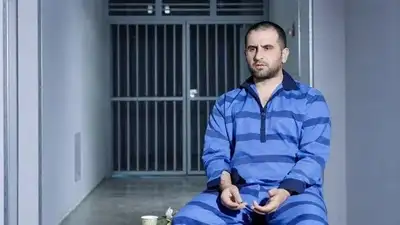
As Iran negotiates with the United States abroad, it is preparing for a future at home without a deal. Figures once tainted by high-level corruption—such as Babak Zanjani—are now rhetorically rehabilitated as symbols of national resilience, reflecting a broader effort to rebrand dysfunction as discipline.
Authorities are deploying everything from internet monitoring and mobile signal tracking to facial recognition, shop surveillance, and even mandatory in-home cameras to build a digital control society. The goal: neutralize dissent before it begins.
This new architecture of repression aims to present a softer, even “benevolent” face of policing—one nearly invisible thanks to smart technologies. The result is a seamless, predictive regime designed not only to watch citizens, but to sort, anticipate, and contain them.
Policing internet, profiling people
In recent years, the Islamic Republic has adopted a more systematized and technical approach to digital control.
A clear marker of this trend was the resolution passed by the Supreme Council of Cyberspace in January 2025. While billed as a plan to “lift filtering,” the directive in practice expands regulation of online activity.
It authorizes the government, along with the Ministry of Culture and the Judiciary, to police “criminal content,” restrict VPNs, and penalize the spread of so-called “fake news.”
This legislative tightening is matched by tactical enforcement. During protests in Izeh in March 2024, authorities imposed localized internet shutdowns that left hundreds of thousands offline. These quiet, surgical disruptions have become a recurring method of quelling unrest.
In parallel, authorities deactivated SIM cards of journalists, activists, and political users—targeting not speech, but connection itself.
The same tools are now used to enforce dress codes. In Isfahan, authorities reportedly use contactless payment readers and surveillance cameras to identify women who defy compulsory hijab.
Threatening messages are sent not only to the women, but to their families—a form of psychological policing that leverages fear and shame.
Urban surveillance, algorithmic control
These measures show no sign of slowing. In May 2025, traffic police announced plans to use facial recognition for pedestrian violations—a tool once limited to license plates now trained on people.
In October 2024, the national police (FARAJA) began equipping 50,000 officers with body cameras that livestream to command centers, turning patrols into mobile surveillance nodes.
Surveillance is also extending into the private sector. Under the “Septam” system launched in late 2024, businesses must install cameras linked to law enforcement to receive operating licenses.
In April 2025, building codes were updated to require surveillance cameras in any residential or commercial complex with four or more units. The state now watches not just public streets but the thresholds of private homes.
These initiatives fall under the “Police Smartification” plan outlined in the FARAJA Architecture Document. Though couched in the language of public service, its purpose is unmistakable: to restructure digital and urban life for maximum predictability and control.
Pre-empting dissent
The driver behind this system is not technological ambition—it is fear. Officials anticipate the return of mass protests, spurred by economic hardship, power outages, and the possible failure of negotiations.
In response, they are building a pre-emptive framework of repression, where law and policing blur, and surveillance becomes the default mode of governance.
This strategy does not merely suppress resistance—it aims to erase the very possibility of it. By severing communication, dissolving public and digital spaces, and inducing despair, the state hopes to prevent disobedience not just in action, but in thought.
If realized, Iran will not merely be a surveillance state—it will be an anticipatory one. A state where individuals are profiled, categorized, and neutralized before they act.Where repression no longer wears a uniform, but operates silently—to predict and pre-empt dissent.