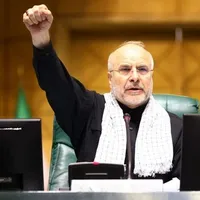
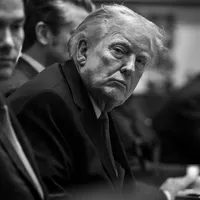
Supreme Leader Ali Khamenei’s reaction to Donald Trump’s Riyadh speech only confirmed the US president’s critique, analyst Morad Veisi argues. Trump compared Iran’s failures with Persian Gulf Arab progress, triggering a defensive response from regime officials, he said. Khamenei said the remarks weren’t worth answering, but then echoed them—proof, Veisi says, that the message hit home. “If officials think Trump lied, they must prove it,” he said. Veisi described Khamenei’s reply as vague and slogan-driven, lacking data. As Iranians face inflation, outages, and regional isolation, Veisi believes public comparisons with neighbors expose the Islamic Republic’s failure to deliver tangible progress after 47 years in power.
Qatar's diplomatic prowess was lavished with praise by US President Donald Trump on his visit this week, suggesting the maverick mediator state may be set for more involvement on one of the region's trickiest dossiers: Iran.
Trump's remarks could herald a bigger role for Qatar as the US-Iran talks mediated by Oman appear headed for crunch time.
During a state dinner in Doha this week, Trump appeared to acknowledge Qatar’s crucial role in helping put off a US military strike on Iran amid high stakes talks over Tehran's disputed nuclear program.
Trump praised Qatar’s leadership, specifically Emir Sheikh Tamim bin Hamad Al Thani, for resisting calls within Washington and its allies to deliver a “hard blow” to Iran.
“Iran should seriously thank the emir of Qatar, because there are others who want to deal a hard blow to Iran, unlike Qatar,” Trump said. “Iran is very lucky to have the emir because he’s actually fighting for them. He doesn’t want us to do a vicious blow to Iran.”
Hashem Ahelbarra, a correspondent for Qatar-owned Al-Jazeera, said the comments strongly indicate a potential larger role for Doha in mediating a settlement between Tehran and Washington.
“They played quite a crucial role in mediating between the Iranians and the Americans in the past.”
Iran’s Foreign Minister Abbas Araghchi’s visits to Riyadh and Doha earlier this month just ahead of the fourth round of nuclear talks held in Oman and Abu Dhabi highlight Tehran’s willingness to broaden the regional dialogue.
Perils of potential US-Iran military confrontation for Qatar
The gas-rich microstate has been key mediator for the United States in regional conflagrations from Afghanistan to Gaza.
Qatar, which has strong ties with the US and hosts Al Udeid Air Base—the largest US military base in the Middle East—opposes any US or Israeli military strike on Iran and its nuclear facilities, emphasizing the risk of regional destabilization, and seeks a diplomatic solution.
“We have no hostility toward our neighboring countries, and brotherhood prevails among us. However, US bases located in the region's countries will be considered targets by us in the event of an attack on the Islamic Republic of Iran,” he said.
In March 2025, Qatari Prime Minister Sheikh Mohammed bin Abdulrahman Al Thani warned that military strikes on Iranian nuclear facilities could have catastrophic environmental consequences, such as contaminating the Persian Gulf’s waters.
This, he said, would imperil the water security of Qatar, along with other states like the UAE and Kuwait, all of which rely heavily on desalinated water from the Persian Gulf.
Good neighbors
Iran and Qatar, which share stewardship of South Pars, the world’s largest natural gas field, have maintained close economic and political relations over the years.
Iran played a crucial role in helping Qatar maintain economic stability and connectivity with the outside world when Saudi Arabia, the UAE, Bahrain and Egypt imposed a blockade on Qatar in 2017, partly due to its close ties with Iran.
Tehran offered Doha diplomatic support, opened its airspace to Qatari aircraft, sent dozens of cargo planes and ships loaded with food, and expanded maritime trade routes to Qatar through its southern ports.
Qatar also played a pivotal role in facilitating the release of five American citizens detained in Iran in September 2023, hosting multiple rounds of indirect negotiations between US and Iranian officials in Doha.
The unfrozen funds, stipulated to be used solely for humanitarian purposes, such as purchasing food and medicine, were transferred to Qatari banks and Qatar committed to overseeing the disbursement of these funds to ensure compliance with US sanctions.
The funds, however, have not been made available to Iran due to a quiet agreement between Washington and Doha.
Iran's Supreme Leader Ali Khamenei blamed Washington for obstructing the release of the funds during his meeting with the Emir of Qatar in Tehran in February and said Iran expected Doha to resist US pressure.
Iran is facing one of its bleakest economic outlooks in years, data published by the International Monetary Fund (IMF) suggests, with inflation surging, fiscal deficit growing and nominal economy shrinking—all indicators of potential long-term instability.
Iran’s real GDP is set to grow by just 0.3% in 2025, the IMF's Regional Economic Outlook for the Middle East and Central Asia published this month projected.
That’s a sharp fall in its October 2023 estimate for this year of 3%.
The revision appears to reflect the tightening of US sanctions under President Donald Trump, who has promised to slash Tehran’s oil revenues and restrict its access to international finance.
In April alone, the Trump administration imposed eight new packages of sanctions targeting tankers and trading networks that facilitate the sale of Iranian oil. Between January and April 2025, imports from China—Iran’s primary oil buyer—fell to 1.38 million barrels per day (bpd), about 7 percent below the 2024 average.
The IMF estimates both production and exports to fall by 300,000 bpd in 2025. Independent energy analytics firms such as Kpler, Vortexa, and TankerTrackers have predicted a steeper drop, as much as 500,000 bpd.
Surplus narrows, capital flees
Iran’s total exports, including non-oil goods and services, is projected to decline by 16% this year to $100 billion, according to the IMF. Imports are expected to fall 10% to $98 billion, leaving a slim trade surplus of just $2 billion, compared to $10 billion last year.
Despite running trade surpluses in recent years, capital flight remains alarmingly high.
Iran’s Central Bank estimates that $14 billion exited the country in the last nine months of 2024. That comes atop $20 billion the year before. Since 2018, when Trump introduced his so-called maximum pressure campaign against Tehran.
Currency falls, economy shrinks
Perhaps the most shocking of IMF figures is those of Iran’s nominal GDP—which reflects the size of an economy in global terms. Iran’s nominal GDP will fall from $401 billion in 2024 to $341 billion this year, according to the report.
The primary reason behind this dramatic fall is the collapse of Iran’s currency, Rial, which lost nearly half its value in 2024.
While real GDP appears relatively stable domestically as it adjusts for inflation and ignores currency devaluation, the dollar-denominated figures reveal a steep contraction.
In 2000, Iran’s economy was larger than those of the United Arab Emirates, Turkey and Saudi Arabia. Today, all three have surpassed Iran, with GDPs more than three times that of Iran in the case of the latter two.
Prices soar, pockets empty
Adjusting for ever-rising prices in Iran, the IMF has upped its inflation estimate for 2025: from 37% in its last report to just above 43% in the latest.
Iran now ranks fourth in the world in inflation, beaten by Venezuela, Sudan, and Zimbabwe only.
Several factors are fueling the surge: the rial’s collapse, restricted access to foreign reserves, excessive domestic borrowing, and rising import costs under sanctions.
What next?
Most troubling for Iran’s government could be the IMF's estimate that the country would need oil prices to reach $163 per barrel just to balance its 2025 budget. That is more than double the current global average.
In its latest budget, the administration of president Masoud Pezeshkian has assumed daily oil exports of 1.85 million bpd at $67 per barrel. But the IMF expects actual exports to average just 1.1 million bpd, indicating a substantial shortfall.
This is a familiar story. Successive administrations in Iran have run deficits amounting to roughly one-third of total public spending, plugging the gap with heavy borrowing and money printing—both of which have fueled inflation and monetary instability.
The IMF projects Iran’s gross government debt to rise to just under 40% of GDP in 2025, and a couple of points above it in 2026 — troubling figures for an economy already under severe external pressure.
On his tour of Iran’s Arab neighbors, US president Donald Trump lashed out at Tehran while hinting a deal was close—warning and wooing at once, and raising as many questions as he answered about the prospects of his transactional diplomacy.
President Trump arrived in Saudi Arabia on May 13 on the first leg of a four-day, three-country trip to the Middle East that included stops in Qatar and the United Arab Emirates.
The choice of Saudi Arabia for the first state visit of Trump’s second term mirrored that of his first, except this time he did not go to Israel, signaling that the administration is doubling down on its Arabian peninsula partners as key supporters of US regional interests.
Iran was naturally not on the itinerary but ever-present in Trump’s public statements, with the president using a characteristic blend of carrot-and-stick which urged Iranian leaders to take a “new and better path” and warned of “massive maximum pressure” if Tehran “rejects this olive branch.”
Trump expressed his desire to reach a deal with Iran on many occasions, even hinting that a deal was almost agreed. For that to happen, however, Tehran "must stop sponsoring terror, halt its bloody proxy wars, and permanently and verifiably cease its pursuit of nuclear weapons,” he added.
Later, aboard Air Force One, Trump told reporters that Iran had to “make the right decision” about its nuclear program because “something’s going to happen one way or the other” and "we’ll either do it friendly or we’ll do it very unfriendly.”
Arab, Iranian audiences
There are various takeaways for leaders in Iran as well as in its neighboring Arab countries, from Trump’s commentary.
For the latter, Trump’s demand that Iran end its sponsorship of terror and involvement in proxy wars will be welcomed as a signal that any agreement with Tehran might not be narrowly confined to its nuclear program alone, as was the case with the Joint Comprehensive Plan of Action in 2015.
Former US and Iran foreign ministers John Kerry and Mohammad Javad Zarif speaking in the lead up to the 2015 nuclear deal
For leaders in Riyadh, Doha and Abu Dhabi - not to mention in Tel Aviv -it was Iran’s regional activities that were as much a priority as its nuclear program, and their exclusion from the negotiations for the 2015 nuclear deal caused alarm in the region.
However, any such optimism in regional corridors of power may be tempered by concern that the president’s unconventional approach to deal-making may create openings for an agreement that gives Trump the optics he desires at the expense of nuts-and-bolts details on specific Iranian commitments.
Deals, details and differences
Comments by Steve Witkoff, Trump’s chief negotiator and one of his closest confidants, in podcast and other appearances, have not given the impression of a details-focused approach to diplomacy, whether in terms of Russia and Ukraine or Iran.
Witkoff and other members of the Trump administration have also sent mixed messages about whether Iran would be able to enrich uranium in any agreement, reinforcing concerns by domestic and regional critics of US engagement with Iran that a new deal may be worse than no deal.
For the leadership in Tehran, beset by economic challenges, energy shortages and geopolitical setbacks that left its regional "Axis of Resistance" weakened, the optics of Trump’s regional procession offer glimpses of opportunity.
The fact that Trump met with Syria’s new president, Ahmed al-Sharaa, in Riyadh and declared that sanctions on Syria would be lifted was further illustration that Trump is transactional rather than ideological, and willing to take decisions that break the mold of conventional American policy thinking.
This was underscored in Trump’s remarks in Riyadh on May 13 when he slammed the failures of generations of western interventionists and neocons in the Middle East who “told you how to do it, but they had no idea how to do it themselves” and, he argued, did far more damage than good.
In making these comments and receiving al-Sharaa, Trump has shown himself willing to break free of traditional constraints on US policymaking in the region, at least on the surface, and this may yet extend to Iran.
Unclear outlook
There are nevertheless multiple uncertainties for Iranian officials as they begin to digest the outcomes of Trump’s visit to the Middle East and assess the implications, both short- and long-term, for Tehran.
The plethora of major deals signed in Saudi Arabia, Qatar, and the UAE have cemented these countries’ deep and longstanding ties with the US across the defense and security, economic, and energy spectrum.
Any concerns in the region of US disengagement from the Middle East may be dissipated by the sight of Trump bestowing such significance on the region, in stark contrast to the disdain with which the administration has treated its formal allies in Europe and North America.
And yet, if Trump is to reap the benefits of the hundreds of billions of dollars of planned investments into the US, he will likely return from his trip with a conviction that the pledges, and the returns, require stability and would be jeopardized by any conflict with Iran.
This not only plays into the de-risking and de-escalatory approach that Iran's energy-rich Arab neighbors have taken since 2020 but may also fortify Trump’s desire to burnish his credentials as a peacemaker in the explosive region.
US President Donald Trump’s high-profile tour of the Persian Gulf has placed unprecedented diplomatic and symbolic pressure on Iran, exposing deep contrasts between the Islamic Republic and its southern neighbors, analyst Morad Veisi said.
While US policies have long strained Tehran, the latest visit—marked by lavish welcomes, multibillion-dollar tech and defense deals, and promises of AI-driven futures—delivered a “deeper and more dangerous” blow to Iran’s leadership than military threats, Veisi argued.
He added that the tour, highlighting development, prosperity, and future-oriented visions in the Persian Gulf nations, undermined Iran's attempts to portray them as solely oil-dependent economies.
“The Islamic Republic finds itself in a defensive and weakened position,” he said, pointing to the powerful contrast in media portrayals of progress in Saudi Arabia, the UAE, and Qatar, compared to Iran’s deepening infrastructure, economic, and social crises.
The trip also triggered painful comparisons among ordinary Iranians. “People are now asking: if not for the Islamic Republic, could Iran have kept pace—or even surpassed—its neighbors?” Veisi added.
US President Donald Trump, Qatar's Emir Tamim bin Hamad Al Thani and Boeing CEO Kelly Ortberg attend a signing ceremony in Doha, Qatar, May 14, 2025.
The fourth round of indirect negotiations between Tehran and Washington ended without a breakthrough but preserved a fragile diplomatic opening on the eve of President Donald Trump’s visit to Iran’s Arab neighbors.
Before traveling to Saudi Arabia on May 12, Trump reaffirmed his opposition to Iran acquiring nuclear weapons, while praising Iranian negotiators for being, in his words, very reasonable and very intelligent.
Despite pillorying Tehran at length in a speech in Saudi Arabia the next day, the comments suggested an openness to continued dialogue—even amid mounting pressure from within his own ranks.
Trump’s position reflects a carrot-and-stick strategy: applying sanctions while keeping the door open for a potential deal. Yet, internal divisions are growing.
Middle East envoy and chief negotiator Steven Witkoff told Breitbart last week that no level of uranium enrichment should take place in Iran—opposing the allowances made under the 2015 Joint Comprehensive Plan of Action (JCPOA).
Witkoff’s remarks echo those of hawkish Republicans who reject even limited enrichment under international monitoring. Witkoff once again aligned himself with that position, signaling that any new deal could be more restrictive than the 2015 deal.
In the same interview, however, Witkoff distanced himself from advocates of military action, accusing them of a “bias toward war.” He emphasized that Trump prioritizes diplomacy, arguing that critics underestimate the risks of armed confrontation.
The messaging—hardline on enrichment, moderate on military force—underscores the absence of a unified Republican policy.
Trump himself has sent conflicting signals. In an interview with Hugh Hewitt on 7 May, he reaffirmed his desire to end Iran’s uranium enrichment but also indicated a willingness to hear justification for maintaining some nuclear infrastructure.
Elusive positions
A week—and one more round of talks—later, we are none the wiser about the Trump administration’s red lines.
US vice president J.D. Vance has taken a more flexible position, suggesting a tightly monitored, limited centrifuge program could be acceptable. His stance diverges from that of US secretary of state Marco Rubio and Witkoff’s latest, betraying disagreement at the very top.
In Tehran, the message has been more consistent—in public at least. The right to enrich uranium is non-negotiable, foreign minister Abbas Araghchi posted on X on the eve of the fourth round of talks.
Enrichment, in reality, is what gives supreme leader Ali Khamenei the leverage he has always sought to face his western ‘enemies.’
Khamenei’s strategy, as far as can be surmised from his decisions in the last two decades, is to remain close to the nuclear threshold without crossing it, standing on the brink without falling into the abyss of war.
Despite this impasse, both sides agreed to extend the negotiations, signaling a desire to avoid blame for their collapse. Still, the fundamental disagreement over enrichment remains unresolved.
Witkoff has also called for the talks to address Iran’s regional conduct, particularly its support for armed groups like Hezbollah and the Houthis. He argues any deal should reduce the Islamic Republic’s hostile actions against the US and Israel.
These positions are yet to be formalized, but the rulers in Tehran appear to have used whatever influence they have with the Houthis to calm the Red Sea and ease pressure on Iran’s negotiators.
But the link between nuclear diplomacy and regional security remains tenuous.
Fraught issue
Historically, the US strategy on Iran’s nuclear program has fluctuated. The Bush administration failed to enforce a zero-enrichment model; the Obama administration accepted a 3.67% cap to delay Iran’s breakout capacity. Trump’s second-term ambitions appear to aim higher—but face the same practical limits.
UN nuclear chief Rafael Grossi asserted recently that completely eliminating Iran’s program may no longer be achievable.
Also significant is public opinion in the US. In a recent poll by the University of Maryland, more than two-thirds of respondents said they preferred a negotiated deal to curb Iran’s nuclear activities, with only 14% backing military action.
On this point at least, and for now, President Trump appears to be reflecting the popular will, letting diplomacy run its course while pursuing his maximum pressure campaign of sanctions, hoping to force Iranians to blink first.
Unclear to nearly all watching the talks—and perhaps even to those involved in it—is how far and how long he is willing to go without visible results.