Mostafa Pourmohammadi, secretary of Iran’s Combatant Clergy Association and a former interior and justice minister, criticized those who view current negotiations with the United States as a reluctant or imposed move.
“Some say talks with the US are being forced upon us out of desperation. That’s because we lack proper analysis and don’t understand our religious foundations or history,” he said in a speech Friday in Qom.
Pourmohammadi stressed that defending the Islamic system requires more than martyrdom. “If someone longs for martyrdom, there are also Muslims who want to live and continue practicing their faith,” he said. “If this country falls into the wrong hands, nothing of religion or faith will remain.”

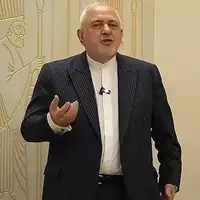
A senior trucking industry official says drivers at Iran’s busiest port are facing extended delays and safety risks due to poor oversight and lack of infrastructure.
Jalal Mousavi, vice president of the National Truckers’ Association, said Saturday that drivers at Bandar Rajaei are often forced to wait five to 20 days for cargo operations due to documentation delays and customs suspicions of smuggling. “Sometimes a container is marked from one country but the goods inside are from another, which can stall clearance,” he said.
Mousavi noted that, unlike international norms, Iranian truck drivers are not informed about the contents of their loads. “In Turkey, trucks are banned from entering hazardous cargo zones. In Iran, everything proceeds with trust in God,” he said.
He also criticized the lack of basic amenities for drivers waiting in extreme conditions and warned that poor managerial appointments across the port system have deepened operational inefficiencies.
An Iranian lawmaker suggested Saturday that the delay in indirect talks between Iran and the United States may be linked to expected actions by the International Atomic Energy Agency (IAEA).
“This delay may be due to possible moves by the IAEA,” said Mohammad-Mehdi Shahriari, a member of the parliament’s National Security and Foreign Policy Commission.
Shahriari did not elaborate on what those “moves” might be. However, earlier this week, the state-run Tehran Times reported that the delay came after pressure from Britain, France, and Germany on the IAEA, alleging that the agency had passed “misleading information” to Washington about Iran’s nuclear program.
Shahriari said the talks are continuing “under the guidance of the Supreme Leader,” and are being conducted, “similar to talks between Russia and Ukraine.” He added, “Our conditions were made clear to the American side from the beginning.”

Senior Iranian official Mohsen Rezaei on Saturday accused US President Donald Trump and his advisers of confusion in their foreign policy approach, saying Tehran has shown seriousness in negotiations but remains fully prepared for any scenario.
Rezaei, a member of Iran’s Expediency Council and former commander of the Revolutionary Guards, was responding to a recent post by Donald Trump Jr. defending Trump’s envoy Steve Witkoff against criticism from Washington insiders.
“Before entering the White House, Trump claimed he had plans to end wars immediately, even within 24 hours,” Rezaei wrote on X. “But the war in Ukraine continues, ceasefires in Gaza and Lebanon have collapsed, and the Israeli army occupies parts of Syria.”
He added: “Iran has shown its seriousness and readiness to negotiate and reach an agreement. But Trump and his team, influenced by Netanyahu and the neocons, remain in confusion.”
Rezaei concluded by warning that “Iran is prepared for every scenario. Confrontation with Iran would have dire consequences for the United States.”

Iran’s currency fell sharply on Saturday after a planned fourth round of indirect talks with the United States was postponed, as sharp disagreements over uranium enrichment and inspections cast doubt on prospects for a breakthrough.
The rial dropped past 870,000 to the US dollar in Tehran’s open market, reversing gains made earlier last month during previous rounds of diplomacy in Oman. The currency had recovered to around 795,000 following the third round but slid again amid rising uncertainty.
Read more here.

A member of Iran’s parliament said the administration of former President Ebrahim Raisi engaged in nuclear negotiations but deliberately withheld information from the public to avoid market volatility.
“The Raisi government also negotiated, but didn’t tell the people,” said Meysam Zohourian, a member of the parliament’s Economic Commission, in remarks published Saturday. “Talks happened, but society wasn’t aware, so it didn’t become psychologically conditioned to the negotiation climate.”
Zohourian argued that the secrecy helped prevent the currency market from reacting to shifts in the diplomatic process. “Progress or failure in talks didn’t affect the exchange rate because the government didn’t socialize the negotiation process,” he said.
He added that withholding information helped manage public expectations. “People didn’t know who had come or gone, and that lack of awareness kept expectations in check.”