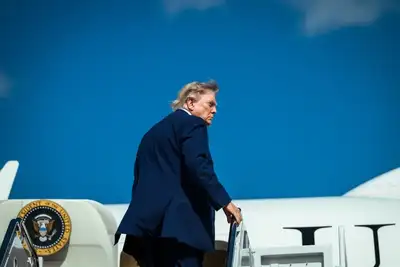
Iran’s foreign ministry on Monday reiterated that Tehran has not received a letter from US President Donald Trump, who said it was sent last week requesting talks on Iran’s nuclear program.
Esmail Baghaei, the ministry's spokesperson, responded to a reporter’s question during his weekly briefing on Monday, saying, “I will answer your long question with a short response: No letter has been received.”
President Trump revealed on Friday that he had sent a letter to Khamenei, offering negotiations while warning of military consequences if talks failed. Speaking to Fox Business Network, Trump said, “There are two ways Iran can be handled: militarily or through a deal. I would prefer to make a deal.”
The next day, Iran’s Supreme Leader Ali Khamenei, in a speech, made no mention of a letter from Trump but declared that the Islamic Republic would not negotiate with "bullying" powers. Iranian Media and observers interpreted this as an indirect response to Trump's demand for talks.
Trump’s explicit threat—both in his public statements and the reported letter—that the United States might consider military action if Tehran refuses genuine negotiations has put Khamenei under pressure to deliver a clear response. Whether the denial of receiving a letter is intended to delay such a response remains uncertain.
It is also possible that Trump sent a message rather than a formal letter, using intermediaries such as Russia or Qatar. This could allow Tehran to deny having received a letter and avoid the pressure to publicly respond.
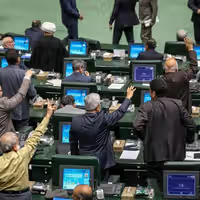
Abbas Golroo, a member of the Parliament's National Security and Foreign Policy Commission, told Borna News Agency in Tehran on Monday that he had no precise information on Trump’s letter and suggested that what was being referred to as a letter was likely a message.
It is entirely possible that Trump sent a message in some form and that Iran may have already responded through indirect channels or intends to do so, while maintaining the pretense that no letter was involved.
In any case, the foreign ministry spokesperson condemned Trump's threats of keeping a military option on the table. “Various Iranian officials have spoken on this matter. The threat of using force is a criminal act under international law,” Baghaei said.
Iran, under intense economic pressure and a weakened regional position, also sees Trump’s maximum sanctions policy as a coercive tactic. Last month, when Trump reaffirmed his maximum pressure strategy, Tehran similarly rejected negotiations, citing its refusal to engage in talks under duress.
Tehran has long sought sanctions relief as a condition for engaging in talks. During the Biden administration, when indirect negotiations lasted more than a year, Washington informally eased enforcement, leading to a significant surge in Iran’s oil exports and nearly $100 billion in additional revenue.