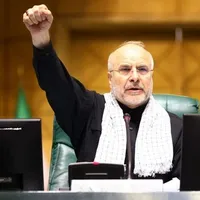
Iran, Russia abandoned Assad when he ceased to be of use - NATO chief
NATO chief Mark Rutte said on Monday said Iran and Russia "proved to be unreliable partners, abandoning Assad when he ceased to be of use to them."
He also said that Tehran and Moscow were "the main backers of the Assad regime, and they share the responsibility for the crimes committed against the Syrian people."
Rainfall across 29 Iranian provinces has dropped by nearly a third since October, according to the Iran Meteorological Organization, as the country continues to struggle with water scarcity.
The country has experienced an overall rainfall reduction of 31.9% during this period, with the southern provinces of Sistan-Baluchestan and Hormozgan seeing the most dramatic declines at nearly 90% and just over three-quarters, respectively.
Mansour Shishehforoush, the Director General of Crisis Management for Isfahan Province, highlighted the severity of the situation earlier this year.
"Isfahan has a dry and semi-dry climate, and over 80% of its area is experiencing drought conditions," he said in July, noting that water tankers were being used to supply over 300 villages. Isfahan has since recorded a 68% reduction in autumn rainfall.
Despite the alarming trends, some regions have bucked the pattern. South Khorasan and Mazandaran have reported slight increases in rainfall, rising by 1.1% and 14.3%, respectively. These exceptions provide little relief, as other provinces, including Golestan and Gilan in the north, have experienced reductions of 16.6% and 7.8%, exacerbating the broader drought.
Sadegh Ziaeian, head of the National Center for Weather Forecasting and Crisis Management, flagged an additional concern: reduced water inflow into the Caspian Sea from neighboring countries, contributing to a decline in the sea's water level.
The rainfall deficit follows a year of weather extremes, including heavy flooding earlier in central and southeastern regions. These floods caused extensive damage, destroying homes and severing transport routes, highlighting the volatility of Iran's climate and the challenges it poses for crisis management.
Iran has carried out an unprecedented number of amputations for theft over the past three years, a punishment based on Islamic law that breaks international human rights laws.
"If theft is proven under the conditions set by Islam, the thief's fingers must be amputated," said Gholamhossein Mohseni Ejei, the judiciary chief, during a speech at Tehran’s Islamic Azad University on Saturday.
"This is a ruling from God that has been implemented and continues to be implemented, despite the pressure we face from various organizations. The majority of hadd punishments [fixed punishments prescribed under Islamic law] for theft carried out in the past three years have been this ruling."
Hand amputation sentences became a formalized aspect of the Islamic Republic's judicial system following the 1979 revolution. Since then, Iran has long faced criticism for its enforcement of amputations and other corporal punishments which are banned under international law.
Reports suggest that authorities have tried to limit publicity around these punishments in recent years due to international pressure. Despite this, numerous cases have been documented.
On October 13, the state-affiliated Iran daily newspaper reported that eight theft suspects had been indicted and referred to Tehran's Criminal Court, facing potential amputation sentences.
On November 9, Tehran based Etemad reported that two suspects accused of robbing safety deposit boxes at the National Bank were sentenced to hand amputations.
At least 237 individuals in Iran were sentenced to amputation between 1 January 2000 and 24 September 2020, with at least 129 of those sentences carried out, according to Ravina Shamdasani, spokesperson for the UN Human Rights Office.
Shamdasani called on Iran to halt such punishments and comply with its international human rights obligations, urging an end to corporal punishment, including amputations, flogging, and stoning.
Amputation sentences contravene international human rights standards, including the International Covenant on Civil and Political Rights, which Iran has signed. This treaty explicitly prohibits inhumane or degrading punishments. Human rights advocates argue that these practices violate the principle of human dignity, a cornerstone of international law.
"Iran has carried out amputations for years, and the actual numbers are much higher than what is reported in media outlets like Etemad newspaper, as most cases are not officially announced," Mahmood Amiry Moghadam, director of the Oslo-based rights group, Iran Human Rights, told Iran International.
"This is an inhumane, cruel, and degrading punishment. It is not only in violation of ethical and human principles but also illegal under international laws. It constitutes a serious violation of the conventions that the Islamic Republic of Iran has signed and pledged to uphold. These practices are far from acceptable."
Iran remains one of the few countries in the world to enforce corporal punishments, including amputations for theft and other crimes. The country has not signed the UN Convention Against Torture, despite facing repeated calls from human rights organizations to abolish such practices.
Sentences like flogging, amputations, and even stoning continue to be carried out, underscoring the Islamic Republic's defiance of international human rights standards.
Since 2022, its rights abuses, including the killing of hundreds of protesters by state security forces and often violent crackdowns on women and girls to comply with Islamic dress codes, have seen further sanctions imposed on the country from nations including the US, UK and EU.
Iranian Foreign Minister Abbas Araghchi spoke of Iran's surprise at the sudden fall of the Syrian government in the face of insurgents during a televised interview on Sunday night.
"The rapid withdrawal of the army was unexpected. All information had been shared in advance. The Syrian army failed to resist, which was largely psychological—no one believed it would happen," he said.
Araghchi said that joint Iranian intelligence had thoroughly assessed the situation, Iran sharing warnings about opposition movements in Idlib with the Syrian government. However, he stopped short of explaining why Iranian forces, a key Assad ally, did not intervene to counter the rapid developments.
“What was surprising was, first, the Syrian army's inability to confront the situation, and second, the rapid pace of developments,” he added.
Araghchi said that while Tehran had a role in the 2017 Astana process - an initiative to build dialogue with opposition groups co-chaired with Russia and Turkey - direct military intervention was not part of Iran’s responsibilities in spite of the country having helped prop up the Assad government for over a decade.
The foreign minister acknowledged Assad’s own shock, saying, “Even Bashar al-Assad himself was surprised by the performance of his army. It was evident there was no accurate analysis within Syria.”
Top rebel commander Muhammad al-Julani speaks to a crowd at Ummayad Mosque in Damascus, after Syrian rebels announced that they have ousted President Bashar al-Assad, Syria December 8, 2024.
Araghchi also addressed Iran's frustration with recent developments undermining the Astana agreements. “One of the objectives of Astana was to help the government and opposition engage in dialogue. While we made slow progress in this direction, it did not proceed well because Assad’s government showed little flexibility,” he said, in a rare criticism of the decades-long president.
On Saturday, Araghchi participated in the Astana Meeting in Doha, where he met with the Emir of Qatar and other Arab officials.
For now, the situation remains unclear as to Iran's future role in the country, Iran's Supreme Leader set to address the issue in a speech on Wednesday. Ahmad Naderi, a member of the Iranian parliament, said: “Iran's future approach towards Syria depends on the behavior of those who have taken power in the country.”
European Union foreign policy chief Kaja Kallas called the rapid fall of the Syrian government a sign of the weakening of both Moscow and Tehran, while US Secretary of State Antony Blinken linked the collapse to Assad’s refusal to engage politically.
Efforts to stop the collapse of Bashar al-Assad’s government were ineffective due to the rapid pace of developments, Iranian MP Mohammad Rashidi said on Monday after a closed parliamentary session with Foreign Minister Abbas Araghchi.
Rashidi said that during a recent meeting in Qatar, the foreign ministers of Iran, Russia, Turkey, and five Arab countries reached "positive agreements" on Syria. However, he noted that "the conclusions of the meeting were ineffective."
Ahmad Nadiri, another member of the parliamentary presidium, also addressed the session, stating that Iran’s future policy toward Syria would depend on the actions of the new leadership.
With the fall of the Assad government threatening Iran's key strategic foothold in the Levant, Tehran signals an interest in forging ties with Syria's new power holders, according to an Iranian official.
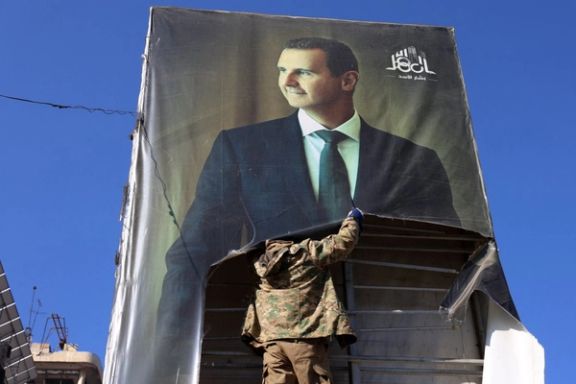
Long-time President Bashar al Assad fled the country at the weekend, leaving a vacuum in the country after both Iran and Russia had since 2011’s civil war, supported.
Reuters reported that talks had begun in an attempt to "prevent a hostile trajectory" between the countries after a rapid takeover saw the 50-year Assad family rule collapse in days.
The senior official told Reuters that Iran's clerical rulers, facing the loss of an important ally in Damascus and the return of Donald Trump to the white House in January, were open to engaging with Syria's new leaders.
Iran had multiple military bases across Syria, having controlled airports and sea ports which have been a key smuggling route to Iran’s military allies in the region, including its largest, Hezbollah in Lebanon. It is not clear if there is an Iranian presence left in Assad's traditional bastion, the Alawite coastal regions.
Syria was also a location for Iran’s oil sales amid global sanctions, allowing the Islamic Republic to circumvent the crippling economic grip imposed by the US and other nations.
"This engagement is key to stabilize ties and avoiding further regional tensions," the official said.
The fall of the Assad government came after the unification of multiple Sunni militia forces, led by Hay'at Tahrir al Sham, a former al Qaeda ally.
However, it is led by Muhammad al Jolani who, though a Sunni, is known to share Iran's hatred of Israel. His grandfather was displaced to Syria from the now Israeli occupied Golan Heights in 1967.
In a rare Western media interview in 2021 with PBS Frontline, he said he was radicalized by the second intifada in 2000, one of the bloodiest periods in the Palestine-Israel conflict.
Just like Iran's backing of Gaza-based Hamas, the alliance would not be the first time Iran had aligned with Sunni militants in a bid to erase its archenemy, Israel.
“I was 17 or 18 years old at the time, and I started thinking about how I could fulfil my duties, defending a people who are oppressed by occupiers and invaders,” he said at the time.
It is not only Iran which is worried about the new transition, in spite of the global relief of the fall of a man known as a brutal dictator, and whose rule saw the deaths of at least 300,000 civilians, including hundreds in a chemical weapons attack in 2013.
The US carried out dozens of targeted airstrikes on ISIS members and facilities as fears of a resurgence of extremism remained a priority.
“There should be no doubt – we will not allow ISIS to reconstitute and take advantage of the current situation in Syria,” CENTCOM Commander General Michael Erik Kurilla said in a statement.
“All organizations in Syria should know that we will hold them accountable if they partner with or support ISIS in any way.”