Iran's president highlights shortages amid foreign aid backlash
Iran's President Masoud Pezeshkian speaking at Tehran's Sharif University on December 7, 2024
Iranian president Masoud Pezeshkian has once again drawn attention to the country’s worsening shortages in critical areas such as electricity, water, oil, and gasoline, as Tehran maintains financial aid to its proxy forces.
Addressing students at Tehran's Sharif University of Technology on Saturday, Pezeshkian warned of a challenging winter ahead unless energy consumption is curtailed.
“We are facing serious challenges today,” Pezeshkian said, comparing the nation’s difficulties to a patient requiring an accurate diagnosis for effective treatment. He called for collective action to tackle Iran’s resource crisis, lamenting, “Whenever we try to make changes, people oppose it. Where should we begin?”
His remarks follow growing outrage over the government’s decision to allocate tens of millions of dollars in aid to mostly Shia Lebanese families affected by war.
The public discontent intensified after Hezbollah’s leader, Naeem Qassem, revealed last week that Iran funded most of a $77 million aid package to support nearly a quarter of a million families in Lebanon. In a televised address, Qassem expressed gratitude, stating, “We thank the Islamic Republic of Iran...for providing this generous support.”
Public reaction to foreign aid
People voiced their anger anonymously through messages sent to Iran International, warning of popular backlash.
“Mr. Pezeshkian, you say there’s no money and prices go up every day, so where does the money you send to Lebanon come from?” one viewer asked.
Another citizen criticized the government, saying, “The corrupt Islamic Republic regime fulfills the demands of all countries except the needs of its own people.”
A user on X from Iran also echoed these sentiments: “They spend the people’s money on Hezbollah instead of addressing the needs of impoverished Iranians or preserving Iran’s environment. For the clerics, the lack of heating for children in schools is not a concern. The absence of drinking water for citizens does not matter, but Hezbollah remains their priority.”
Economic woes deepen as winter nears
Iran’s looming energy crisis is compounded by an annual subsidy burden of tens of billions of dollars, according to Pezeshkian. “If we cannot control gas and energy consumption, we won’t be able to supply households with gas this winter,” he cautioned.
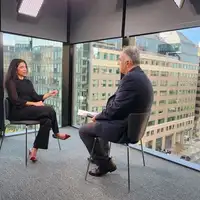
Iranian President Masoud Pezeshkian during a televised interview on December 2, 2024.
Gasoline imports also remain a key financial strain. In a televised address on Monday, Pezeshkian warned that without parliamentary action to allocate foreign currency for imports, gasoline prices would inevitably rise, potentially worsening inflation and fueling public dissatisfaction. He described this challenge as part of a broader energy shortage that urgently requires resolution.
Some commentators in Iranian media warn that raising gasoline prices or cutting subsidies could reignite unrest similar to the protests in 2019 following fuel price hikes. Within parliament, divisions persist, with some lawmakers cautioning that such measures could destabilize an already fragile political climate.
As winter approaches, Pezeshkian’s call for reforms underscores the tough decisions Iran must face; however, people continue to question why, despite claims of shortages and insufficient funds, substantial aid is still sent to Iran’s proxy groups in the region.