Iran funds Lebanon war families despite economic pain at home
Hezbollah leader Naeem Qassem delivers in a televised speech on Thursday
Iran has funded the bulk of aid distributed to Lebanese families affected by a 14-month war between Israel and the country's Tehran-backed militia Hezbollah, the group's leader said, even as an economic crisis festers inside Iran.
A total of $77 million has been earmarked for almost a quarter of a million families, Naeem Qassem said in a televised speech on Thursday, adding that most of the funds came from Iran.
Families whose primary homes have been destroyed would eventually be paid $8,000 as compensation and between $4,000 to $6,000 for temporary accommodation for a year, depending on where they live.
"We thank the Islamic Republic of Iran, led by Imam Khamenei, the state, the people, and the blessed Islamic Revolutionary Guard Corps for providing this generous support in the displacement process," Qassem said.
Hezbollah was formed by the IRGC in 1982 and joined a war between Israel and Hamas a day after the Palestinian group launched the deadliest attack on the Jewish state in its history on October 7 2023.
Israel escalated the conflict in September, killing Hezbollah's leader Hassan Nasrallah after maiming hundreds of mid- and senior-level commanders by planting explosives in their communications devices.
Hundreds of air strikes pounded Hezbollah's centers of popular support mostly within majority Shi'ite areas of south Beirut and the country's south. Lebanese authorities say more than 3,960 people were killed, many of them civilians.
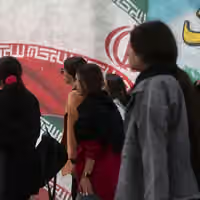
Meanwhile in Iran, decades of US-led sanctions and economic mismanagement have sent costs soaring while the currency has plumbed multi-decade lows.
Labor and cost of living protests swept Iran earlier this month as nurses, emergency personnel, retirees, and public transportation drivers picketed, expressing dissatisfaction with government economic and social policies.
Iran’s president Masoud Pezeshkian warned of depleting foreign currency reserves in a televised address on Monday and earlier warned of an "economic abyss" due to shortages of water, electricity, and natural gas.