• العربية
  • فارسی
Brand
  • Iran Insight
  • Politics
  • Economy
  • Analysis
  • Special Report
  • Opinion
  • Podcast
  • Live TV
  • Iran Insight
  • Politics
  • Economy
  • Analysis
  • Special Report
  • Opinion
  • Podcast
  • Live TV
  • Theme
  • Language
    • العربية
    • فارسی
  • Iran Insight
  • Politics
  • Economy
  • Analysis
  • Special Report
  • Opinion
  • Podcast
  • Live TV
All rights reserved for Volant Media UK Limited
volant media logo

Israel vows harsher attack as Iran hints at measured response

Oct 29, 2024, 21:00 GMT+0Updated: 15:30 GMT+0
IDF Chief of Staff Herzi Halevi

Israel's top military officer on Tuesday threatened a stronger retaliation should Iran launch further missile strikes, shortly after Iran's foreign minister hinted at a studied response to Israel's Saturday airstrikes.

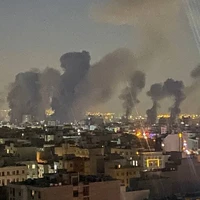
Israel's airstrikes on Iranian military sites early Saturday damaged the country’s missile production capabilities in three sites and air defenses in at least two facilities, according to the analysis of satellite imagery.

However, Chief of Staff of the Israel Defense Forces (IDF) says the country used only "some of its capabilities" in the airstrikes launched in reaction to Tehran's Oct. 1 missile barrage, vowing to launch an even harsher attack in case of an Iranian response.

"If Iran makes the mistake and launches another barrage of missiles at Israel, we will once again know how to reach Iran, reach even with capabilities that we did not use this time, and hit very, very hard both the capabilities and places that we left aside this time," Herzi Halevi told the aircrews at the Ramon Air Base in southern Israel who took part in the strike on Iran.

Halevi emphasized that Israel held back certain capabilities in recent strikes, leaving key targets untouched. “We did this for a very simple reason — because we may be required to do it again. We didn’t finish this event; we are right in the middle of it."

His remarks came a few hours after Iran's Foreign Minister Abbas Araghchi said Tehran reserves the right to respond to the Israeli airstrikes but will not show an emotional reaction.


"Responding to Israel’s blatant aggression appropriately is our legal right, but the Islamic Republic will decide on this response itself, and we won’t allow anyone to drag us into emotional reactions," he said. Still, Araghchi stressed that Israel will pay a heavy price for the attack.

Israel, however, does not seem to be only target of Iran's threats following the Israeli air raids. Some Iranian hardliners are now warning that US interests could be targeted by Islamic Republic forces, asserting that Iran should view "interests, resources, and military personnel" as legitimate targets.

The United States has in recent days repeatedly warned Tehran against responding to the Israeli airstrikes, so that the tit-for-tat exchanges of fire would stop.

"Our message for Iran remains clear: Should it choose to undertake further aggressive actions against Israel or US personnel in the region, there will be severe consequences. We will not hesitate to act in self-defense," the US Ambassador to the United Nations tweeted Tuesday. "But let there be no confusion: The US does not want to see further escalation. We believe this should be the end of the direct exchange of fire between Israel and Iran."

Earlier on Monday, State Department Spokesman Matthew Miller said the Biden administration believes Iran should not respond to the Israeli airstrikes in any way.

"Israel had the right to respond to Iran's Oct. 1 attack. We believe Israel's response on Friday night should be the end of that matter, as the nature of their response was proportionate. We believe Iran should not respond in any way. If Iran does respond, the US will continue to defend Israel," Miller said.

Now the ball is in the court of Iran's Supreme Leader Ali Khamenei. He has delegated decision-making to the Supreme National Security Council, but all SNSC members are his appointees. Thus, the ultimate decision on whether to attack Israel still rests with Khamenei, though he seeks to sidestep direct accountability for potential consequences.

Most Viewed

Iran state TV airs threat against Trump’s son Barron
1

Iran state TV airs threat against Trump’s son Barron

2
PODCAST

Will Iran bend or escalate as US launches economic war?

3

Iran security chief hints at nuclear doctrine shift after US attacks

4
VOICES FROM IRAN

Nine out of ten shun marriage, parenthood in Iran International poll

5
PODCAST

He spent a decade helping vulnerable children. Iran handed him 31 years

Banner
Banner
Banner

Spotlight

  • Iran keeps finding gas. Getting it out is the problem
    ANALYSIS

    Iran keeps finding gas. Getting it out is the problem

  • Who speaks for Iran? Rezaei’s threats fuels divide over war and diplomacy
    INSIGHT

    Who speaks for Iran? Rezaei’s threats fuels divide over war and diplomacy

  • Iran shrugs off US economic war as analysts sound alarm
    INSIGHT

    Iran shrugs off US economic war as analysts sound alarm

  • Tehran mosques used to surveil, shoot at January protesters
    EXCLUSIVE

    Tehran mosques used to surveil, shoot at January protesters

  • Will Iran bend or escalate as US launches economic war?
    PODCAST

    Will Iran bend or escalate as US launches economic war?

  • Iran leader’s absence gives war camp room to shape policy
    ANALYSIS

    Iran leader’s absence gives war camp room to shape policy