In pictures: Mourning for Hezbollah leader Nasrallah in Tehran
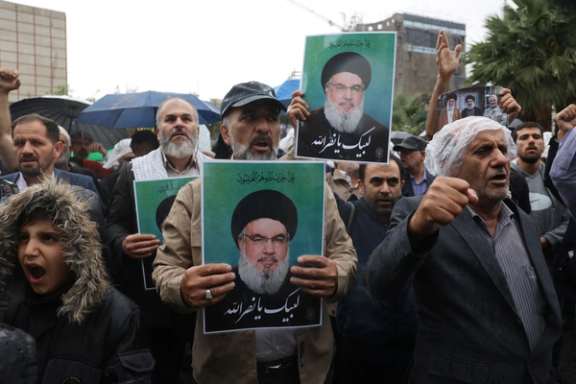
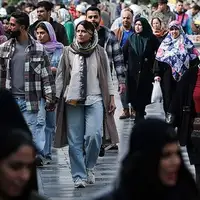
A woman holding an image of late Iranian military commander General Qassem Soleimani, in Tehran, Iran September 28, 2024.Gathering in Tehran to mourn Hezbollah leader Hassan Nasrallah's death, September 28, 2024.People gather to mourn following the announcement of the death of Lebanon's Hezbollah leader Sayyed Hassan Nasrallah, in Tehran, Iran September 28, 2024. Crowds gather to mourn the death of Hezbollah leader Hassan Nasrallah, September 28, 2024, Tehran, Iran.
The Israeli military has released an image of Hezbollah's military command network in Lebanon, showing the commanders who have been killed. In this image, only the commander of the Bader Unit, named 'Abu Ali Rida,' is still alive.
The IDF's Persian-language X account shared this image and wrote: "The Israeli army is destroying Hezbollah's military leadership in an unprecedented blow to this terrorist organization."
Hassan Nasrallah’s killing and Hezbollah’s weakening raise serious concerns for Iran-backed groups, Lina Khatib, associate fellow at the Middle East and North Africa Programme at Chatham House, wrote in The Times.
"If Israel is able to bring Iran’s most powerful asset in the Middle East to its knees, then smaller, newer groups in Iran’s network are potentially easier to undermine," she argued.
Khatib also compared Nasrallah’s death with that of IRGC-QF commander Qasem Soleimani, who was killed in a US drone strike in Iraq in 2020. She noted that, unlike Soleimani's assassination, which was an isolated incident, Nasrallah’s killing is part of a broader Israeli strategy to dismantle Hezbollah, potentially signaling the start of Iran's diminishing influence in the region.
In a statement mourning the death of Hassan Nasrallah, Iran's President Masoud Pezeshkian condemned the attack that killed him, placing blame on the US.
"The international community will not forget that the order for this terrorist attack was issued from New York, and the Americans cannot absolve themselves of complicity with the Zionists," the statement published on Iran's official government website read.
Masoud Pezeshkian President of Iran addresses the "Summit of the Future" in the General Assembly Hall of the United Nations Headquarters in New York City, US, September 23, 2024.
Mehrdad Farahmand, a Middle East analyst and political commentator based in Istanbul, told Iran International that "Hassan Nasrallah has become a casualty of the misguided policies of the Islamic Republic and Hamas."
He further noted, "Hezbollah has lost its leader at a time when its very reputation is also in decline."
Farahmand emphasized, "Had Hezbollah been the sole decision-maker, it would have avoided involvement in the Israel-Hamas conflict. However, it is the pressure from the Islamic Republic that has led Hezbollah to its current predicament."
France's Foreign Ministry announced on Saturday that, based on its information, Hezbollah leader Hassan Nasrallah was confirmed dead, after Israel said it had killed him on Friday.
"According to the information we have, Hassan Nasrallah, secretary general of Hezbollah, would indeed have died," the French Foreign Ministry said in a statement.