Iran’s attack on Israel to be harsher than April, IRGC’s Qaani tells Sinwar
In a letter to Hamas' new leader, Yahya Sinwar, Iranian Revolutionary Guards' Quds Force chief Ismail Qaani vowed to avenge the recent killing of Ismail Haniyeh in Tehran.
"We are preparing to avenge his blood, a painful and difficult incident that happened in the Islamic Republic of Iran. This is our duty," Qaani wrote, without revealing how Tehran would retaliate.
He emphasized that Haniyeh’s death would lead to an even harsher punishment for Israel, referencing the previous Iranian strike on April 13.
Qaani also emphasized the role of the Tehran-backed regional militias within the "Resistance Front" in the retaliation, stating, "The heroic jihad of your brothers in the Islamic Resistance will amplify the impact of the punishment more than ever before and will lead to the swift eradication of this malevolent phenomenon."
Commander of Iran’s extra-territorial Quds Force, Esmail Qaani
Iran’s new president, Masoud Pezeshkian, "is battling against" the hardline Revolutionary Guards to avoid an all-out war with Israel, according to the Telegraph.
Tehran is split over how to respond to Hamas leader Ismail Haniyeh’s assassination, with Revolutionary Guards generals pushing for strikes on Tel Aviv, while Pezeshkian suggests targeting secret Israeli bases in neighboring countries.
An aide to the Iranian president told the Telegraph that Pezeshkian has proposed striking a location connected to Israel within the Republic of Azerbaijan or the Kurdistan region of Iraq. He suggested notifying these countries in advance to swiftly resolve the ongoing tensions.
Pezeshkian has further proposed arming the Lebanese Hezbollah with more sophisticated weapons and “letting them fight” with the intensified support of Iran, according to the Telegraph.
The ultimate decision on how Iran will respond lies with Ali Khamenei, the Supreme Leader.
On Wednesday, Iran International exclusively reported that Pezeshkian had urgently appealed to Khamenei to abstain from launching an attack on Israel, warning of the catastrophic consequences such an action could have on his presidency.
Pezeshkian cautioned that an Israeli decision to retaliate forcefully against Iran's national infrastructure and energy resources could devastate the Iranian economy, potentially precipitating the country's collapse.
Masoud Pezeshkian meets with high-ranking IRGC commanders following his election as president, July 2024.
As the US presidential election draws closer, Iran-linked groups are intensifying their efforts to influence the outcome, according to a new report from Microsoft.
The Microsoft Threat Intelligence Report, released on Friday, details how these groups have been setting up and launching influence campaigns aimed at swaying voters, particularly in swing states, while also conducting operations to gather intelligence on political campaigns, potentially laying the groundwork for future interference.
The report revealed that an Iranian group named Storm-2035 has launched covert news sites targeting both left-leaning and conservative US voters, using AI to plagiarize content and promote divisive political messages.
Another group called Sefid Flood has been preparing since March for potentially extreme influence operations, including “intimidation or inciting violence against political figures,” aiming to incite chaos, undermine authorities, and sow doubt about election integrity.
IRGC-linked hackers targeting senior officials before US election
Moreover, Microsoft reported that Mint Sandstorm—a group run by the Islamic Revolutionary Guard Corps (IRGC) intelligence unit—attempted to hack the account of a senior US official involved in a presidential campaign.
The incident involving what Microsoft called a “high ranking official” happened in June, just weeks after a breach discovered on the account of a county-level US official.
"A group run by the IRGC intelligence unit sent a spear-phishing email to a high-ranking official of a presidential campaign” and “another group with assessed links to the IRGC compromised a user account with minimal access permissions at a county-level government,” the report said, directly naming Iran.
Additionally, in May, Peach Sandstorm—another group linked to the IRGC—compromised the account of "a county-level government employee in a swing state." Microsoft noted that this group has been active since September 2023, primarily targeting US government organizations in swing states.
US intelligence officials recently admitted that Iran had ramped up the use of clandestine social media accounts with the aim to use them to try to sow political discord before the polls.
Iran has denied the allegations, with a statement from the UN Mission in New York to Reuters saying that the country’s cyber capabilities were "defensive and proportionate to the threats it faces" and that it had no plans to launch cyber-attacks.
"The US presidential election is an internal matter in which Iran does not interfere," the mission told Reuters in response to the allegations in the Microsoft report.
Microsoft also noted that the latest incident is part of an increase in activity trying to glean intelligence on US political campaigns and attempting to target swing states.
The successful breach in May of a county-level employee's account, Microsoft said, was part of a "password spray operation" in which hackers use common or leaked passwords en masse until they can break into one. However, no other accounts were breached.
Another Iranian group had launched “covert” news sites, Microsoft added, using AI to lift content from legitimate sources in order to target US voters across the political spectrum. It named Nio Thinker, a left-leaning site, and a conservative site called Savannah Time, which both share similar formats but without any contact details.
The US intelligence warned in July that, in addition to Iran, Russia and China were also conducting clandestine operations ahead of the upcoming elections. The three "rogue" states have been recruiting people in the US to spread propaganda, though the Iranian government denies the allegations.
As the elections near, the US remains on high alert for Iranian attacks. The 2024 annual threat assessment warned that "ahead of the US election in 2024, Iran may attempt to conduct influence operations aimed at US interests, including targeting US elections, having demonstrated a willingness and capability to do so in the past."
The assessment noted that during the US election cycle in 2020, Iranian cyber actors obtained or attempted to obtain US voter information, sent threatening emails to voters, and disseminated disinformation about the election.
"The same Iranian actors have evolved their activities and developed a new set of techniques, combining cyber and influence capabilities, that Iran could deploy during the US election cycle in 2024," the report added.
In the 2020 election campaign, the FBI reported that Iranian operatives impersonated members of the right-wing Proud Boys group as part of a voter intimidation effort. Two men were charged.
Later that year, Iranian hackers breached a website that a municipal government in the US used to publish election results, though the attackers were caught before carrying out any nefarious activity, US cybersecurity officials said.
Offering a $10m reward for information on their identity and whereabouts, the US said the six officials are linked to Iran’s Islamic Revolutionary Guard Corps (IRGC) and its Cyber-Electronic Command (IRGC-CEC).
One of the men named was Hamid Reza Lashgarian. head of the IRGC’s cyber-electronic command and a commander in the IRGC-Qods Force.
The suspects have also been linked to the hacking group CyberAv3ngers, which in October, publicly took credit for cyberattacks against Israeli PLCs.
It is part of an ongoing cyber-war launched by Tehran. In February, the US imposed sanctions on the same six individuals for their “deliberate targeting of critical infrastructure.”
A Treasury Department official condemned the attacks as “unconscionable and dangerous,” emphasizing that the US “will not tolerate such actions and will use the full range of our tools and authorities to hold the perpetrators to account.”
In April, the US imposed sanctions on four men and two companies accused of conducting cyber-attacks for the Iranian military. The US Treasury Department said they were involved in "malicious cyber-activity" to the benefit of Iran's Islamic Revolutionary Guards Corps' Cyber-Electronic Command (IRGC-CEC).
Under Secretary of the Treasury for Terrorism and Financial Intelligence, Brian E. Nelson, said: “Iranian malicious cyber actors continue to target US companies and government entities in a coordinated, multi-pronged campaign intended to destabilize our critical infrastructure and cause harm to our citizens."
State Department spokesman Matthew Miller also said in a statement that Washington “will not tolerate malicious cyber activities victimizing US companies”.
The US Justice Department and FBI simultaneously unsealed an indictment against the four men accusing them of participating in a coordinated hacking initiative starting around 2016 through to April 2021, targeting American firms and crucial government departments.
In June, Microsoft President Brad Smith revealed that the company detects around 300 million cyberattacks targeting its customers daily, with a majority originating from China, Iran, North Korea and Russia.
As Iran steps up its cyber war globally, cybersecurity firm Check Point revealed last month that the Iranian hacker group MuddyWater has expanded its operations to countries such as Azerbaijan, Portugal, Turkey, Saudi Arabia, and India, using newly developed malware.
MuddyWater, also known as APT34 and OilRig, has been active for several years, focusing on cyber-espionage against private and governmental organizations in the Middle East and Western countries.
Iran has sent small shipments of crude oil to new destinations such as Bangladesh and Oman, according to shipping sources and data, the latest sign of Tehran pushing to sustain output at close to its highest in five years.
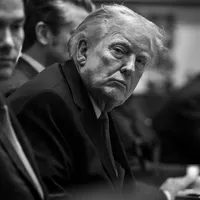
Oil sales are Iran's major revenue source and the country has been looking for ways to sidestep US sanctions on its crude exports that former president Donald Trump re-imposed in 2018 over Tehran's nuclear program.
Iran, which is exempt from output quotas set by the Organization of the Petroleum Exporting Countries (OPEC), is striving to maximize production and exports, amid a serious, five-year-long economic crisis.
Oil Minister Javad Owji said in July that Iran was selling crude oil to 17 countries, including those in Europe, according to the semi-official Mehr News Agency. The details could not be corroborated. Iran’s main oil buyer is China that defies US sanctions.
In one new trade, the Golden Eagle tanker sailed near the port of Chittagong in Bangladesh earlier this year after receiving oil from another vessel that loaded it from Iran’s Kharg Island according to available evidence based on shipping data, Claire Jungman, from US advocacy group United Against Nuclear Iran, told Reuters.
The Golden Eagle offloaded parts of the cargo to smaller tankers in ship-to-ship transfer operations around Chittagong in April, said Jungman, whose organization tracks Iran-related tanker traffic via satellite data.
The shipment to Bangladesh was separately confirmed by another oil export tracking source.
An official with state-owned Bangladesh Petroleum Corporation, which operates the country's main refinery, said it did not buy the cargo and it was difficult to establish who was the buyer.
The Golden Eagle's Liberia-based owner and manager listed in shipping databases could not be reached for comment.
Iranian officials did not immediately respond to a request for comment.
Violation of sanctions
Iran’s oil exports had dropped to as low as 250,000 barrels per day in 2019-2020, after the United States imposed full sanctions in May 2019. However, after President Joe Biden came to office and started nuclear talks with Tehran, Chinese refineries began buying ever larger shipments of illicit Iranian oil.
Critics say that the Biden administration, hoping to revive the 2015 nuclear deal with Tehran, stopped enforcing Trump’s “maximum pressure” sanctions. By some estimates, Iran has sold around $70 billion of additional oil in the past three years.
Syria, Oman
Tehran's oil output has topped 3.2 million barrels per day this year, the highest since 2018, according to OPEC figures, after posting one of OPEC's biggest output increases in 2023 despite U.S. sanctions still being in place.
Iranian crude exports have reached new highs this year, with March-May being the strongest three-month period since mid-2018, according to Petro-Logistics, a Geneva-based firm which tracks tanker shipments.
"But volumes seem to be plateauing now," said Virginie Bahnik of Petro-Logistics.
At least eight cargoes of oil - mostly from Iran - were heading to Syria with some already discharged, shipping sources said. Shipments to Syria, however, were below their peak some years ago as Iran seeks other export destinations.
Iranian oil deliveries into Syria have averaged 57,190 bpd in 2024 compared with a high of 147,000 bpd in 2022, according to export analysis from UANI’s Jungman. However, it is not clear if Iran is paid for the oil, or the shipments are assistance to its ally, the Assad government and possibly Hezbollah.
A separate tanker delivered a cargo believed to be Iranian crude oil into the Omani port of Sohar in June after loading the consignment via a ship-to-ship transfer with another vessel that picked up the shipment from Iran's Kharg Island earlier this year, UANI's Jungman said, citing shipping data.
The ship tracking source also confirmed the arrival of this cargo into Sohar.
Sohar Port and Oman’s Maritime Security Centre did not immediately respond to requests for comment.
Iran has also begun bringing cargoes into China's northeast Dalian port, adding another new destination for its crude, in addition to elsewhere in China.
Tanker trackers and dealers say that traders re-brand Iranian oil destined for China as originating from elsewhere, such as Malaysia, Oman or the United Arab Emirates.
Iranian oil exports have now reached a peak and have stabilized around 1.5 million bpd, since February, said Homayoun Falakshahi, senior crude oil analyst with Kpler.
Israel has significantly reinforced its air defenses in anticipation of a potential airborne retaliation from Iran and its allies following the targeted assassinations of two senior militant leaders, the Financial Times reported.
Israeli officials are bracing for what they believe could be the most formidable test yet for their multi-layered defense system, though the precise nature of the expected assault from Iran, Hezbollah, and other regional militias remains unclear.
An Israeli military affairs analyst told the FT, "If it’s a mass combined attack, in a single barrage, at the same time . . . They could overwhelm the system to a certain degree. How many [projectiles] get through and what kind of damage [they] wreak is unknown."
Israel's military displays what they say is an Iranian ballistic missile which they retrieved from the Dead Sea after Iran launched drones and missiles towards Israel, at Julis military base, in southern Israel April 16, 2024.
Pakistan will support "all efforts to prevent a war in the Middle East," the Foreign Ministry stated on Friday, amid growing concerns of a broader conflict involving Israel and Iran.
Foreign Ministry spokesperson Mumtaz Zahra Baloch made the remarks during a media briefing but did not disclose whether Pakistan has engaged in discussions with Washington on the matter.
Meanwhile, the US has been intensifying its diplomatic efforts, urging nations to convey to Iran that further escalation in the Middle East is not in their interest, according to the State Department.