Second attack this week on Iraqi airbase hosting US troops

Multiple rockets were launched at Iraq's Ain al-Asad airbase housing US-led forces late on Thursday, American and Iraqi sources said, with no damage or casualties reported.
Multiple rockets were launched at Iraq's Ain al-Asad airbase housing US-led forces late on Thursday, American and Iraqi sources said, with no damage or casualties reported.
Two US officials said the base itself had not been struck in the attack. This was the second such attack this week. Two drones were fired at the base on Tuesday, with no casualties.
The attack came two days after a military summit in Washington where Iraqi and US officials discussed winding down the coalition's work a decade after it was formed to fight Islamic State as it stormed across Iraq and Syria.
No major announcement was made at the end of the talks, though US and Iraqi sources say an announcement that it will begin to gradually wind down is likely in the coming weeks.
Iran’s Islamic government has long campaigned for US troops to leave Iraq, where it has established wide-ranging influence by creating armed militia groups. As a result, Iran-aligned Iraqi political and military factions have pressured the country's government to quickly draw down the coalition's work and say they want all 2,500 troops deployed by the country's one-time occupier to leave.
Washington and the Iraqi government say they want to transition to a bilateral security relationship that would likely see some troops remain in an advisory role.
US-led forces invaded Iraq in 2003, toppled former leader Saddam Hussein and then withdrew in 2011, only to return in 2014 to fight Islamic State at the head of the coalition.
Iran-backed Iraqi armed factions have targeted bases housing US troops in Iraq and Syria over the years and particularly since the Israel-Hamas war began on October 7, though there have only been a handful of attacks since February, when the US retaliated and an unofficial truce took hold.
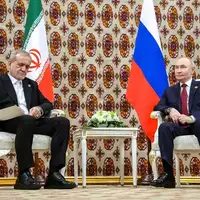
The latest attacks come after Masoud Pezeshkian, who is presented as a “moderate” won the presidential election in Iran, raising some expectations in the West that he might restart nuclear talks. However, the United States has dismissed such suggestions, giving little credence to major changes under the new president.