• العربية
  • فارسی
Brand
  • Iran Insight
  • Politics
  • Economy
  • Analysis
  • Special Report
  • Opinion
  • Podcast
  • Iran Insight
  • Politics
  • Economy
  • Analysis
  • Special Report
  • Opinion
  • Podcast
  • Theme
  • Language
    • العربية
    • فارسی
  • Iran Insight
  • Politics
  • Economy
  • Analysis
  • Special Report
  • Opinion
  • Podcast
All rights reserved for Volant Media UK Limited
volant media logo

UN Nuclear Watchdog Says Iran’s 2015 Deal ‘Means Nothing’

Jun 17, 2024, 12:48 GMT+1Updated: 16:34 GMT+0
International Atomic Energy Agency (IAEA) Director General Rafael Grossi waits for the beginning of a board of governors meeting at the IAEA headquarters in Vienna, Austria, March 1, 2021.

The head of the UN's nuclear watchdog says Iran’s 2015 nuclear agreement to limit its nuclear program "exists only on paper and means nothing."

In an interview with Russian newspaper Izvestia, the International Atomic Energy Agency Director General Rafael Grossi said: “Nobody applies it, nobody follows it. There have been attempts to revive it here in Vienna. But unfortunately, although they were relatively close to success, they failed for reasons unknown to me, because I was not involved in the process.”

The statement comes just weeks after Grossi admitted the agency "has lost continuity of knowledge in relation to the production centrifuges, rotors and bellows, heavy water, and uranium.” He recently also admitted that Iran is “weeks not months” away from a nuclear weapon, with enrichment reaching alarming levels.

He said “the parties mutually blame each other for the failure - mainly the United States and Iran”, referencing the breakdown in progress since the US withdrew from the nuclear agreement under former President Donald Trump.

“ I continue to tell my Iranian colleagues that we must provide the agency with at least minimal access to help return to the second version of the JCPOA or any other agreement,” he stressed, but noted it is not an easy road to deal with Tehran.

“There are problems, I’ll be honest with you. We do cooperate with Iran. I don't deny this. This is important for inspection. My Iranian colleagues often say that Iran is the most inspected country in the world. Well, it is, and for good reason. But this is not enough,” he warned.

On Saturday, France, Germany, and Britain, original signatories of the 2015 nuclear deal with Iran, condemned Tehran’s latest actions to further expand its uranium enrichment.

"Iran has taken further steps in hollowing out the JCPOA, by operating dozens of additional advanced centrifuges at the Natanz enrichment site as well as announcing it will install thousands more centrifuges at both its Fordow and Natanz sites," the joint statement said.

During the interview with Izvestia, Grossi also highlighted the importance of Russia's collaboration with Iran, as Moscow "can influence compliance with a peaceful nuclear order”, the two nations firm allies in the field of military cooperation. Iran has been providing Russia with drones for its war on Ukraine, with manufacturing facilities for Russia being built with Iranian assistance.

“I think this is our shared responsibility. And Russia plays a very important role in this diplomacy, trying to keep the Iranian program within a predictable and peaceful framework,” he noted, reiterating that “if we cannot verify everything, we cannot give the guarantees that the international community expects from us.”

Grossi added that since signing the agreement in 2015, Iran’s program “has expanded significantly”. He said: “They are capable of producing the latest generation centrifuges, building new facilities and much more.”

Iran’s nuclear chief insists the country is adhering to the Nuclear Non-Proliferation Treaty (NPT) agreements, but is “in the process of reducing its nuclear obligations from the 2015 agreement." Mohammad Eslami maintained Tehran is still following the NPT Safeguards Agreement and is only reducing the obligations it had under the 2015 nuclear deal, known as the Joint Comprehensive Plan of Action (JCPOA).

Iran has responded to an IAEA Board of Governors’ censure resolution, passed in early June, by expanding its uranium enrichment capacity at two underground sites.Iran has rapidly installed two more cascades, or clusters, of uranium-enriching centrifuges at its Fordow site and begun work on more while also planning others at its underground plant at Natanz, a UN nuclear watchdog report said.

"On 9 and 10 June ... Iran informed the Agency that eight cascades each containing 174 IR-6 centrifuges would be installed over the next 3-4 weeks in Unit 1 of FFEP (Fordow Fuel Enrichment Plant)," the confidential International Atomic Energy Agency report sent to member states on Thursday said.

"On 11 June 2024, the Agency verified at FFEP that Iran had completed the installation of IR-6 centrifuges in two cascades in Unit 1. Installation of IR-6 centrifuges in four additional cascades was ongoing," the report said, referring to one of one of Iran's most advanced centrifuge models.

While non-binding, resolutions by the International Atomic Energy Agency's 35-nation Board of Governors anger Tehran, which typically responds by accelerating its nuclear activities.

Admitting that Iran's uranium enrichment continues to intensify, Grossi said, "We know that Iran is considering a number of activities which require construction of new facilities, installing new cascades, among other things". In the Monday press conference, Grossi stressed the severity of the situation as the program continues unabated. "They should be informing us of these changes," he said.

Grossi pointed out that it has been over three years since Iran ceased applying its Additional Protocol, restricting the IAEA’s ability to perform comprehensive inspections. "There has been no progress in resolving the outstanding safeguards issues," he stated, mentioning unresolved queries regarding traces of uranium found at undeclared sites in Varamin and Turquzabad.

On Saturday, ahead of the International Atomic Energy Agency (IAEA) Board of Governors meeting, Iran issued a warning regarding a possible censure resolution. Ali Shamkhani, a senior aide to Iran's Supreme Leader and reported head of Iran's nuclear negotiations, declared that Iran would deliver a "serious and effective response" if European countries advanced a resolution criticizing its nuclear program.
Most Viewed

Iran negotiators ordered to return after internal rift over Islamabad talks
1
EXCLUSIVE

Iran negotiators ordered to return after internal rift over Islamabad talks

2
ANALYSIS

US blockade enters murky phase as tankers spoof signals and buyers hesitate

3
ANALYSIS

Why the $100 billion Hormuz toll revenue is a myth

4

US tightens financial squeeze on Iran, warns banks over oil money flows

5
ANALYSIS

US blockade targets Iran oil boom amid regional disruption

Banner
Banner

Spotlight

  • Hardliners push Hormuz ‘red line’ as US blockade tests Iran’s leverage
    INSIGHT

    Hardliners push Hormuz ‘red line’ as US blockade tests Iran’s leverage

  • Ideology may be fading in Iran, but not in Kashmir's ‘Mini Iran'
    INSIGHT

    Ideology may be fading in Iran, but not in Kashmir's ‘Mini Iran'

  • War damage amounts to $3,000 per Iranian, with blockade set to add to losses
    INSIGHT

    War damage amounts to $3,000 per Iranian, with blockade set to add to losses

  • Why the $100 billion Hormuz toll revenue is a myth
    ANALYSIS

    Why the $100 billion Hormuz toll revenue is a myth

  • US blockade targets Iran oil boom amid regional disruption
    ANALYSIS

    US blockade targets Iran oil boom amid regional disruption

  • Iran's digital economy battered by prolonged blackout
    INSIGHT

    Iran's digital economy battered by prolonged blackout

•
•
•

More Stories

Tehran Mayor Pays Extra Salaries Amid His Presidential Run

Jun 17, 2024, 11:27 GMT+1

Tehran Municipality has disbursed 250 million rials ($400) for "arrears salaries" of each employee as presidential candidate Alireza Zakani, the city mayor, bids to win the public's support.

Deputy mayor Majid Bagheri praised the payment as "unprecedented support for colleagues' livelihood," during the intense campaigning by presidential candidates for the snap election on June 28, triggered by the unexpected death of President Ebrahim Raisi.

However the action is seen simply as a financial reward to sway votes for the June 28 presidential election.

In reality, it will make little difference to the 140,000 employees who will receive $400 at a time when one third or more of Iranians now live below the poverty line. But the amount is substantial for most employees who make around $200 a month.

Bagheri emphasized the historic nature of the piecemeal salary reform within the municipality, marking it as a first in its history while many in the city are facing record levels of unemployment.

Zakani earlier sparked controversy by appointing his deputy for financial affairs, Lotfollah Forouzandeh, as the head of his campaign team.

Despite such moves and various promises from the six contenders in the race, voter turnout is expected to remain low, mirroring the dismal participation seen in the last parliamentary elections in March.

The public's growing skepticism towards political promises and the effectiveness of such pre-election strategies are telling of the broader discontent and political fatigue among the electorate.

Three Candidates Dominate Iran’s Presidential Elections

Jun 17, 2024, 10:26 GMT+1

A week after the start of the election campaign in Iran, almost no one speaks about three of the five hardliner candidates: Amir Hossein Ghazizadeh Hashemi, Tehran Mayor Alireza Zakani, and former Justice Minister Mostafa Pourmohammadi.

Nearly all of the official and unofficial polls are about the election chances of the other three: Majles Speaker Mohammad Bagher Ghalibaf, Member of Parliament Massoud Pezeshkian and former nuclear negotiator Saeed Jalili.

Hadline lawmaker Amir Hossein Sabeti mentioned the results of a poll last week by an undisclosed government agency in a post on the social media platform X. This poll has shown that ultraconservative Jalili has a 23 percent chance to get elected as Iran's next President while Ghalibaf has a 21 percent and Pezeshkian has a 13 percent chance.

Meanwhile, a poll conducted by Iranian journalist Maryam Shokrani on her Instagram page, among a statistical sample of 3,374 users, some 88 percent of Instagram users have said that they are not going to vote in the presidential election.

Another poll she conducted on her X account with a sample of 6,433 users, some 73.99 percent have said they are not going to vote. These results are close to the figure that has leaked from the incumbent government, a legacy of former President Ebrahim Raisi's administration which puts the number of those who say they are not willing to vote at a sharp 80 percent.

Government polling agencies in Iran include those that belong to the Culture Ministry, Intelligence Ministry, Interior Ministry, the state television and major government-owned news agencies such as IRNA and ISNA. Results are usually confidential and not released to the public unless politically expedient.

Some social media users have questioned the validity of the poll about the chances of the three candidates. One wrote a long series of 16 posts on X to prove that between Jalili and Ghalibaf, the former has a chance of more than 80 percent to be the forerunner.

The Iranian press have their own ways of assessing the candidates' chances while being cautious about revealing what they know. The government has been arresting journalists and harassing the media, pressuring them to report a welcoming but otherwise uneventful election. Authorities seem wary of any reports that convey a sense of competition or the extent of support for individual candidates.

At the same time, the smear campaigns previously seen in Iranian media during past elections have now shifted to social media. Users, writing under aliases to avoid repression, are engaging in these attacks.

Meanwhile, the IRGC that has been a key player in the controversial elections since 2005, sent its spokesperson out last week to insist that the Revolutionary Guard will not interfere in the election in any way. Ramazan Sharif said that the IRGC will not take part in any activity in support or against any candidate.

However, none of those figures and statements can be relied upon. The Iranian media and politicians have proven that they have no notion of accuracy when using figures. As an example, ultraconservative candidate Jalili has said that "he is going to compensate several centuries of Iran's backwardness in a matter of a few years." Meanwhile, over the past years, he and other hardliners have regularly praised the Islamic Republic for turning Iran into an advanced country.

Social media user Darius who quoted the statement, said "One who thinks several centuries of backwardness can be compensated for in a few years, is an disillusioned and errant individual who needs to be hospitalized.

Iranians in Stockholm Rally Against Release of War Criminal

Jun 17, 2024, 09:42 GMT+1

Iranians living in Sweden gathered outside the Ministry of Foreign Affairs on Sunday to protest the release of an Iranian official serving a life sentence for war crimes.

Hamid Nouri was in prison for his involvement in the 1988 massacre of thousands of Iranian political prisoners, and was released over the weekend in exchange for two Swedish citizens, one of whom was an EU diplomat accused of spying for Isreal.

The protest also highlighted the case of Ahmadreza Jalali, an Iranian-Swede who was left out of the prisoner swap and remains on death row in Iran.

Among the speakers of the rally was Jalili’s wife Vida Mehrannia who criticized Swedish Prime Minister Ulf Kristersson for agreeing to the exchange which only emboldens Iran's policy of hostage taking.

"The Swedish government has claimed that the Islamic Republic is not willing to agree to exchange Ahmadreza Jalali. How, then, was the Swedish government prepared to release a terrorist?" she questioned.

The protest in Stockholm is part of a larger wave of dissent, with many fearing that such exchanges may embolden the Iranian government in its use of hostage-taking as a diplomatic tool.

It is unknown how many dual-nationals are being held in Iran, but earlier this month it was revealed that a British-Iranian woman was the latest to have been found being held in Evin Prison on trumped up charges.

Nasrin Roshan was arrested on her way home to Britain accused of protesting against the government abroad, sentenced to three years in prison.

Just last year, the US exchanged five US-Iranians for the release of $6bn of frozen Iranian funds held in South Korea, further legitimizing Iran's policy of hostage-taking.

Heatstroke Claims Lives of Seven Iranian Hajj Pilgrims

Jun 17, 2024, 09:14 GMT+1

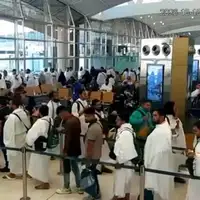
Iran's Red Crescent Society has confirmed the deaths of seven Iranians during this year's Hajj pilgrimage in Mecca due to “heatstroke” and “pre-existing health conditions”.

This year's total death toll reached 19 with temperatures forecast to reach a peak of 47 degrees.

The intense heat has had a significant impact, especially during the critical Hajj ritual of 'stoning the Devil', a period marked by several of the reported deaths.

Each year, the Hajj pilgrimage attracts approximately 1.8 million Muslims to the holy city of Mecca in Saudi Arabia.

According to Saudi's health ministry spokesman, Mohammed Al-Abdulaali, more than 2,760 pilgrims suffered from sunstroke and heat stress on Sunday alone.

In response to the annual deaths which plague the pilgrimage, Saudi authorities have introduced a variety of precautions including climate-controlled facilities and comprehensive medical support to address the health risks posed by the heat.

Last year, deaths reached as many as 240 with temperatures around 48 degrees.

Evin Prison's Ward 4: Cramped, Filthy, Pest-Ridden, and Ignored

Jun 17, 2024, 09:00 GMT+1
•
Niloufar Goudarzi

Inmates in Ward Four of Tehran’s notorious Evin Prison are suffering from severe overcrowding, abysmal hygiene, and hunger, according to a human rights monitoring group.

The US-based Human Rights Activists News Agency (HRANA) has detailed the conditions in which these prisoners live, most of whom are political detainees, in a report published on Friday.

Here is an in-depth report on the prison, compiling data from previous reports and HRANA's findings on Ward 4.

Evin Prison's Profile

The Evin prison is Iran's largest facility for detained political prisoners, some charged with crimes related to national security. Over the years, it has garnered international attention and criticism for its wrongful treatment of prisoners and human rights violations. In response to allegations of abuse and misconduct, both the US and the EU have imposed sanctions on Evin prison, underscoring the need for reforms within Iran's penal system.

Fire at Evin Prison, October 2022
100%
Fire at Evin Prison, October 2022

An incident that intensified attention, particularly, was a fire that broke out in Evin prison in October 2022 amid the nationwide Woman Life Freedom protests. Official records indicate eight prisoner fatalities and 61 injuries.

While Iranian authorities attributed the fire to prisoners, evidence collected by Amnesty International raised significant concerns that the authorities exploited the situation to justify a violent crackdown on prisoners under the pretext of firefighting and preventing escapes.

Another notable event occurred in 2021 when a hacktivist group breached Evin prison's security cameras. The footage obtained by Edalat-e Ali from these hacked CCTV cameras revealed numerous abuses, including overcrowding, inhumane cell conditions, and instances of guards and other inmates assaulting prisoners.

Overcrowding and Hygiene Concerns

Evin prison has four halls in its ward four. Originally designed to house 120 individuals, halls 3 and 4 now find themselves overcrowded with more than 300 inmates. This overcrowding has led to cramped sleeping arrangements and heightened hygiene concerns. With inadequate space and minimal facilities, many prisoners are forced to sleep on the floor, resulting in an alarming increase in the prevalence of bed bugs and other diseases within the prison environment.

In May, Mehdi Mahmoudian, a political activist with over eleven arrests and eight years of imprisonment, reported on X that Taleghani Hospital in Tehran ceased admitting dialysis patients from Evin due to bedbug contamination.

The activist stated that the hospital provided a sample canister of bedbugs to Evin's medical department head as evidence.

Earlier, Zia Nabavi, a student activist and political detainee, described the harsh effects of the infestation, such as sleep deprivation, before being transferred to solitary confinement.

Prison Store and Food Quality

Furthermore, the quality of prison food has come under scrutiny, with reports of physical ailments among inmates due to poor nutrition.

Many prisoners have experienced weight loss, joint pain, and difficulties concentrating, attributing these health issues to the substandard quality of the government-provided meals.

Evin prison footage leaked by hacktivist Edalat-e Ali, 2021
100%
Evin prison footage leaked by hacktivist Edalat-e Ali, 2021

Additionally, the exorbitant prices at the prison store have made it difficult for some inmates to afford basic necessities, exacerbating their financial strain.

Recently, reports emerged that Mohammad Nourizad, a prominent writer, filmmaker, and political detainee, was transferred to solitary confinement following his protest against the escalating food prices in prison, as disclosed by his wife.

Fatemeh Maleki, in an audio clip circulating on social media, revealed that Nourizad's objections to the rising prison food expenses in the past two months prompted his solitary confinement.

Drug Related Issues

According to HRANA's report, the ongoing prevalence of drugs poses a substantial threat to the welfare of the incarcerated community.

This aligns with the statement made in May by Iran's anti-narcotics police chief, who asserted that roughly half of the country's prisoners are implicated in drug-related activities.

Evin prison footage leaked by hacktivist Edalat-e Ali, 2021
100%
Evin prison footage leaked by hacktivist Edalat-e Ali, 2021

In 2020, Iran Wire reported the distribution of inexpensive, mass-produced narcotics within prisons. Activists like Leila Hosseinzadeh, now released, highlighted the prevalent practice of systematically drugging prisoners. Describing an incident, she recounted how, following a brawl between two inmates, one was forcibly administered a pill to silence them for several days.

Living Conditions and Protests

The dire living conditions within ward four have prompted protests among the incarcerated population. Despite repeated appeals and requests for intervention, prison officials have thus far neglected to address these grievances adequately. The overcrowding and unsanitary living conditions have significantly impacted the physical and mental well-being of the inmates, fueling their frustration and dissatisfaction.