Iranian Commander Calls US Student Protests ‘Islamic Awakening’

The commander of Iran's Basij militias linked the wave of pro-Palestinian student protests across US universities to what he describes as an "Islamic awakening."
The commander of Iran's Basij militias linked the wave of pro-Palestinian student protests across US universities to what he describes as an "Islamic awakening."
Addressing the media, Gholamreza Soleimani claimed that "the awakenings we are witnessing today in America, Canada, and Japan all originate from Islamic awakenings and are derived from the culture of Islamic resistance."
Soleimani's remarks followed comments from Ahmad Alamolhoda, a senior Iranian cleric and father-in-law to Iran’s President Ebrahim Raisi, who attributed the mobilization of the student protests to the influence of letters from Iran's Supreme Leader, Ayatollah Ali Khamenei.
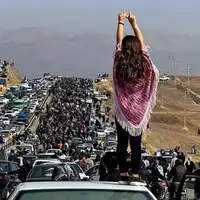
This contrasts sharply with the Iranian regime's harsh treatment of domestic dissent, particularly among its own student activists, who face severe penalties for similar protest activities. The discrepancy has drawn criticism from within Iran, with many pointing out the regime’s apparent hypocrisy.
The Iranian leadership, including Khamenei, has portrayed the student protests as a victory for pro-Palestinian sentiments among Western youth, interpreting it as a sign of growing global sensitivity towards the Palestinian issue. The more the world aligns with Palestine, the greater the victory Tehran feels against its archenemy Israel.
Throughout his leadership, Khamenei has maintained a strong anti-Israel and anti-West stance, supporting groups like terror group Hamas. His policy has contributed to Iran's isolation from the global economy, exacerbating existing economic challenges such as a shrinking GDP and soaring inflation rates.
The leveraging of anti-Israeli and anti-Western sentiments on international stages is seen as part of Iran's strategy to assert the legitimacy and righteousness of its political stance in the face of domestic and international pressures.