Iran Says It Has No Blocked Funds in Iraq
A top Iranian official said on Wednesday that Tehran has no blocked funds in Iraq, after the Biden administration issued sanction waivers in 2023 and this year to allow Baghdad to release the Iranian funds.
A top Iranian official said on Wednesday that Tehran has no blocked funds in Iraq, after the Biden administration issued sanction waivers in 2023 and this year to allow Baghdad to release the Iranian funds.
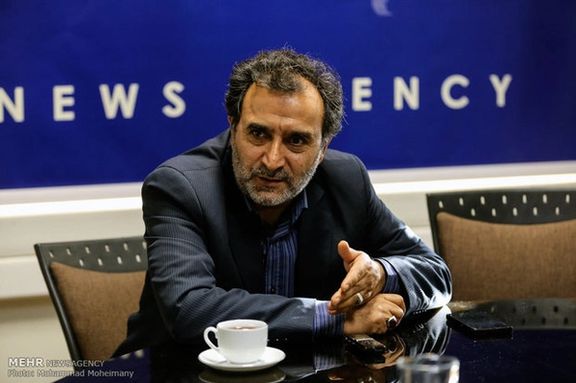
After a cabinet meeting in Tehran, President Ebrahim Raisi’s legal affairs deputy Mohammad Dehghan told reporters, “We do not have blocked assets in Iraq. Sometimes some obstacles are created that are resolved through dialogue.”
Iran is exporting natural gas and electricity to Iraq, but according to US banking sanctions on Tehran since 2018, Baghdad was not able to transfer hard currency payments for its debts. In June 2023 and again earlier this year, the Biden administration issued waivers, allowing Iraq to send the money abroad.
As of June 2023, Iraq owed Iran an estimated $11 billion, which Iraq could only pay by financing Iran’s food and medicine purchases from its domestic markets. Iran always insisted on receiving the hard currency cash.
Iran's deputy Minister of Economy, Ali Fekri also denied that Iran has any funds held back in Iraq. In an interview with ILNA in Tehran on Wednesday, Fekri denied that Iraq still owes $11 billion. “Such a thing does not exist at all, and we have no outstanding claims or issues in Iraq.”
The US administration claims that Iran can use the funds only for buying non-sanctionable goods, but critics argue that money is fungible, and if Iran can spend the Iraqi payments to purchase civilian necessities, it can use other funds for malign and military activities.
The controversy intensified after last year’s Hamas attack on Israel, believed to have been facilitated by Iran’s financial and military assistance.






The US Central Command (CENTCOM) reported that on Monday Iranian-backed Houthi forces launched three uncrewed aerial vehicles (UAVs) from Yemen over the Gulf of Aden.
According to CENTCOM, a coalition ship intercepted one of the drones, US forces took down another, and the third crashed into the Gulf. There were no injuries or damages reported.
“Later, at approximately 5:02 a.m. (Sanaa time) on May 7, Iran-backed Houthi terrorists launched an anti-ship ballistic missile (ASBM) over the Gulf of Aden. There were no injuries or damages reported by US, coalition, or merchant vessels,” added CENTCOM.
Yemen's Houthi attacks in the Red Sea area, which they claim are in support of the Palestinians in Gaza, have disrupted international shipping routes. The Red Sea blockade has led companies to opt for lengthier and costlier routes around southern Africa. The assaults started in mid-November following a call by Iran's Supreme Leader Ali Khamenei for Muslims to blockade Israel to force it into a ceasefire amid the Gaza war.
This latest development comes shortly after CENTCOM forces destroyed three similar unmanned systems last week in a region of Yemen under Houthi control.
In response to the escalated threat from the Houthis, whose attacks have targeted global shipping, not only Israeli linked vessels, the United States, in cooperation with the United Kingdom, has ramped up military operations within Yemen.
Chinese President Xi Jinping and his French counterpart, Emmanuel Macron, have reiterated their commitment to a political resolution of the ongoing Iranian nuclear issue as Iran continues to exceed enrichment limits.
President Xi traveled to France as part of his first European tour in five years. The latest declaration follows a previous joint statement made in April last year, where both countries underscored their dedication to diplomatic solutions regarding Iran's nuclear ambitions, as stated on the official Elysee Palace website.
The statement last year stressed the importance of adhering to United Nations Security Council resolutions without compromising their authority or effectiveness.
Despite assurances from Iranian officials that Tehran’s nuclear program is intended solely for peaceful purposes, nuclear experts largely agree that the levels and quantities of uranium enrichment conducted by Iran since 2021 suggest otherwise.
According to the International Atomic Energy Agency (IAEA), Iran is currently enriching uranium to 60% purity, nearing the 90% threshold typically necessary for producing nuclear weapons. Last month, the IAEA's chief said Iran is 'weeks not months' away from nuclear weapons with Iran's nuclear stockpile now significantly exceeding the limits set by the 2015 nuclear deal with world powers.
Rafael Grossi, the director general of the IAEA is in Tehran this week in a bid to repair strained relations and bolster cooperation between the agency and Iran after a year in which Iran has blocked vast numbers of the agency's inspectors and continued to breach regulations.
The French government on Tuesday accused Iran of adopting a policy of "state hostage-taking" and "blackmail," intensifying calls for the release of a French couple detained for the past two years.
The condemnation by France highlights a rare and escalating conflict between Iran and Western nations over detained foreign nationals.
Cecile Kohler, a teacher and head of the National Federation of Education, Culture and Vocational Training (FNEC FP-FO), and her partner Jacques Paris, also a member of the same trade union, were arrested on May 8, 2022. They are accused by Iranian authorities of inciting labor protests, charges both their families and the French government deny. The couple had traveled to Iran as tourists, visiting Tehran, Kashan, and Isfahan before their arrest while attempting to return to Paris from Tehran’s Imam Khomeini Airport.
"France condemns this policy of state hostage-taking and this constant blackmail by the Iranian authorities," stated the French foreign ministry. The strong stance comes as activists continue to point out Iran's pattern of detaining Western nationals to leverage concessions.
Apart from Kohler and Paris, other French citizens detained in Iran include Olivier, known only by his first name, and Louis Arnaud, a banking consultant sentenced last year to five years in jail on national security charges. France's foreign ministry reiterated its call for their "immediate and unconditional release" and extended its concerns to all European nationals facing what it described as "absurd charges" in Iranian custody.
The ministry also condemned the Iranian practice of airing forced confessions, a tactic Kohler and Paris were subjected to following their arrest. The method of coercion and the sham trials are seen as part of a broader strategy by Iran, criticized internationally for its judicial processes.
While several foreign prisoners, including five Americans, have been released in recent months through diplomatic negotiations, European citizens continue to be held. Among them are German citizen Jamshid Sharmahd and Swedish national Ahmadreza Djalali, both facing the death penalty under charges their families and international observers claim are baseless.
Sharmahd, a 69-year-old California resident, was abducted in 2020 while in the United Arab Emirates and later sentenced to death by Iran on allegations of leading a pro-monarchist group linked to a 2008 bombing. Despite prior arrests and convictions related to the incident, Sharmahd’s charges are maintained without substantive evidence, drawing criticism from human rights organizations like Amnesty International for the lack of fair trial standards.
Swedish EU diplomat Johan Floderus is another high-profile detainee, facing possible death sentences on disputed spying charges. This comes amid heightened tensions following the life imprisonment in Sweden of former Iranian prison official Hamid Nouri for his involvement in mass executions during the 1980s in Iran.
Former US Iran envoy Robert Malley lost his security clearance, two influential congressmen have suggested, because he had transferred classified documents to his personal email and cell phone, and the documents were then stolen by a hostile cyber actor.
It’s not clear who the “cyber actor” was, but US lawmakers have expressed concern about the possibility that it could have been related to Iran’s intelligence or Revolutionary Guards (IRGC).
Malley was placed on leave and had his security clearance suspended in April 2023. Iran International was first to report the incident in June of that year, but then the State Department blocked all attempts to find more information about Malley’s case.
“We remain deeply frustrated by the Department's lack of responsiveness to our requests for information needed to conduct appropriate oversight,” wrote top Republicans on the Senate Foreign Relations and the House Foreign Affairs committees. “Due to the Department's evasiveness and lack of transparency, we have worked to glean information from other sources.”
This is in effect the first time in more than a year that a semi-official story has transpired on Malley’s sudden and complete disappearance from public life. Even then, the letter sent to Secretary of State Antony Blinken by Senator James Risch (R-ID) and Rep. Michael McCaul (R-TX) raises many more questions than it answers.
“Did Mr. Mailey send or attempt to send these documents to anyone who lacked the proper clearance,” the two Congressmen ask. “Were any of these individuals affiliated with the Iranian government or the Iran Experts Initiative?”
Iran Experts Initiative –also made public by Iran International alongside Semafor– was an influence network initiated by Iran’s foreign ministry in 2014, recruiting young researchers and academics to “promote Tehran’s argument in the West.” At least three prominent members of the network were close associates of Malley.
Malley was appointed as Joe Biden’s Iran envoy in 2021 and immediately embarked on back-channel talks with Iran. For many years, he’s been an advocate of engagement –and not isolation– of the regime in Tehran. Two years after his appointment, Malley began to be noted by his disappearance.
It is now known that State Department officials had repeatedly lied to Members of Congress by claiming Rob Malley was on personal leave.
Risch and McCaul have sent Blinken 17 questions, including one to confirm that Malley’s security clearance was suspended because he ‘mishandled’ sensitive (or classified) documents. “What has been the impact on the administration's Iran policy,” Risch and McCaul ask in another question in their letter to Blinken. “Did Mr. Malley's alleged infractions affect the conduct of Iran policy?”
The Biden administration’s Iran policy has attracted a lot of criticism, especially since October 7. Joe Biden’s approach is seen as too soft, ‘appeasing’ even, encouraging the Iranian regime to be more aggressive as it sees no retribution for its gross violations of human rights at home and destabilizing activities outside.
Malley seems to have had a central role in devising and advancing President Biden’s Iran policy. And that –for those who see that policy as wrong or problematic– is more than enough to want to pursue his case to find out how (or if) US national interests or security has been affected.
“The allegations we have been privy to are extremely troubling and demand immediate answers,” the lawmakers’ letter to Blinken concluded. “These allegations have a substantial impact on our national security and people should be held accountable swiftly and strongly.”
On November 8, 2024, the world may expect a re-enactment of Donald Trump’s temperamental mono in foreign affairs after a four-year interval upon his possible re-election.
For those in the Middle East, the day could mark anticipation and expectation seamlessly fused as a sense of “anticipancy.”
During his presidency, two fundamental features of Trump’s tactical foreign policy toolkit were “Transactionality” and “Unpredictability.” Both tactical tools ostensibly serve to preserve and promote Trump’s cardinal national security doctrine: “America First.”
The leaders of Egypt, Israel, Qatar, and Saudi Arabia (EISQA) may already be preoccupied by a sense of informed anticipation, but they could also be keeping Trump apprised of their efforts towards a region wide peace settlement, i.e., a possible sequel to the Abraham Accords.
The most pressing question for the emerging EISQA peace quartet is how a new Trump administration would deal with an ever-unruly Iranian regime and its proxies. Whilst the response to this question may be in “Project 2025”, Trump’s tried and tested “temperamentality”has proven that he abides by no pre-ordained stratagem other than his idiosyncratic appreciation of how to fulfill the “America First” agenda.
It is imperative to note that many of Trump's domestic policies during his first term, such as the so-called “Muslim travel ban”, astonished many analysts of US public policy. Certainly, one can equally characterize Trump’s foreign policy decisions, such as abandoning the Iran nuclear deal or killing IRGC general Qassem Soleimani as abrupt or unpredictable. However, when viewed through the prism of “America First,” Trump’s actions were generally idiosyncratic for they did not comport with the precedents set by the previous administrations, and they thus caught most domestic and foreign observers by surprise.
Heritage Foundation’s Project 2025 seems to offer a blueprint as to how Trump’s second administration would forge ahead in foreign policy, but equally makes allowances for Trump to act idiosyncratically based on a combination of personal rapport with world leaders and opportunism.
Trump’s First Presidency: A Catalogue of Disconformities
Trump inherited from Obama a Middle East in turmoil in his first term. In Syria, Russia and Iran supported the Assad regime against anti-Assad forces, consisting of those armed backed by US and Turkey, as well as the Kurdish peshmerga) and ISIS. In Iraq, Iran’s proxies, the Kurdish peshmerga, US advisors, and the Iranian IRGC advisors fought against ISIS, and in Yemen, Saudi Arabia and UAE were at war with Iran-backed Houthis. Trump also inherited the Iran Nuclear Deal, signed by Obama, that had lifted most sanctions against Iran.
Trump succeeded in reducing ISIS with minimal US intervention by early 2018. On this score, and only a week after US backed Syrian Democratic Forces launched an attack to vanquish ISIS in its last stronghold in Syria, Trump pulled out of the nuclear deal with Iran on 1 May 2018 and introduced “maximum pressure” comprehensive sanctions against the Iranian regime.
Feeling betrayed, Iran sought to retaliate using its complex network of proxies in Iraq and Syria. To Trump the Iranian proxies’ attacks on American bases warranted a severe retaliation, the assassination of Qassem Soleimani, the IRGC top commander who was the godfather of the many militia proxies of the Iranian regime in the region and a mastermind of asymmetrical warfare.
In addition to its military achievements, the Trump administration signed extensive aid packages with Israel and Egypt, and spearheaded negotiations with the Taliban, mediated by Qatar, to begin the phased withdrawal of US forces from Afghanistan.
Trumps crowning diplomatic achievement was the Abraham (peace and normalization) Accords signed between Israel and Bahrain, UAE, and Morocco, through US guarantees and mediation. The Accords were propitious to engage Israel and Saudi Arabia in intense normalization negotiations.
Promises and Perils of Project 2025
In terms of foreign policy, Project 2025 is a voluminous 920 page policy paper consisting of proposals for the incumbent nominee of the Republican Party, Donald Trump, that correspond to Trump’s first term presidency. The report resonates with Trump’s vision of “America First” but also accords with him in identifying China as the greatest threat to US national security, devoting over 200 pages to it. The report states that “The United States and its allies also face real threats from Russia, as evidenced by Vladimir Putin’s brutal war in Ukraine, as well as from Iran, North Korea, and transnational terrorism…”, (93) concluding that “In this light, US defense strategy must identify China unequivocally as the top priority for US” (125).
Project 2025 and US Foreign Policy in Action à la Trump
With Biden taking over the reigns of US foreign policy, his administration has faced upheavals that were unlike any that Trump had to face. Many in conservative circles across the globe believe that Biden’s disastrous withdrawal from Afghanistan most likely emboldened Putin to attack Ukraine, which in turn provoked Western sanctions against Russia and led to mass Western military aid to Ukraine.
Trump’s administration will inherit a world totally remade by Covid and Russia-Ukraine War, and Project 2025 seeks to supply the upcoming Republican administration with a menu of options that would reverse many of the Biden’s foreign policy decisions. The project clearly relies on Trump’s vision of a transactional foreign policy.
It considers the President indispensable as the final arbiter of US foreign policy decision making, toeing the traditional line of “imperial presidency” in foreign policy (181). The prime directive, according to Project 2025, that Trump shall follow in executing his role as the captain of the US foreign policy is “America First”: “Rather each foreign policy decision must ask: What is in the interest of the American people? US military engagement must clearly fall within US interests; be fiscally responsible; and protect American freedom, liberty, and sovereignty, all while recognizing Communist China as the greatest threat to US interests.” (182)
Project 2025 assesses Iran to pose a dual threat to Middle East stability, first, through its network of regional armed clients and, second, through its highly expanded weaponization threshold nuclear program. It thus proposes the promulgation of an Arab-Israeli entente with the full support of the US military industrial complex. Such advice accords with what former Trump advisors still see as the most viable options to confront and contain Iran. Second, it calls for sanctions and pressures to contain Iran’s nuclear program (185).
However, Project 2025 remains ambiguous as to how the US should deal the final blow to Iran’s nuclear program or eliminate Iran’s armed proxies. In realpolitik terms, Iran functions as a Gordian knot that binds itself at once to China and Russia in an awkward security, military, and economic arrangement.
To decouple Russia from this arrangement through whatever incentives that Trump can “unpredictably” muster would help neutralize Iran’s threat. This means that Trump would have to somehow decouple Russia from China before he can make any strides against Iran. Decoupling Russia from China and Iran would mean that Trump would have to somehow break the deadlock in the Russia-Ukraine conflict. Being “unpredictable” could mean that Trump may decide not to implement many anti-Russia sanctions in violation of all special Russian sanctions act and would demand the Congress to repeal such acts as an incentive to Russia in a Trump mediated peace round with Ukraine.
Trump’s intervention on Russia’s behalf through easing sanctions would sway Putin to support him against Iran, and enable him to start a process to contain Iran’s nuclear program without resorting to threats of military strikes; a possibility that cannot be discounted if Trump becomes the commander-in-chief once again. In effect, in his most unpredictable, transitional minded logic, Trump could perceive winning Putin to his side is worth isolating China and dealing with Iran at once.
Biden’s Euro-American sanctions and massive military assistance to Ukraine in the fight against Russia’s invasion have drastically changed the world that Trump had to deal with during his first term. During Trump’s first term “America First” policies provoked closer Sino-Russian military and economic relations under the Shanghai Security Organization and Euro-Asian Economic Union (EAEU). Yet, such relations completely transformed into an de facto Sino-Russian entente in the wake of Russia’s 2022 Ukraine invasion.
To complicate matters, since 2022, Iran has advanced itself to the level of a junior partner to both Russia and China as a dependable source of military ammunition and arsenal logistics, as well as being a reliable strategic oil supplier to China. Iran, Russia, and China have effectively formed a mutually beneficial de facto pact over the past four years that can be characterized as an unofficial military-economic triple entente. To contain and neutralize Iran’s threat would thus require decoupling Russia from both Iran and China.
It would come as a surprise if in his effort to deal with Iran, Trump would introduce a new version of his first term’s “maximum pressure sanctions.” However, with the complex sanction evasion networks that the Iran has developed on a global scale in tandem with Russia, “maximum pressure sanctions” would not be sufficient. Trump’s administration would have to use all the power of the US navy and its allies to stop Iran’s oil exports to China. Whereas Biden has refused to meaningfully enforce sanctions on Iran’s oil exports to China, as it is wary of a surge in oil prices that can infuriate the American consumer at the gas pump, a Trump administration will be bent on expanding US oil production in contravention of all “green” concerns of Biden democrats.
Nonetheless, not enforcing the Russian sanctions would not be sufficient to bring Putin onboard against Iran. Nor would mediating between Russia and Ukraine in and of itself decouple Putin from Xi. Trump would need to offer an invaluable prize to Putin. The only bargaining chip available to Trump is to force Ukraine to sign away some of her eastern provinces to Russia. Do the Project 2025 authors believe that Trump could offer Ukraine as a sacrificial lamb, for all intents and purposes, to Putin so that it would successfully decouple Russia from China? If one is guided by the America First directive, such an interpretation is not too far-fetched.
Furthermore, Trump may seek to arrive at a compromise with Putin over Iran. In all the 57 instances that Iran appears in Project 2025, it is abundantly clear that the authors are taking more than a cue from the precedent set by the first Trump administration’s treatment of the Islamic Republic. They are in fact rigorously applying the America First directive: “What is in the interest of the American people?” No international commitment to anyone is more sacrosanct to Trump than America First.
On a last note, one cannot discount Trump’s idiosyncratic inventiveness and spontaneity in foreign policy. If Trump’s first term is any guide, Trump may still send, say through Oman, all manner of secret messages to sway Tehran Mullahs to cut a deal with him. He is on record to have dispatched messages to that effect to Iran Supreme Leader Khamenei; especially one for direct talks through the late Japanese PM Abe Shinzo. None can put it past Trump that he would seek make a deal with the Mullahs, especially if Putin seeks to drive a hard bargain before he joins Trump against Iran.
Despite Trump’s characteristic unpredictability, four contours of Trump’s approach to foreign policy seem to have remained constant from his first administration to date: his distrust of China, his affinity for Putin and Russia, his eagerness to forge an everlasting rapprochement between Arabs, chiefly the kingdom of Saudi Arabia, and Israel, and his unflinching adherence to “America First” as his realpolitik compass.
The late Henry Kissinger, who counselled Trump during his presidency, quipped with much insight during an interview with the Economist last May that: “’I have never met a Russian leader who said anything good about China, and I’ve never met a Chinese leader who said anything good about Russia. They are not natural allies.” Of everything that Kissinger could have whispered in Trump’s ear, these insights must still echo in Trump’s head. Neither a territorially intact Ukraine nor a democratic Iran fair more prominently in Trump’s vision than “America First.” Accordingly, sacrificing both Iran and Ukraine at Putin’s altar is a small penance, especially if they could secure the greatest prize of all: sowing division between Russia and China.