IDF Spokesman Rear Adm. Daniel Hagari in a press statement says IDF Chief of Staff Lt. Gen. Herzi Halevi has concluded an assessment with CENTCOM chief Gen. Michael Erik Kurilla on the threat of an attack by Iran on Israel.
“We held a joint assessment of the situation, to ensure that our coordination is tight,” Hagari says, adding that here are still no changes in instructions to civilians amid the heightened alert of a potential Iranian attack.
“We have been at war for the past six months, and we have dealt with all the existing threats. Our defense is ready, and knows how to handle each threat individually. We are also ready for attack, with a variety of capabilities, to protect the citizens of Israel,” he said.
“Iran is escalating, pushing for regional escalation. We’ll know how to deal with the Iranian threat. We are well-prepared and will know how to respond to anything,” Hagari noted.
Coffins of members of the Islamic Revolutionary Guard Corps who were killed in the Israeli airstrike on the Iranian consulate in the Syrian capital Damascus, during a funeral ceremony in Tehran, Iran April 4, 2024
Iran may keep Israelis in a state of anticipation and apprehension for a while but will eventually retaliate for the attack on its embassy in Damascus last week, analysts say.
Israeli Foreign Minister Israel Katz says Israel has not taken responsibility for the attack that killed seven top Iranian Revolutionary Guard commanders, but in his Eid al-Fitr sermon on Wednesday, Iran’s Supreme Leader Ali Khamenei held Israel responsible and promised retaliation.
Iranian officials and media have largely been silent on Friday over the prospects of a retaliation, but after reports of an attack being imminent, Khamenei’s X account retweeted the same remarks without further comments.
Two US officials told CBS News that a major Iranian attack against Israel was expected as soon as Friday, possibly to include more than 100 drones and dozens of missiles aimed at military targets inside the country. The White House National Security Council spokesman John Kirby also said on Friday that an Iranian strike on Israel was possible.
Israeli Prime Minister Benjamin Netanyahu listens to Foreign Minister Israel Katz during the weekly cabinet meeting in Jerusalem October 27, 2019.
Most analysts believe the Israeli strike on the Damascus embassy that the Iranian regime calls “Iranian soil” has left no other choice for the Islamic Republic than to strike back as a matter of principle and honor.
“They will retaliate but will try to keep Israelis on their toes and perplex them as long as they can before initiating an attack,” an analyst in Iran who requested anonymity told Iran International.
“For instance, they may deploy a hundred missiles to one location in the country, then move them to another. Or put their forces in a state of high alert in one place, then rescind the decision without explanation, or move them to another location,” he added.
Reports from Israel Friday indicated that Iran's use of this psychological warfare tactic has already made a lot of Israelis very nervous.
Iran International’s correspondent Babak Itzhaki in Jerusalem reported on Friday that the feeling is prevalent in Israel that the Islamic Republic and Israel’s exchange of threats and warnings has reached a final point and caused worry to the public.
Rather than preparing to get together for Sabbath as they always do, Israeli families are staying home to remain close to their safe rooms, he says, adding that municipalities are preparing themselves for some sort of attack and have been ordered to open up shelters to people if Iran's threats materialize although new instructions have not been issued so far for extra measures.
A source in Tehran told Iran International that while people are preoccupied with various local issues and controversies, the looming threat of escalation, potentially culminating in an Israeli attack on Iran, is a cause for concern. Their primary worry revolves around the potential further rise of the US dollar in Tehran and the subsequent increase in the severity of their living conditions. The Iranian currency, the rial, has depreciated by 30 percent since early January, exacerbating inflation, which is already hovering around 50 percent.
Iranian sources and diplomats from the US say Tehran has signaled to Washington that it wishes to avoid escalation and will not act hastily, Reuters reported.
“Iran wanted condemnation of Israel’s attack on the Iranian embassy by the United States, western countries and the United Nations Security Council as Foreign Minister Hossein Amir- Abdollahian pointed out,” the Iranian analyst said, adding that the only way for the Islamic Republic to hold off an attack and not to lose face is getting a big concession. “They may be maneuvering now to increase the price of holding off an attack on Israeli soil,” he added.
Iran has already begun exhibiting its preparations. According to the semi-official Iranian Students News Agency (ISNA) which cited the Army, the air defense chief of northern Iran, Brigadier General Amir-Mohammad Sadeghian, on Friday inspected “the combat readiness, equipment, and response protocols” of the force.
"It's going to be very difficult for Iran not to retaliate," Raz Zimmt, senior researcher at Israel's Institute for National Security Studies also told Reuters.
"I still believe that Iran doesn't want to engage in full-scale, direct military confrontation against Israel, and certainly not with the United States. But it has to do something," he added.
Follow developments on Iran International's Live coverageof ongoing tensions between Iran and Israel.
European Union flags fly outside the European Commission headquarters in Brussels, Belgium, April 10, 2019.
The European Union is imposing sanctions against three Hamas and Palestinian Islamic Jihad entities, over “widespread sexual and gender-based violence” that occurred across Israel on October 7.
“The Council decided today to list three entities under the EU Global Human Rights Sanctions Regime in view of their responsibilities in the brutal and indiscriminate terrorist attacks that occurred across Israel on 7 October 2023,” a press release read.
Thesanctions target the Al-Quds Brigades, the armed wing of the Palestinian Islamic Jihad, the Nukhba Force (special forces unit of Hamas) and the Qassam Brigades (military wing of Hamas).
Israel’s Foreign Minister, Israel Katz, took to Xto laud the decision, saying it “sends a clear message: those who murder, rape, burn, abuse the bodies of babies, girls, women, and men, and commit atrocities against humanity -- will pay the price.”
Individuals and entities listed under the sanctions regime face an asset freeze, meaning their financial assets are blocked. Providing them with funds or economic resources, either directly or indirectly, is prohibited. Persons listed are also banned from traveling to the EU.
The EU had already classified Hamas and the Palestinian Islamic Jihad as terrorist entities.
Last month, the UN Special Representative on Sexual Violence in Conflict reportedthat she and a team of experts found “clear and convincing information” of rape and sexualized torture being committed against hostages seized during the 7 October terror attacks.
Pramila Patten said that in addition there are also reasonable grounds to believe that such violence, which includes other “cruel, inhuman and degrading treatment”, may be continuing against hostages still being held by Hamas and other extremists in the Gaza Strip.
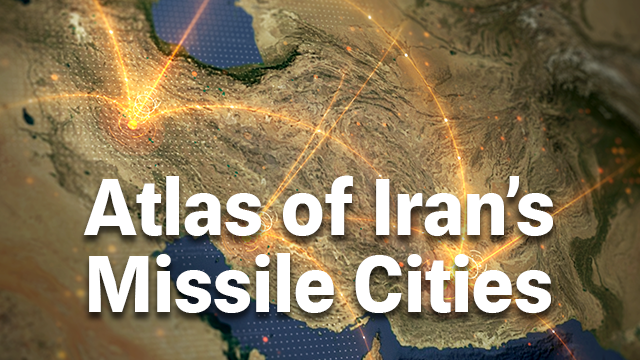
Javad Karimi Quddusi, a member of the Iranian parliament's National Security and Foreign Policy Committee, said on his X (formerly twitter) account that "After punishing the Zionist regime in the upcoming hours," Israel will soon learn that any attempt to eliminate Resistance Front figures will be met with swift retribution “by Iranian Sejjil, Kheibar, and Shahab missiles.”
According to reports, Sejil-3 – the latest in the series has a maximum range of 2,000 to 2,500 kilometers, and a launch weight of 38,000 kilograms. Kheibar’s operational range is about 2,000 km with a 1,500 kg warhead. The Shahab-3 has a range of 1,000 kilometers with some model boasting 2,000 kilometers.
Any projectile with about 2,000-kilometer range can reach Israel from Iran’s western regions.