Identity Of Iran's Future Leader To Remain Secret Amid Assassination Fears
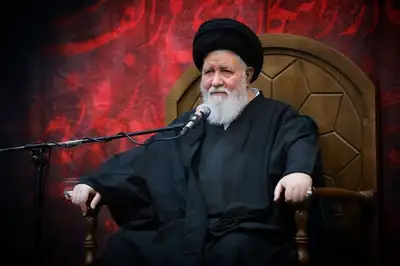
Mohammad Ali Jazayeri (left), the former representative of Ali Khamenei in Khuzestan
On the eve of upcoming elections, the identity of Iran's future leader remains top secret, with a member of the Assembly of Experts citing security concerns amid assassination risks.
Mohammad Ali Jazayeri, the former representative of Khamenei in Khuzestan, admitted there is potential risk of assassination if the identity is revealed amid the country's worst civil unrest since the founding of the Islamic Republic in 1979.
•
On Wednesday, an official disclosed that President Ebrahim Raisi is one of three individuals designated by Supreme Leader Ali Khamenei to select the future leader of the Islamic Republic. Hassan Ameli, an Assembly of Experts member, confirmed Raisi's inclusion in the committee tasked with the decision, further solidifying Khamenei's confidence in Raisi's future role.
With Raisi initially the sole candidate from South Khorasan Province in the March 1 Assembly of Experts elections, the addition of a second candidate suggests formalities in the election process. However, questions remain regarding the Assembly of Experts' role in selecting the successor, as the committee of three is primarily tasked with this responsibility.
Following Ali Khamenei's tenure, an election for Iran's third Supreme Leader is slated. Succession to Khamenei has long been a sensitive issue in Iran. The Assembly of Experts holds the constitutional duty of selecting the next leader.
Khamenei has not publicly addressed his replacement. According to Iran's Constitution, the Assembly of Experts must convene to appoint a successor if the incumbent Supreme Leader dies or is removed. A Provisional Leadership Council, comprising the President, Chief Justice, and a cleric from the Guardian Council chosen by the Expediency Discernment Council, assumes leadership duties until a permanent successor is chosen.
Iran's foreign minister arrived in Geneva on Sunday to address the UN's Human Rights Council and participate in the disarmament conference amid the regime's ongoing repression back home.
Hossein Amir-Abdollahian's being given a platform amid the worst rights abuses since the Islamic Republic was founded in 1979, has led to criticism of the rights body with many activists boycotting events for which he is scheduled to attend, and calling for those attending to leave on his planned address.
Ladan Boroumand, an Iranian human rights activist and co-founder of the Abdorrahman Boroumand Foundation, said, "You can't stand still and listen to [the] torrents of lies he will unleash to fill [the] UN Human Rights' Council with an abominable alternative reality."
Iranian rights activist Nazanin Boniadi also urged US officials to boycott the session.
Iran is one of the few countries worldwide for which the UN Human Rights Council has appointed a special rapporteur. However, in November, widespread criticism ensued when the presidency of the two-day UN Human Rights Council Social Forum was handed over to the ambassador of Iran.
Iran has a history marred by severe human rights violations including crackdowns on political dissent, arbitrary arrests, torture, and executions. Religious and ethnic minorities, as well as women and LGBTQ+ people, face ongoing discrimination and persecution.
Freedom of expression and assembly are heavily restricted, with journalists, activists, and peaceful protestors frequently targeted. The regime's use of force to suppress protests and dissent has led to hundreds of deaths and injuries.
A former Iranian minister said the government’s recent deals with Chinese companies to build residential units in the capital are an "insult to Iran's engineering community" while the local economy is in freefall.
“We have given China privileges that are unprecedented in our country,” said Ahmad Khorram, former Roads and Transportation Minister under President Mohammad Khatami, in an interview with Jamaran News website.
Earlier this month, Tehran’s municipality announced that China will soon start building housing units in the capital. Mayor Alireza Zakani said several contracts have been signed with Chinese companies to revamp the capital’s infrastructure, including construction and transportation projects, at the expense of local businesses amidst a crippling economic crisis.
According to Khorram, such decisions are like “punching Iranian people in the face” and do not serve their interests. “Our private-sector companies are much smarter and much more specialized than the Chinese ones … If they [Tehran’s municipality officials] give this concession to Iranian contractors, they will run with enthusiasm to get the project off the ground.”
Ahmad Khorram, a cabinet minister in the late 1990s and early 2000's reformist government
Lambasting the close ties between Tehran and Beijing, the reformist politician stressed that China has undertaken the projects in return for buying Iran’s sanctioned oil 30 percent below the global price.
“The 30 percent oil money they don’t pay is all profit for them. For 25 or 30 percent of the rest of the oil money, they export goods to Iran, and by giving us goods, they make more than 50% profit,” he pointed out.
According to reports, China’s importation of oil from Iran increased by 60 percent in 2023, with Tehran selling 90 percent of its oil to Beijing. International tanker tracking companies say a huge amount of Iranian oil is sold to China via middlemen and brokers and by ship-to-ship transfers which take place in international waters. The cargoes are mostly rebranded as Malaysian oil but apparently Malaysia does not interfere.
Khorram further noted that building housing units will also guarantee a profit of over 100 percent for the Chinese companies. According to the former minister, Tehran provides Beijing with all these privileges to guarantee its support in the UN Security Council.
Both China and Russia have collaborated with the US over banning Iran’s nuclear program and were the first countries to back the Security Council’s resolutions against Iran, he went on to say.
Earlier in February, economic journalist Reza Gheibi told Iran International that Chinese encroachment into Iran's construction sector would have adverse effects related to opacity in the financial details of the scheme and its impact on local companies. There has been no word from the Chinese side confirming such a deal.
Tehran grapples with severe housing and transportation challenges, characterized by exorbitant real estate prices that are beyond the means of ordinary Iranians, who can barely afford rent.
According to Iran's leading economic daily Donyaye Eqtesad (World of Economy), owning a home in the Iranian capital Tehran has become virtually impossible while key indicators of quality of life are also in decline. The average time people need to save money to be able to buy a residence in Tehran has increased to a staggering 112 years, from about 22 years in 2005, the report added.
Over 20 collaborative research papers have been published in the past year between Australian universities and Iranian institutes, the Guardian reported.
This comes as Australian Foreign Minister Penny Wong earlier urged university leaders to halt joint projects with Iranian entities due to concerns over human rights abuses in Iran.
“I urge you to join with the Government to put on hold existing cooperation with Iranian entities, including … universities, and to refrain from any proposed new engagement,” Wong wrote.
While some collaborations focus on benign subjects like cancer research and renewable energy, others delve into critical technologies such as artificial intelligence and biotechnology, raising fears of potential military and surveillance applications in repressive regimes, says a report published by The Guardian.
Rana Dadpour, a former Iranian university teacher turned migration researcher at James Cook University, highlighted the state's direct influence on research agendas noting potential implications for surveillance and military purposes. Despite the warnings and insights, the extent of Australian university leaders' compliance with the government's request remains undisclosed.
“They have direct control over academic direction and research priorities,” she told the Guardian. She also added that some research areas would be directed by Iran’s Islamic Revolutionary Guard Corps (IRGC) and could be used for “surveillance or military purposes”.
Recent statistics on the 2022 and 2023 protests in Iran against the Islamic Republic have shed light on the scale and geographic distribution of protests across the country.
Figures released at a research seminar indicate that Tehran and Kordestan provinces were hotspots for demonstrations during the period.
The uprising, sparked by the death of 22-year-old Mahsa Amini in September 2022 while in the custody of the morality police, saw a wave of outrage sweep through Iran. Reports suggest that over 550 demonstrators lost their lives at the hands of the regime’s security forces in a matter of weeks, hundreds seriously injured and more than 20,000 people arrested.
Details of the geographic atlas documenting the protests were unveiled at the Sixth National Conference on Social and Cultural Research in Iranian Society. According to the atlas, provinces such as Esfahan, East Azarbaijan, Kermanshah, and Khuzestan experienced moderate levels of protests, while Kerman, Bushehr, Markazi, and Qazvin saw demonstrations to a lesser extent.
In contrast, the geographical atlas of the 2022 protests revealed that Ardebil, Qom, Yazd, Hamedan, Zanjan, Hormozgan, Bandar Abbas, Ilam, Lorestan, Golestan, and Chaharmahal-Bakhtiari provinces witnessed minimal protest activity.
The global community has denounced Iran's suppression of dissent, yet these condemnations have yet to yield tangible benefits for the populace. In response, the US enacted the MAHSA Act, significantly bolstering Washington's sanctions against the regime for its human rights violations.
The 2024 elections in Iran mirror past ones under the Islamist regime in various aspects, such as the arbitrary disqualification of candidates, and dwindling participation rates.
Amid numerous crises gripping the nation, the regime, under the control of its 84-year-old ruler Ali Khamenei, is striving desperately to achieve a high turnout to demonstrate that it still maintains popularity and a degree of legitimacy.
However, the rejection of hundreds of candidates has led to voter disillusionment and a shortage of candidates in certain provinces rendering the Assembly of Experts elections virtually non-competitive. There is also public disillusionment regarding the elections' impact, and the presence of mobile ballot boxes, which facilitate fraud, accounting for up to one-third of all voting stations. Similarly to prior elections, the Interior Ministry has reduced the eligible voting population from 65.7 million to 61 million, artificially inflating the turnout figures.
However, several distinctive features characterize this particular election cycle.
Lack of unity among hardliners
Facing no serious challenge after disqualifying rival candidates, the principlists, or pro-Khamenei hardliners, have no intention to unite. Instead, four sub-factions have emerged, each with its own list of candidates. Amidst this chaos, Ali Motahhari, an independent conservative, is offering his list of ex-officials and lesser-known university students for Tehran. This further compounds the confusion among the small but motivated pro-regime constituency.
Ali Motahhari, an independent conservative politician
Lack of issue-based debates and campaigns
Neither individual candidates nor groups and coalitions have articulated their plans should they enter parliament. No public discourse on issues is evident. In a society grappling with myriad challenges such as near 50-percent inflation rates, water scarcity, educational dropout rates, child labor, soaring healthcare costs, alarmingly high unemployment (up to 40 percent for university graduates), brain drain, skilled worker emigration, increasing crime rates, mental health issues affecting up to 25 percent of the population, and a housing crisis, the silence on these critical matters is striking and begs for public engagement.
Despite all these, candidates vie primarily to demonstrate their allegiance to the regime and Supreme Leader Ali Khamenei. They recognize that the public remains skeptical no matter what they pledge yet anticipate securing seats without addressing these concerns. Their focus is not on serving the people but on appeasing the ruling elite.
Lowering voter ID requirements
This time it appears people can vote as many times as they want. Their national IDs will not be stamped after casting a ballot and voters can show other IDs. According to the Interior Ministry’s election headquarter, voters can substitute “birth certificates, driver’s license, military service card and passport.” There is no local voting registration system in Iran. It seems that the government needs more votes and has opened the gate for as many as it can get.
Public apathy
Not only are over 75 percent of the population not planning to vote, but a significant portion of them are also unaware of the upcoming election in Iran. According to a Gamaan survey titled "Iranians' Attitudes Towards the 2024 Elections," conducted from January 31st to February 7th, 2024, approximately 38 percent of the population were unaware of the timing of the elections scheduled for March 1st.
Seriousness
Even the regime's propaganda machinery doesn't treat this political event with gravity. A good example is the comic street shows to encourage participation. Weeks before the controversial election day, the Ministry of Islamic Guidance and Culture hired Basij members to perform street shows to send supposedly convey the message that the “enemies” (Israel and the US) discourage people from voting. In these dramatic displays, they urge citizens “to strike a blow against imperialism” by turning out to vote in large numbers.
Above all, elections
The fundamental requirements for any election include freedom of speech, media, association, and assembly. However, under the Islamist regime, these freedoms are nonexistent. Citizens are only permitted to engage in state-sponsored rallies, parrot state-approved messages, join government-endorsed parties, and consume content from state-controlled media outlets. In such a stifling environment, genuine political competition, substantive debates on issues, and truly free and fair elections become unattainable.