US Targets Houthi Vessels, Missiles In Operation Dubbed 'Self-Defense'
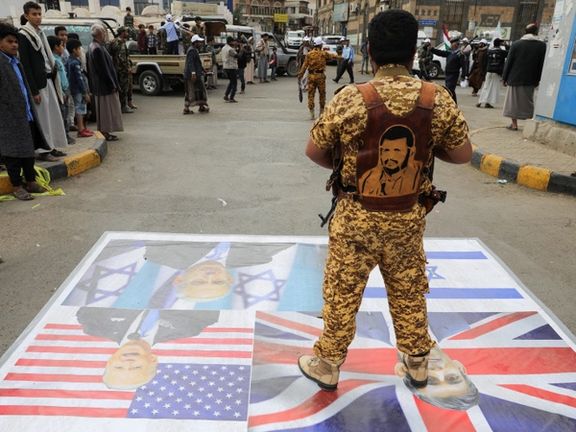
The US Central Command (CENTCOM) has announced the successful execution of self-defense strikes against Iran-backed Houthi vessels and missiles.

The US Central Command (CENTCOM) has announced the successful execution of self-defense strikes against Iran-backed Houthi vessels and missiles.
The announcement claimed that on Saturday, US forces "successfully conducted self-defense strikes against two unmanned surface vessels (USV) and three mobile anti-ship cruise missiles (ASCM) north of Al Hudaydah, Yemen, that were prepared to launch against ships in the Red Sea".
CENTCOM clarified that the vessels and missiles were identified in Houthi-controlled areas of Yemen and posed an imminent threat to US Navy ships and merchant vessels in the region. The operation was conducted with the aim of safeguarding freedom of navigation and ensuring the safety and security of international waters for both US Navy and merchant vessels.
Yemen’s Houthi militants have caused huge trade by targeting shipping lanes in key maritime areas such as the Red Sea, the Gulf of Aden, and the Bab el-Mandeb Strait in support of Hamas's war against Israel.
Iran-backed Hamas invaded Israel on October 7 and the Jewish state's retaliatory attacks have seen large swathes of Gaza destroyed. The Houthis' actions aim to force a ceasefire on Israel.
The Houthis claim to target exclusively Israeli and Israel-bound ships, citing a campaign initiated following a call by Iran's Supreme Leader, Ali Khamenei, in early November, but global shipping has suffered and international vessels have been victim to attacks.
Saturday's defensive attacks are the lastest in a series of actions from the US as the Biden administration comes under increasing pressure to take action against Iran's proxies which have launched over 180 attacks on US targets in the Middle East since October 7, including a deadly attack killing troops in Jordan.
The Biden administration listed the group as specially designated global terrorists (SDGT) last month in response to their rising threats in the region. However, when the administration assumed office in early 2021, it delisted the Iran-backed Houthi designation as both a foreign terrorist organization and as a specially designated global terrorist.

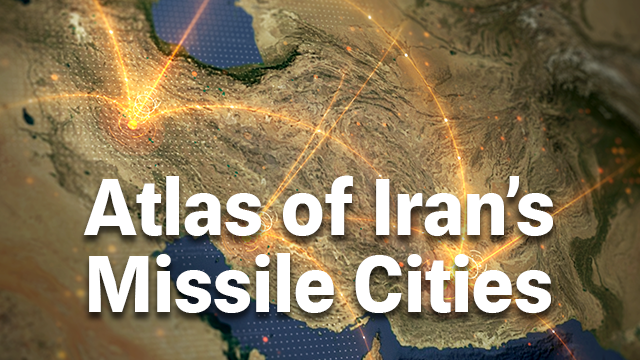
The military collaboration between Iran and Russia has significantly intensified since the invasion of Ukraine, with Tehran delivering offensive weapons used against civilian targets.
The recent revelation by the Prana Network of Iran's clandestine arms deal with Russia, valued at $1.75 billion, has sparked concerns about its implications on global security and regional stability. Additionally, Iran's acquisition of the Russian S-300 air defense system in 2016, along with its forthcoming procurement of advanced Russian military aircraft, signals a significant milestone in their evolving defense partnership.
It's worth noting that under Resolution 2231, which endorsed the 2015 nuclear deal known as the Joint Comprehensive Plan of Action (JCPOA), Iran was prohibited from importing and exporting certain missiles, drones, and related technologies without prior UN Security Council approval. However, this resolution expired in October 2023.
This growing alliance has raised concerns about the possibility of Iran supplying precision-guided ballistic missiles to Russia following the expiration of UN sanctions. However, some analysts remain doubtful about Iran's willingness to provide Russia with cutting-edge weaponry, citing concerns about preserving its own military capabilities and its desire for international recognition as a responsible arms trader. Nevertheless, the covert arms agreement between Russia and Iran, alongside their deepening military cooperation, underscores the need for vigilance regarding their actions and their potential impact on both regional and global security dynamics.
Regarding Leaked documents. Theodore Karasik, Senior Advisor from Gulf State Analytics, believes that "This data reveals details of the Russia-Iran relationship regarding weapon systems, despite budget constraints. Despite differences, they collaborate closely, as evidenced by the recent meeting between Russian National Security Advisor Nikolai Patrushev and his counterpart Ali Akbar Ahmadian."

The impact of the arms deals between Russia and Iran on the Middle East
The arms agreement between Iran and Russia has the potential to escalate tensions in the Middle East, leading to increased regional military spending and arsenals. This heightened militarization not only threatens regional stability but also poses risks to American and allied forces when engaging with Tehran's proxies. Additionally, by bolstering Iran's ballistic missile capabilities and potentially supporting Russia's operations in Ukraine, the arms transfer raises concerns about international security and the likelihood of further destabilization. Moreover, the agreement could fuel a regional arms race, undermining efforts towards peace.
Dr. Ariel Cohen, Managing Director of the energy, growth, and security program at the International Tax and Investment Center, and a Senior Fellow at The Atlantic Council, has underscored the economic implications of Iran's arms sales to Russia, raising questions about Tehran's motives and the impact on the Iranian people. Concerns persist regarding the involvement of nuclear weapon technology, potentially further destabilizing the Middle East. Additionally, the exchange of advanced weaponry between Iran and Russia poses a significant threat to global security, necessitating careful international monitoring and regulation to prevent escalating conflicts and instability worldwide.
Challenges and Opportunities
Understanding the challenges of Iran's covert arms trade, particularly with Shahed-136 drones and Russian weaponry, is essential for assessing its impact and requires a nuanced understanding of geopolitical dynamics and risks. These challenges include the potential escalation of war, violations of international law and sanctions, threats to regional stability, and reputational risks for Iran as an arms dealer. However, there are also opportunities for economic gains and the growth of Iran's military industry, as well as the strengthening of the Iran-Russian strategic partnership.
In conclusion, the Iran-Russia arms trade underscores geopolitical maneuvers, with Russia deploying inexpensive drones like the Shahed-136 against Ukrainian forces. This highlights the need for international collaboration to regulate the arms trade and ensure accountability, mitigating the destructive effects of conflict and fostering peace in affected regions. Questions about Iran's responsibility for the harm caused by these weapons emphasize the importance of international oversight in managing arms transfers and addressing broader conflict ramifications, advancing principles of transparency, accountability, and peace in conflict zones.

Two Basij militia members were killed in an armed assault on a guard post along the railway route from Zahedan to Bam in southeast Iran.
According to the Quds Headquarters of the Ground Forces of the Islamic Revolutionary Guard Corps, the two members were identified as Mohammad Anvar Gomshadzahi and Abdolhossein Baluch.
The incident follows a deadly assault in December perpetrated by the militant Sunni organization Jaish al-Adl, which targeted a police station in Rask, a small city in Iran’s Sistan-Baluchistan Province, resulting in the deaths of 12 police officers.
Sistan-Baluchistan Province, marked by poverty and bordering Afghanistan and Pakistan, hosts a substantial Sunni population from the Baluch ethnic group. The community faces pressure from Iran’s Shiite clerical rulers and experiences frequent clashes between security forces and Sunni militants, as well as drug smugglers.
Jaish al-Adl, purportedly advocating for greater rights and improved living conditions for ethnic minority Baluchis, frequently asserts responsibility for such attacks. Over recent years, the group has launched multiple assaults on Iranian security forces in the province.
In July, Jaish al-Adl targeted a police station in Zahedan, the provincial capital, alleging its involvement in the September 30, 2022, massacre of approximately 90 civilians, known as Black Friday. The ensuing anti-government protests following Friday prayers led to confrontations with security forces, resulting in demonstrations in Zahedan and the subsequent arrest of hundreds by security forces.

A conscript soldier turned into an assailant in a town near Tehran killing a law enforcement officer and a civilian before being killed in a police pursuit.
According to the Public Relations Office of the Alborz Province Police Command, the soldier, serving in the rescue unit, opened fire on a fellow unit member for reasons yet unknown, killing him. Subsequently, he proceeded to shoot and kill another civilian, hijacking his vehicle in the process.
IRNA reported that “law enforcement ordered the soldier to halt, but he ignored the commands, prompting officers to open fire. In the ensuing chaos, the soldier's vehicle overturned, leading to his death.”
The Alborz Police Command stated that the cause of the incident remains unclear and is currently under investigation.
The event follows a similar incident on February 1, when a soldier and an employee of the Pakdasht police station, east of Tehran were mistakenly killed in an “accidental shooting”.
The incident sheds light on the persistent issue of suicide and violence among soldiers in Iran, with numerous cases reported over the years. While exact statistics on soldier suicides are unavailable, media and social activists in Iran have raised concerns about the rising trend.
In a report two years ago, Shargh newspaper highlighted that besides actual suicides, around 15 percent of soldiers have suicidal thoughts, reflecting a troubling reality.
Compulsory military service in Iran, spanning nearly a century, adds to the complexity of the situation. An estimated three million soldiers are currently considered fugitives from service, with over 317,000 conscripts entering service last year alone.

The IRGC's deputy commander for operations, General Abbas Nilforoushan has said the IRGC keeps tabs on its enemies' activities and settles scores with them on a regular basis.
Nilforoushan told Etemad Online website in Tehran this week that the enemies are aware of IRGC's policy, which appears different from Revolutionary Guard’s declared strategy about its retaliatory measures. Chief Commander Mohammad Ali Jafari announced in 2016 that IRGC’s retaliation policy was not to react immediately, but act at a time and place of its choosing.
That was part of its asymmetrical warfare doctrine which often brought the Guards under criticism for "inaction" against attacks on their forces particularly in Syria.
The United States has launched precision strikes in the past few weeks against IRGC-linked bases in Syria and Iraq, as Israel has targeted senior officers based in Syria.
Nilforoushan now says that no attack on Iran's interests will remain unanswered, adding that Iran's response will come "on the spot" exactly where the attacks have taken place. This comes while since the killing of IRGC Quds Force commander, Qasem Soleimani, in 2020, IRGC has been criticized both in Iran and abroad for failing to properly respond.
Nilforoushan claimed that during the past 45 years, the IRGC has been striving to create some sort of balance with its enemies in terms of combat operations, influence and image building. He reiterated that IRGC's arch enemy during this period was the United States.

He boasted that unlike the pre-1979 era, when Iran was dependent on the United States, during the past 45 years, the Islamic Republic has become the biggest missile power in West Asia. Nilforoushan further claimed that the region's geopolitics has effectively changed as Iran became a regional power. He boasted that Iran, China and Russia were the world's strongest powers while US power has been diminishing.
The senior IRGC officer further claimed that the United States is not likely to remain a big power in the future, insisting that the most the US can do is to prevent its own downfall.
In the wake of the Israeli-Hamas conflict, some Iranian hardliners have boasted about Iran's increased military strength. However, simultaneously, they have begun retracting previous assertions regarding Iran's influence over proxy groups in Iraq, Syria, Lebanon, and Yemen. Recently, Interior Minister, Ahmad Vahid, emphasized that the United States must acknowledge its waning ability to meddle in the internal affairs of other nations.
Vahidi made the statement while US attacks on pro-Iranian militia positions in Iraq, Syria and Yemen were widely welcomed both in the region and in the international community as a measure in the interest of security of the region and international commercial navigation.
Meanwhile, former IRGC Commander Mohsen Rezaei has said the United States has come to the conclusion that it can restore security in the region only with the cooperation of the Islamic Republic, which has stayed out of direct involvement in the current conflict.
Rezaei also denied Iran's influence among its proxy groups in the region and said Iran was not involved in their attacks on US bases in the region. He claimed that Iran's influence is mainly about deterring attacks on the Islamic Republic.
In his interview, Nilforoushan emphasized that Israel has recognized the unlikelihood of a direct military clash between Iran and the United States. He asserted that Israel has also acknowledged its incapacity for a military showdown with the Islamic Republic and has opted to engage Iran solely in the ambiguous realms between other conflicts.
Furthermore, Nilforoushan emphasized the imperative for Iran to safeguard its intelligence assets and prevent their compromise to external entities. However, he overlooked the numerous Israeli assaults on Iranian installations in Syria and Israel's evident intelligence advantage concerning Iran's nuclear endeavors.

Iran’s foreign minister has criticized the US stance towards the Israel-Hamas conflict, stressing that peace will be restored to the region only id Israel’s military campaign in Gaza ends.
“The US is simultaneously moving in two directions: The first is to continue to send weapons [to Israel] … and the second is to talk about a political solution,” said Hossein Amir-Abdollahian Saturday during a joint press conference with his Lebanese counterpart Abdallah Bou Habib in Beirut.
“If the US wants peace in the region, the solution is to stop the crime and genocide in Gaza and the West Bank,” Amir-Abdollahian pointed out, further adding that the war has had “no tangible gains” for Israel and its supporters
According to Iran’s foreign minister, Tehran and Beirut have never sought to expand the war as they believe that it cannot be the solution.
Earlier in the day, Amir-Abdollahian met with Hezbollah leader Hassan Nasrallah and Lebanese caretaker Prime Minister Najib Mikati.
Iran provides significant support to Hamas and Hezbollah, as well as several other groups in the region designated as terrorist organizations, including Iraqi Shiite militias, Islamic Jihad in Gaza, and the Houthis in Yemen.
Upon his arrival in Beirut on Friday, Iran’s top diplomat pledged continued support for Hezbollah, emphasizing the interdependence of Lebanon's security with that of the Islamic Republic and the wider region.
Though Iran has avoided any direct military involvement in the Israel-Hamas conflict, the regime has used its proxy groups to attack Israeli and American targets in the Middle East.