Iran Issues $2.6b Verdict Against US Over Alleged Terrorist Support
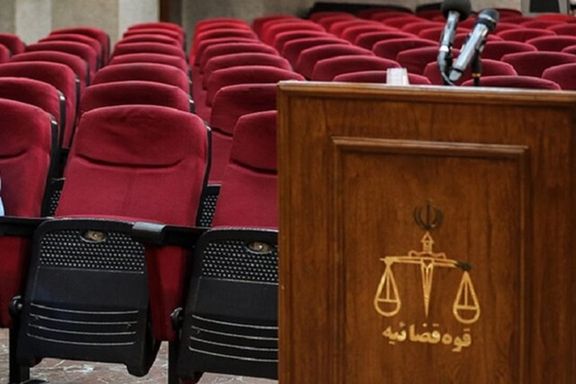
The Iranian government, long accused of being a primary supporter of terrorism, has issued a verdict condemning Washington for alleged assistance to the Jundallah terrorist group.
The Iranian government, long accused of being a primary supporter of terrorism, has issued a verdict condemning Washington for alleged assistance to the Jundallah terrorist group.
The Judiciary's announcement reveals that, following a lawsuit filed by 93 plaintiffs, including victims and survivors of the 2010 Chabahar suicide bombing, a special branch dealing with international lawsuits issued a verdict against the US government.
The incident, which took place on December 14, 2010, involved two suicide bombers targeting a Shia Muslim mourning procession in Chabahar, killing 39 people and injuring nearly 70.
Iran accuses Washington of orchestrating the attack and supporting the Jundullah group, a Sunni extremist rebel group that claimed responsibility for the bombing. US officials have not reacted to the accusation.
As part of the verdict, Iran claims “the US government has been ordered to pay a total of $290m for 58 injured ones of the terrorist incident (equivalent to $5m per claimant) and $140m for 35 family members of the victims (equivalent to $4m per claimant) as material damages.”
Additionally, Washington is sentenced to pay a total of $744 million for 93 claimants (equivalent to $8m per claimant) as “emotional damages.” The court has further condemned the US government to pay “punitive damages” equal to twice the emotional damages, totaling $1.488b, along with covering litigation costs and attorney fees.
In this case, the collective order for the defendant amounts to $2.662b.
Facing scrutiny for backing terrorist groups such as Hamas and the Yemeni Houthis, Tehran is seemingly attempting to shift blame onto the US to alleviate international pressure on itself.


The upcoming speech by Iran's Foreign Minister at the World Economic Forum (WEF) in Davos has ignited controversy, primarily due to accusations of his support for Hamas terrorists.
Jason Brodsky, Policy Director at United Against Nuclear Iran (UANI), expressed concerns regarding Hossein Amir-Abdollahian's connections with Hamas. Brodsky, in light of the WEF's theme of Rebuilding Trust, criticized the invitation, pointing to the foreign minister's defense of individuals accused of severe crimes.
“This is a man who defended Hamas terrorists as they raped women, baked babies in ovens, sliced women's breasts off, mutilated genitalia, and murdered citizens on 10/7 in Israel from many of the countries gathered in Davos,” he added.
Brodsky raised questions about whether WEF partners, including major corporations like Goldman Sachs, want their brands associated with someone tied to sponsoring terrorists engaged in atrocities. He highlighted the inconsistency of not inviting Hamas leadership while extending invitations to sponsors purportedly linked to such groups.
Calls have been made for the World Economic Forum to rescind Amir-Abdollahian's invitation due to his close ties to the Islamic Revolutionary Guard Corps (IRGC). Mark Wallace, CEO of United Against Nuclear Iran, and Alireza Akhondi, a Swedish parliament member of Iranian descent, conveyed their concerns in a letter to the forum and Swiss Foreign Minister Ignazio Cassis.
The letter underscored Amir-Abdollahian's affiliation with the IRGC's Basij paramilitary force and the IRGC Quds Force, citing his involvement in planning meetings before the October 7 Hamas onslaught on Israel. Wallace and Akhondi urged Switzerland and the WEF to deny a visa and invitation to a major Iranian sponsor allegedly connected to Hamas.
The 54th annual meeting of the World Economic Forum is scheduled to take place from January 15 to January 19, 2024.
Iran has significantly increased the consumption of Mazut, a dirty fuel, in cement factories, despite widespread warnings and criticisms of its use in power plants.
Ali-Akbar Alvandian, the secretary of the Association of Employers of the Cement Industry in Iran, has reported a several-fold increase in Mazut consumption in cement factories.
Alvandian informed ILNA news agency on January 12 that the gas consumption of the country's cement factories has decreased to 6 million cubic meters per day in winter, while their usual daily consumption stands at 27 million cubic meters. He revealed that 70% of the country's cement production now relies on Mazut fuel.
Iran faces a significant natural gas shortage during the winter, leading to the utilization of the highly polluting Mazut as an alternative fuel. While one liter of Mazut can replace one cubic meter of gas, its pollution levels are substantially higher than those of natural gas.
According to the Environment Agency of the German government as well as US Environmental Protection Agency (EPA), the direct CO2 emissions of Mazut (fuel oil) are 33% higher than natural gas. Iran’s Mazut also contains 3.5% sulfur, which is approximately seven times higher than the required standards for ship fuel, making it far more pollutant than natural gas.
Alvandian continued, mentioning that factories located away from urban areas use Mazut as an alternative fuel, but factories near cities have excluded furnaces have reduced its use.
He further disclosed that, on a general scale, 70 percent of the country's cement production now relies on Mazut fuel. Given the daily gas requirement of 27 million cubic meters for cement factories across the country, the current delivery of six million cubic meters per day combined with the production of 70 percent of the country's cement using Mazut, indicates that approximately 13 million liters of Mazut are used daily in Iran's cement production.
A document from the National Iranian Gas Company (NIGC), obtained by Iran International, reveals that Iran uses Mazut in cement factories even during the warm seasons. According to this document, the average gas delivery to cement factories during the summer was around 20 million liters per day, indicating that the sector used roughly 7 million liters of Mazut daily at full capacity.
Iran is currently grappling with a gas shortage not only in the cold seasons but also in spring and summer, leading to the utilization of Mazut as a fuel source.
Another document from the Ministry of Oil illustrates that Iran consumed 19 million liters of Mazut daily in industries and power plants during the spring and summer of the previous year. Mazut consumption in these sectors surges to 45 million liters per day in winter, with daily diesel consumption increasing by 10 million liters from summer to winter, reaching 127 million liters. This increase is attributed to a higher substitution of diesel with natural gas in the power and industrial sectors.
Alvandian has noted that the cost of cement production with Mazut is higher than the cost of production with gas, posing a dilemma for cement factories in the eastern part of the country that have switched to Mazut. He mentioned, "Cement factories are forced to source their required Mazut from the Rey and Tehran oil storage facilities, and the cost of transporting Mazut from Tehran to the eastern provinces is added to the production cost of these units."
Despite the country not experiencing the same level of cold as the previous year, gas consumption for domestic households remains unchanged compared to last year, making restrictions on gas supply to industries, including cement factories, inevitable, according to officials.
Statistics from the National Iranian Gas Company reveal that on Friday, January 12, the breakdown of gas consumption was as follows: the household sector consumed 385 million cubic meters, the transportation sector consumed 27.5 million cubic meters, the public and commercial sector consumed 60.5 million cubic meters, the agricultural sector consumed 27.5 million cubic meters, and the small industries sector consumed 60.5 million cubic meters. In total, these sectors accounted for 550 million cubic meters of gas consumption, which is 3.3 times higher than summer consumption.
The substantial increase in gas consumption in these sectors has compelled the government to significantly reduce gas supply to major industries, including cement, steel, petrochemicals, and others.
A document from the National Petrochemical Company indicates that Iran's petrochemical production capacity was 91.5 million tons last year. However, due to gas shortages in the fall and winter, as well as power outages in the summer, only two-thirds of this capacity was operational, resulting in actual petrochemical production in the country totaling only 59.7 million tons.
In a related context, Mehdi Mahdavi Abhari, the Secretary-General of the Petrochemical Employers Association, announced last week that Iran lost $800 million in petrochemical exports due to gas supply shortages last year.
The document from the National Gas Company reveals that during the summer, nearly 70 million cubic meters of gas were supplied daily to petrochemical plants, 20 million cubic meters to cement factories, 36.5 million cubic meters to steel mills, and 17.7 million cubic meters to refineries. In total, during the summer, 145.5 million cubic meters of gas were delivered to the country's major industries. However, on January 12 this year, this figure decreased to 110 million cubic meters.
Although Iran's winter is still relatively mild, last year, on some days, gas consumption in the residential, commercial, and small industrial sectors in Iran had reached nearly 650 million cubic meters. This resulted in Iran facing a daily gas deficit of 250 million cubic meters last winter.
Eleven prisoners have been executed in the central prison of Karaj, five convicted of drug-related crimes, while investigations into the identities and charges of the others are ongoing.
The US-based Human Rights Activists News Agency (HRANA) said that no official information or statements regarding the executions had been provided by the authorities or relevant institutions. According to HRANA, responsible institutions have only disclosed about 34% of the executions carried out in Iran over the past year.
Norway-based Iran Human Rights Organization reported another execution in Khorramabad on Saturday. The executed prisoner, identified as Reza Heidari, faced charges related to drug offenses, with the organization stating that he had been in detention for four years before being sentenced to death.
The Iran Human Rights Organization highlighted a continuous and significant increase in the execution of prisoners charged with drug-related offenses over the past three years. A comparison with the first six months of 2022, where 91 individuals were executed on drug-related charges, reveals a staggering 126% increase in the current year, with a total of 206 executions recorded under the charges.
According to HRANA's annual statistics, 2023 witnessed the execution of at least 791 citizens, including 25 women and 2 child offenders. This represents an alarming increase of over 33% compared to the same period in the previous year, raising concerns about the human rights situation in the country.
Iran-backed Houthis attempted to hit a US warship in the Red Sea on Sunday, but their missile was intercepted, according to the US military.
This latest Houthi attack comes only a few days after the airstrikes by the US and Britain on dozens of Houthi sites in Yemen, signaling that the group, which claims to be acting in support of Gaza under the Israeli onslaught, is not just undeterred but may be radicalized.
Shortly after the airstrikes last week, the Houthi leadership spoke of retaliation and threatened that all American and British interests would be “legitimate targets”.
Sunday afternoon (Yemen time), the Houthis fired an anti-ship cruise missile” towards USS Laboon (DDG 58), according to US Central Command. “The missile was shot down in vicinity of the coast of Hudaydah by U.S. fighter aircraft. There were no injuries or damage reported.”
The Houthis are no match for US and UK military power, but they seem to have enough determination and weaponry –provided by Iran– to make the Red Sea entirely unsafe for shipping, and escalate the conflict in the Middle East.
Initial assessments from the US suggests that no more than a quarter of the Houthis’ capability has been destroyed in the US/UK airstrikes.
The intercepted attack on a US warship may mean more airstrikes against Houthi targets in Yemen, something that most countries in the region, including US ally Saudi Arabia and Nato member Turkey, do not like for different reasons.
President Biden said following the airstrikes that there could be more if the Houthis don’t back down. He did issue a thinly veiled warning to the Iranian regime as well, saying a message had been delivered and they wouldn't do anything. Any further Houthi aggression could be testing for Biden as he’d have to juggle domestic calls for a show of strength and calls for restraint from crucial regional countries.
Britain will "wait and see" before deciding to launch fresh military strikes against the Iran-aligned Houthis in Yemen in order to protect international shipping, Defense Secretary Grant Shapps said on Monday.
"Let's wait and see what happens, because it's not that we want to be involved in action in the Red Sea. But ultimately freedom of navigation is an international right," Shapps told Sky News, when asked if Britain would carry out more strikes.
All this comes amid an ongoing Israeli onslaught on Gaza, which Biden wants to contain as he enters the 2024 election campaign begins in earnest
A new poll by ABC and Ipsos shows Biden’s approval rating has fallen to its lowest and “a record low for his presidency and for any president in the last 15 years."
In the survey, conducted the first week of January, only 33 percent of those surveyed said they approved of Biden, a 4-points drop from the previous poll in September 2023, while 58 percent said they disapproved of his performance, a 2-points rise since September.
The situation in the Middle East is likely to surface as a key theme during the election campaign, especially since Biden’s unconditional support for Israel seems to be losing him indispensable Arab/Muslim votes in such key states as Michigan –as well as some younger ‘progressive’ votes.
On the 100th day of the Israeli war on Gaza, the White House national security council spokesman John Kirby said that the Biden administration had been discussing with Israel “a transition to low-intensity operations” in Gaza.
“We believe it’s the right time for that transition,” he said in an interview with CBS. “And we’re talking to them about doing that.”
A member of the Iranian parliament pointed fingers at Israel, repeating accusations that they were involved in the twin bombings that rocked Kerman on January 3.
Abbas Golroo, belonging to the hardliner faction and member of the parliament's national security committee, made the comments in a Sunday interview with Jamaran website.
The Kerman attacks resulted in nearly one hundred deaths and hundreds of injuries along the route leading to a cemetery, where former IRGC commander Qasem Soleimani is buried.
While the ISIS of Afghanistan claimed responsibility for the suicide bombings, social media speculation within Iran continues, with some accusing the country's security and intelligence agencies of orchestrating the attacks to garner sympathy for the regime.
Golroo claimed that Iran has played a role in attacks against Israeli targets in European countries. He also highlighted Hamas' recent attack as a “successful challenge to Israel's defense capabilities.” He hinted at ongoing and planned actions against the Israeli interests in various regions.
“A portion of the actions that we receive reports about is actively taken against this regime, both in European countries and within the occupied territories, as well as in the region. Additional actions are also being planned,” added the MP.
Despite accusations against Israel for allegedly organizing the Kerman incident, the United States rejected any suggestion of Israeli or American involvement in the Kerman explosions.