Terror Attack Fallout: Iran Claims Success Amid Credibility Crisis

Following widespread criticism of Iran’s security failure that led to the deadly blasts last week, the intelligence ministry released further details on the incident.
Following widespread criticism of Iran’s security failure that led to the deadly blasts last week, the intelligence ministry released further details on the incident.
In its second statement after two explosions hit a memorial ceremony for slain Revolutionary Guard commander Qasem Soleimani near his grave on January 3, the Islamic Republic’s intelligence ministry said Thursday that 35 people have been arrested across the country over alleged links and support to the bomb attack. The terror operation was claimed by the ISIS branch in Afghanistan (ISIS-Khorasan). About 90 people were killed and 300 injured in the incident, the biggest terror attack since the Islamic Republic was founded in 1979.
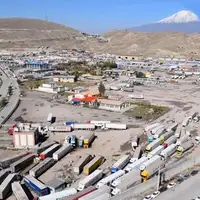
According to the ministry, the main operative who made the explosive vests and oversaw the operation is a man from Tajikistan known by the alias "Abdullah (Abdollah) Tajiki." He purportedly entered the country illegally from southeastern borders on December 19 along with a woman and a child. He was then transferred to Kerman province and settled in a rented house on the outskirts of Kerman city, where the attack took place. The ministry claimed that he left the country two days before the incident after he assembled the explosives.
The ministry also identified one of the two suicide bombers as a Bozorov or Bazirov, a 24-year-old Israeli man and a Tajikistani national. It also claimed that he resided in the Turkish city of Van before crossing through Iran and joined the ISIS-K in Afghanistan, where he underwent training. He came back to Iran after a few months via Saravan in Sistan-Baluchestan province and ultimately joined other agents in Kerman.
In an attempt to downplay the inefficiency of the country's security forces, the intelligence ministry said the perpetrators had decided to carry out the attack at Soleimani’s grave but ultimately had to change their plans and blow up themselves before reaching the inspection gates due to “stringent measures and multiple security layers.” “The first terrorist detonated his suicide vest approximately 700 meters from the cemetery, and the second terrorist detonated his explosive vest approximately 1,000 meters from the graves.”
The ministry also released a video montage featuring various individuals visiting the residence, accompanied by a tour of the premises, purportedly identified as the location where the explosive vests were made. The footage also showed search dogs unearthing equipment that reportedly was for the production of additional explosives.
The authorities, who found themselves in hot water over their intelligence lapse, swiftly reacted with multiple claims about their success in busting terror cells and foiling more attacks to rebuild their credibility. The haphazard response led to conflicting reports with some officials saying that the security apparatus thwarted dozens of bombings planned for the Soleimani’s death anniversary ceremonies and arrested “all people” involved.
Head of the Armed Forces' Judicial Organization in Kerman, Ali Tavakkoli, claimed that over 64 bombs were discovered nationwide, intended to detonate during the memorial for Soleimani.
Addressing the inconsistencies, the intelligence ministry said, “In recent days, statements suggesting the discovery of multiple bombing conspiracies have been released, raising some suspicions. The fact is that in such reports, two elements, namely the quantity and the timing of the discoveries of explosive materials, are not accurate.” It added that the reports were about the foiled bombing attacks in the past months and only one of the arrests was related to an operative linked to the bombing on Soleimani’s death anniversary. The ministry said he was a Tajik ISIS operative who planned a bombing in the city of Mashhad. His arrest was also featured in the ministry's video montage.
The ministry also claimed that it has identified several other people involved in the Kerman blasts beyond the borders, emphasizing that it considers its inalienable right to pursue them wherever they may be.
Although meant to replenish its blemished credibility, the intelligence ministry's move did not address the main questions: if the security apparatus was aware of the threats, why it went along with the ceremony and risked peoples’ lives? A large number of Iranians are of the opinion that the Islamic Republic needed such a deadly incident to justify its tight security measures that mainly target the people, not the enemies of the people.