Swedish Court Upholds Life Sentence For Iranian Jailor Hamid Nouri

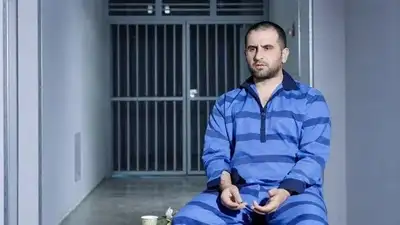
Following appeal, the Stockholm Court of Appeals announced it would uphold the life sentence of former jailor Hamid Nouri, for his role in Iran's 1988 massacres.

Following appeal, the Stockholm Court of Appeals announced it would uphold the life sentence of former jailor Hamid Nouri, for his role in Iran's 1988 massacres.
In addition to the life sentence, Nouri was also ordered to pay compensation to the families of the victims and political prisoners and faces expulsion from Sweden upon completing his prison term.
It is the first time that an official of the Iranian regime has been prosecuted for his role in the 1988 massacre.Nouri was a former deputy prosecutor at Gohardasht Prison in Karaj near Tehran at the time of the purge of political prisoners which saw around 30,000 people brutally murdered by the regime, around 90% of whom were members of the opposition People's Mojahedin Organization of Iran (MEK), party.
On July 14, 2022, Nouri was initially sentenced to life imprisonment for "war crimes" and "murder" by the Stockholm Regional Court, equivalent to 25 years in Swedish legal terms for which his legal team submitted an appeal.
Arrested on November 6, 2019, at Arlanda Airport in Stockholm, Nouri had dismissed all allegations related to the 1988 executions, labeling the events and charges against him as a "fictional, imaginary, and fabricated story."
The "Death Commissions" in 1988 followed the issuance of a fatwa by Ayatollah Ruhollah Khomeini, ordering the execution of thousands of political and ideological prisoners in the prisons of the Islamic Republic of Iran. The executions were carried out secretly, and burial orders were issued for mass graves.
Some individuals involved in the crime currently hold key positions within the Islamic Republic, including Ebrahim Raisi, the President of Iran, who previously served as the head of the judiciary and was a member of the Death Commissions in Tehran and Karaj.

Renowned Iranian activist and Nobel Peace Prize laureate Narges Mohammadi publicly declared her decision to abstain from attending her trial session on Tuesday.
Mohammadi, currently imprisoned, shared the decision through her Instagram account, where she characterized the Revolutionary Court as the "slaughterhouse of the youth" and expressed her unwillingness to participate in what she views as a judicial system influenced by security institutions and extrajudicial elements.
Mohammadi's decision to refrain from the trial is rooted in several concerns, including the perceived lack of independence of the judiciary, the illegality of the Revolutionary Court, secret show trials, and the denial of defendants' right to a fair defense.
The announcement of Mohammadi's trial was made on December 10, with the session scheduled for December 19, her first trial after being honored with the Nobel Peace Prize.
This marks the third trial for Mohammadi, with recent proceedings focusing on her activities within the confines of the prison and her anti-government statements. Mohammadi, in her Instagram post, labeled the prison as the "stronghold of the despotic government," asserting that such methods have failed in suppressing the determination of courageous prisoners.
In her previous two cases during her imprisonment, Mohammadi was sentenced to 27 months in prison along with four months of street cleaning and community service.
The Defenders of Human Rights Center, in a report following the Nobel Peace Prize ceremony, branded the latest prosecution against Mohammadi a retaliatory measure by the judiciary against her years of human rights advocacy.
The Nobel Peace Prize ceremony in 2023 took place on December 10 in Oslo, Norway, without Mohammadi's presence. Her children, Ali and Kiana Rahmani, accepted the prestigious award on her behalf.

The CEO of the National Iranian Oil Company announced a 60% growth in the country's oil production over the past two years in spite of global sanctions.
While Mohsen Khojasteh-Mehr attributed the achievement to “meticulous planning” within the government of President Ebrahim Raisi, a substantial portion of the shipments originated from stockpiled oil on tankers and ground facilities. With these reserves diminishing, Iran faces the imperative to boost production to sustain the current export pace.
The deputy oil minister stated that according to the statistics of the Central Bank of Iran (CBI), the oil and gas sectors have played the biggest role in the country's economic growth.
According to reports from the IRNA state news agency, Khojasteh-Mehr also added that “in the past two years, the oil industry has witnessed the signing of 54 contracts valued at $80 million.” He specified that the National Iranian Oil Company “holds 29 contracts, totaling $29 million, and anticipates an additional $40 million to be added to the company's share by the year's end.”
Experts say Iran possessed a stockpile of 115 million barrels in mid-2022. However, most of this oil has been sold, leaving only 27 million barrels—a quantity barely sufficient to sustain one month of exports.
Despite full US sanctions on Iranian oil exports imposed in May 2019, China remains the primary buyer. Initially, Iran's shipments dropped significantly to around 300,000 barrels per day. However, following the Biden administration's indirect talks with Tehran to revive the JCPOA nuclear deal, Chinese purchases increased. Some observers suggest that the United States has exercised restraint in cracking down, possibly to avoid jeopardizing the prospects of a nuclear deal.

Nine former politicians and civil activists in Iran have demanded the abolition of compulsory hijab, calling it “double suppression” of women.
“The Islamic regime has resorted to hijab to double its discrimination against women in an era when human equality, regardless of gender, race, ethnicity, creed and religion, plays a pivotal role in progressive human discourse,” a statement published Monday by Zeitoun news website said.
“The cruel and violent measures to enforce the mandatory hijab have been disastrous not only for women, but also for their fathers, husbands, and brothers. In other words, Iranian men have also found it difficult to bear so much oppression of women,” said the statement six of the signatories of which are also prominent political and intellectual figures.

Most of the signatories, including prominent female Islamic scholar Sedigheh Vasmaghi, are known as “religious intellectuals” in Iranian politics, meaning they advocate a moderate view of Islam.
Vasmaghi, 63, recently removed her veil after decades and even challenged Supreme Leader Ali Khamenei’s hijab edict, arguing that there is no foundation in the Quran or the Sharia for such an edict.
Zahra Rahnavard, one of the leaders of Iran's Green Movement, is also among the signatories of the statement. Rahnavard and her husband Mir-Hossein Mousavi have been under house arrest since 2011. The seventy- eight-year-old academic and artist chose to wear the hijab before the Islamic Revolution of 1979 and has still held on to it. Mousavi was prime minister in the early years of the Islamic Republic and both were committed supporters of the regime.
Prominent human rights lawyer and Sakharov Prize winner Nasrin Sotoudeh, 60, however, has for years fought against the compulsory hijab and defended other women who were prosecuted for protesting the mandatory hijab.
The statement also criticizes the regime for denying civil and human rights such as the right to work, study, benefit from social rights and services such as healthcare for not abiding by the hijab rules.
“These extreme beliefs and methods have imposed heavy costs on the country, particularly on Iranian women and girls, and caused the shedding of the blood of the likes of Mahsa and Armita,” the statement said.
The death of Mahsa (Jina) Amini, 22, in September 2020 in the custody of morality police resulting from injuries she sustained during her arrest for what the authorities called “inadequate hijab” sparked widespread protests across Iran that went on for months and were heavily suppressed by the government.
Tens of thousands were arrested during the protests, at least 550 protesters including 68 children were killed, and thousands including hundreds that lost their eyes to birdshot bullets fired directly in their faces by security forces, sustained very serious injuries.
Armita Geravand, 16, who sustained a head injury after allegedly being assaulted by hijab enforcers in a metro car in Tehran also fell to the same fate after a month-long coma on October 28.
Fearing another round of protests, authorities forced Armita’s family to bury her as discreetly as possible. Nevertheless, dozens including Sotoudeh and Vasmaghi, two of the signatories of the present statement, attended the burial at Tehran’s Behesht-e Zahra.
Sotoudeh who had previously called Armita’s death a “state killing’ and attended the funeral without a headscarf in defiance of the regime was detained, and Vasmaghi was assaulted by four agents but was reportedly rescued by other people at the scene.
In a commentary entitled “Lesson Taught By the Trumpeter Sadegh” published by the reformist Etemad newspaper last week, reformist commentator Abbas Abdi warned the regime that insisting on imposing hijab by all means including violence would only cause a massive negative reaction from the public.

After a major cyber attack, only 40 percent of Iran's gas stations were operational on Tuesday morning, and only cash payments able to be processed.
The cyberattack responsible for crippling gas stations across Iran on Monday was claimed by the hacking group "Gonjeshk-e-Darande" or Predatory Sparrow. The group, previously accused by Iran of having links to Israel, announced the attack on X, stating that they took out "a majority of the gas pumps throughout Iran."
In statements in both Persian and English, the hacking group declared that the "cyberattack comes in response to the aggression of the Islamic Republic and its proxies in the region." They further warned, "We will impose a cost for your provocations. This is just a taste of what we have in store."
The ongoing disruption follows a commitment made by Javad Owji, the Minister of Oil, who assured on Monday that "within 2-3 hours, all stations in the country will be manually active."
On October 26, 2021, another widespread cyberattack affected all 4,300 fuel stations in Iran. Despite initial assurances of a one-day resolution, it took an additional three days for all stations to return to the online system.
Meanwhile, the Ministry of Oil dismissed any connection between the disruption and changes in gasoline prices. Salarinasab emphasized, "The news related to an increase in gasoline prices is a rumor."
The disruption in Iran's fuel distribution network comes just a month after an official claimed on television that the "smart fueling system" is "completely independent" and "not susceptible to hacking or disruption."

The Islamic Revolution Guards Corps (IRGC) Navy has established a voluntary unit with scope to carry out marine military operations, according to a top commander.
Local sailors will be allowed to carry out missions on vessels armed with rockets, according to IRGC Navy Commander Rear Admiral Alireza Tangsiri, who said the naval Basij has been organized after the successful formation of the maritime Basij in the Persian Gulf.
According to local reports, he said the maritime Basij in the Persian Gulf includes 55,000 voluntary forces with 33,000 vessels, noting that the second phase will be established in the Caspian Sea.
Tangsiri said the naval Basij involves large boats and launches that can sail as far as Tanzania. The shadow navy will have a presence in a series of coastal villages in southern Iran which have been equipped with military vessels.
“The Basij forces use those vessels that are furnished with weapons such as 107mm rockets, and fire them when necessary,” he said.
The revelations come against the backdrop of heightened tensions prompted by attacks on commercial shipping off the coast of Yemen, attributed to Iran-backed Houthis. Simultaneously, Washington is considering reinforcing measures to protect shipping in the Red Sea, where the Yemeni Houthis, with support from Iran, have targeted vessels in recent weeks.
Despite steering clear of direct military involvement in the Israel-Hamas conflict, Iran has leveraged allies such as the Houthis and militant groups in Iraq and Syria to target both Israel and American interests in the region.
Criticism has been directed at the Biden administration for perceived shortcomings in deterring Iran and its proxies in the Middle East, Iran's involvement in the seizure and harassment of vessels forcing the United States to bolster its military presence in the region.