US Stands Ready For Further Action In Response To Iran-Linked Attacks

US President Joe Biden says Washington is prepared to take additional measures following a series of attacks by Iran-linked groups targeting US forces in Iraq and Syria.

US President Joe Biden says Washington is prepared to take additional measures following a series of attacks by Iran-linked groups targeting US forces in Iraq and Syria.
Early on Friday, US fighter jets carried out airstrikes in eastern Syria, targeting locations associated with Iran's Revolutionary Guard Corps. The strikes were a response to a barrage of drone and missile attacks against US bases and personnel in the region that began the previous week.
In a letter addressed to the new House Speaker Mike Johnson, Biden made it clear that the recent strikes were executed with the aim of establishing deterrence.
“The strikes were intended to establish deterrence and were conducted in a manner to limit the risk of escalation and avoid civilian casualties. I directed the strikes in order to protect and defend our personnel, to degrade and disrupt the ongoing series of attacks against the United States and our partners, and to deter Iran and Iran-backed militia groups from conducting or supporting further attacks on United States personnel and facilities,” read his letter.
US Defense Secretary Lloyd Austin, in a statement, described the precise self-defense strikes as a response to a prolonged series of mostly unsuccessful attacks on US personnel in Iraq and Syria by Iranian-backed militia groups, commencing on October 17.
Meanwhile, on Friday, the IRGC-affiliated news agency, Tasnim, reported that gunmen in eastern Syria fired ten rockets at a base housing American troops in retaliation for the US airstrikes. A US official confirmed the rocket attack, noting that there were no reported casualties.


Armita Geravand, a 16-year-old student who suffered a head injury in an encounter with Tehran’s hijab police has passed away in hospital, reports said on Saturday.
On October 1st, Armita, a high school student, fell into a coma after she was stopped by hijab enforcers in Tehran subway. Although, the government prevented any clear information about what took place, but apparently a woman agent pushed her and Armita fell, receiving a severe head injury.
There was a tight police cordon around her in Tehran's Fajr Hospital to prevent photographs or information from reaching the public. Earlier reports in the Iranian state media indicated that the 16-year-old was brain dead.
Earlier, Iran International received information that Armita Geravand's family faced pressure from authorities to relocate her body discreetly from Tehran to Jafar Abad, Kermanshah, in the event of her death, revealing it was at the order of Iran's Leader, Ali Khamenei.
Following the death of Mahsa Amini in September 2022, the Iranian clerical regime is apprehensive about a resurgence of the extended anti-establishment protests and the 'Women, Life, Freedom movement' seen last year.
The circumstances of Geravand's case closely resemble those of Mahsa Amini's death last year while she was in the custody of morality police. In both instances, the regime denied any wrongdoing but pressured the families to refrain from speaking to the media.
The regime's explanation of what caused the death of this teenage girl has been questioned on social media. Many emphasize that she was "killed" by hijab enforcers, much like Mahsa Amini's case, when the government tried to offer an explanation that she had pre-existing health issues, but the public did not believe it.
Information obtained by Iran International had indicated that additional family members and relatives of Armita Gravand had been threatened and are prohibited from discussing her condition with the media.
There were concerns among the Geravand family and their relatives that security agents might have installed eavesdropping devices or cameras inside their residences, causing them to feel unsafe in their own homes.
Moreover, her parents were required to sign a statement committing not to file a complaint against "any individual, organization, or entity."
Her death has triggered a flood of swift reactions from activists, journalists, and others who have turned to social media to protest against the regime and mourn her passing.
Behnam Gholipour, journalist, wrote on X: "The [political] system that killed this sweet girl is the flagbearer for Gaza."
Political commentator Sadegh Zibakalam in Iran also expressed condolences to Armita's family following her passing, saying: "I hope her death will cause the system to reconsider its stance on compulsory hijab. How many Mahsas and young Armitas must be buried before the authorities accept that you cannot force people to wear the hijab or remove it?"
Iran's parliament passed a stringent 'hijab bill' on the first anniversary of Mahsa Amini's death in mid-September, which, if violated, can result in ten years' imprisonment. Women have been required to wear the hijab by Iran's theocratic establishment since 1979, when the secular Shah was overthrown. However, the 'Women, Life, Freedom' movement has permitted more women to appear unveiled in public places, including malls, restaurants, and stores.
In response to the hospitalization of Armita Geravand, Amnesty International has asked the international community to urge the Iranian authorities to allow an independent international delegation, including UN experts, to investigate the incident.

In a surge of persecutions against the Baha'i religious community in Iran, 36 new incidents have come to light in recent days, disproportionately impacting women.
Ten women, many of them young, were apprehended in Esfahan (Isfahan), central Iran, earlier this week, with an additional three arrests reported in Yazd, the Bahai’s International Community reported.
The arrests were marked by home invasions and the confiscation of personal possessions, including electronics, books, cash, and even gold. In a particularly disconcerting instance, more than ten agents were involved in the raid during one woman's arrest.
Each of the arrested Baha'i individuals and the victims of home invasions carried out by the Iranian government has a profoundly personal and harrowing account of persecution that has permeated every aspect of their lives, the statement says.
The recent wave of arrests and harsh prison sentences follows over a year of heightened attacks on Iran's Baha'i community. Dozens of Baha'is have been subjected to arrests, trials, sentencing, or bans from university education and livelihoods in recent months. In August, the Baha'i International Community reported that 180 Baha'is, including a 90-year-old man had been targeted.
Two other Baha'i women, Mahvash Sabet and Fariba Kamalabadi, who had previously endured a decade in prison from 2008 to 2018, were re-arrested in July 2022 and are currently serving a second 10-year jail term.
In Iran, approximately 300,000 Baha'is reside, and they frequently document a pattern of systematic rights violations. The violations encompass harassment, forced displacement from their residences and businesses, and unequal treatment with regard to government employment and access to higher education.

Although reports say around 40,000 people have registered as candidates for the 290 seats of the Iranian Parliament (Majles), no one knows how accurate the figure is.
Online registration for the upcoming parliamentary elections, scheduled for March 1, 2024, was conducted discreetly. The registration website is not accessible to the public, leaving candidates' identities concealed.
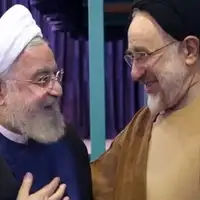
Several prominent figures, including former Presidents Mohammad Khatami, Mahmoud Ahmadinejad, and Hassan Rouhani, as well as former Majles Speakers Ali Akbar Nateq Nouri, Gholam Ali Haddad Adel, and Ali Larijani, have announced their decision not to run in the election.
While Rouhani, Ahmadinejad, and Larijani plan to support like-minded candidates, Khatami seems disinterested in the election, possibly stemming from previous frustrations with reformist candidates being disqualified by the regime in past elections. Some even interpret his lack of interest as a sign of boycotting the election altogether.
Some reformists, most notably women's rights activist Faezeh Hashemi has openly boycotted the election and several other reformists have said they might consider a boycott if the situation of vetting and approval of candidates remains as biased and restrictive as before. Some political figures such as the former mayor of Tehran Gholamhossein Karbaschi have called on reformists not to be shy or intimidated and to officially declare their boycott.

Centrist politician Mohammad Namazi says the upcoming election will offer no surprise as he cannot see any sign of a competitive plebiscite ahead. According to Nameh News, political activity concerning the upcoming election appears to be at a minimum.
Namazi, armed with insider knowledge, emphasized that while approximately 40,000 individuals have submitted their candidacies, there is a noticeable absence of prominent political figures among them. Furthermore, he highlighted the persistence of rigorous restrictions and filters imposed on candidates through the vetting process, which is overseen by the Guardian Council under Supreme Leader Ali Khamenei's control. Despite the active involvement of certain conservative factions, Namazi noted a lack of enthusiasm among other politicians and the general public, especially in major urban centers. He found it peculiar that there is no discernible government-driven momentum or excitement surrounding the forthcoming elections.
Most political parties seem to lack a well-defined strategy for the upcoming elections. Hossein Marashi, a senior member of the centrist Executives of Construction, was reported as stating that his party intends to withhold its decision until the Guardian Council releases the list of approved candidates. Only then will they consider endorsing a select number of candidates.
Marashi has also suggested that the government holds the key to whether the upcoming elections will be competitive. If the government chooses to extend the registration period and permits broader participation, competitive elections could become a possibility. In such a scenario, political parties may take the opportunity to present their platforms and agendas to persuade the public to participate.
Meanwhile, conservative politician and Islamic Coalition Party member Hamid Reza Taraqqi admitted in an interview that a large number of Iranians did not know that this is an election year in Iran. However, he suggested that lack of public interest is an indication that Iranians are overwhelmed by the news of the war in Gaza. It seems he overlooked the possibility that voters' reluctance and indifference might be a consequence of the government's apathy toward the demands expressed by the people in various nationwide protests since 2018.
The only part of the Iranian political spectrum which is happy about the people's indifference is the ultraconservative Paydari Party which has the upper hand in the current Majles with scores of young but otherwise inexperienced lawmakers who now have a proven record of inefficiency and lack of interest in the people's demands. They know that like the previous election, they can easily win the parliament in a low-turnout election.
Rumor has it that Paydari has registered the candidacy of a couple of its heavyweights such as Party Leader Sadeq Mahsouli and former nuclear negotiator Saeed Jalili. If this is true, it shows that Paydari is planning to further strengthen its foothold in the parliament and Iran's next government which is to be elected two years after the Majles election.
According to unofficial reports on candidate registrations, around 40 percent of candidates are between 30 and 40 years old, 36 percent are aged 40 to 50, while the remaining candidates fall in the 50 to 75 age range. This trend reflects the ongoing shift toward a younger generation of politicians in the Majles, many of whom may lack a deep understanding of the clerical regime’s founding promises regarding the welfare, freedom, and independence of Iran.

Israel stepped up air and ground attacks on Hamas in the Gaza Strip Friday as the UN General Assembly endorsed a resolution calling for a truce.
The Israeli military said air and ground forces have widened their attacks and the Palestinian militant group said its fighters were clashing with Israeli troops in areas near the border with Israel.
"In the last hours, we intensified the attacks in Gaza," Rear Admiral Daniel Hagari, spokesman for Israel's military, told a televised news briefing after dark on Friday. Israel's air force was conducting extensive strikes on tunnels and other infrastructure, he said.
"In addition to the attacks carried out in the last few days, ground forces are expanding their operations tonight," he said, raising the question of whether a long-anticipated ground invasion of Gaza may be beginning.
The military wing of the Islamist militant group – designated as terrorist by the US and several other countries – said their forces were clashing with Israeli troops in Gaza's northeastern town of Beit Hanoun and in the central area of Al-Bureij.

The United Nations General Assembly backed a resolution drafted by Arab states calling for an immediate ceasefire in Gaza, the release of all civilians, the protection of civilians and international institutions, and ensuring the safe passage of humanitarian aid into the Strip.
The resolution is completely symbolic and not binding but reflects the global mood about Israel’s retaliatory offensive against Hamas, one of Iran’s proxy militias that killed 1,400 Israelis and took over 220 hostages on October 7, the largest attack on the Jewish state since the Yom Kippur War, a three-week armed conflict fought in October 1973 between Israel and a coalition of Arab states led by Egypt and Syria. The resolution passed to a round of applause with 120 votes in favor, while 45 abstained and 14 -- including Israel and the United States -- voted no.
Canada sought to have an amendment added to the resolution to include a condemnation of Hamas, and a majority of members backed the proposal, but it fell short of the two-thirds majority needed to be adopted.
Immediately after the multi-thronged operation that Hamas calls al-Aqsa Flood, proclaiming its goal of flooding Israelis out of al-Aqsa, Iran and several other countries as well as world bodies started urging an end to the conflict. According to Palestinian authorities Israel’s retaliatory fire has killed over 7,000 Palestinians.

All the country’s resources should be at the disposal of the government to help Gaza and Palestine fight Israel, a firebrand senior cleric has said during Friday prayers.
Ahmad Alamolhoda is Supreme Leader Ali Khamenei’s representative in one of the most important Shiite cities, Mashhad, where a revered imam is buried. He is also the father-in-law of Ebrahim Raisi, who was handpicked by Khamenei to become president in 2021, simply by barring all other serious candidates from running, in what turned out to be a selection rather than an election.
“As soon as the Supreme Leader commands, we should all rush to help Palestine and Gaza using all of the resources belonging to the regime and the people.”
“We have a duty to destroy Israel,” Alamolhoda said.
The hardline rhetoric comes amid rising tensions in the Middle East as the Hamas-Israel war rages on. This adds to the wave of incendiary remarks made by Iranian authorities in recent days warning Israel and its ally the United States of escalating tensions if attacks on Gaza don’t stop.
On Thursday, Iran’s foreign minister, Hossein Amir-Abdollahian repeated the regime’s warning during an emergency meeting of the UN General Assembly on the Israel-Hamas conflict in New York.
"I say frankly to the American statesmen, who are now managing the genocide in Palestine, that we do not welcome the expansion of the war in the region.”
“But if the genocide in Gaza continues, they will not be spared from this fire,” said Abdollahian.