Pressures Grow In Washington 'To Rein In' Iran

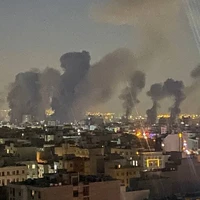
Two weeks after Hamas attacked Israel, diplomatic efforts have intensified to prevent a full-blown regional war involving Iran and its proxies in the Middle East.
Two weeks after Hamas attacked Israel, diplomatic efforts have intensified to prevent a full-blown regional war involving Iran and its proxies in the Middle East.
On Friday, President of the EU Commission Ursula von der Leyen, who has traveled to Washington for a US-EU summit, raised the issue with US President Joe Biden.
“We must work actively to prevent regional escalation,” von der Leyen said, “I am particularly concerned about Iran and its proxies. We have all seen the incidents involving missiles and drones from Yemen potentially targeting Israel.”
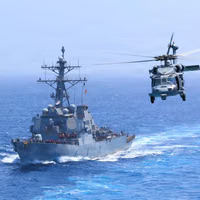
Pentagon officials confirmed Friday that the American warship USS Carney intercepted 4 cruise missiles and 15 drones over a period of 9 hours in the Red Sea, all headed towards Israel reportedly.
Targeting Israel from a place as far as Yemen is yet another worrying sign that the Israel-Hamas conflict may very well escalate beyond Gaza.
Biden suggested on Friday that the aim of Hamas' attack on Oct. 7 was to disrupt the potential normalization of relations between Saudi Arabia and Israel.
Tensions run high, particularly since an explosion in a Gaza hospital for which Israel and Hamas blame one another. Arab leaders are anxious about the popular rage in their countries, created by the plight of Gazans.
Many fear that the war between Israel and Hamas may bring in other regional actors such as Hezbollah or Shi’a armed groups in Iraq.
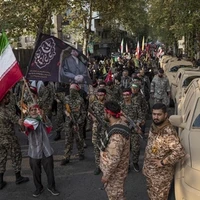
German foreign minister Annalena Baerbock warned these groups to not enter the conflict. “I'm warning Iran,” she said during her trip to Israel, “I'm warning Shiite militias in Iraq, I'm warning the Houthi in Yemen not to ignite and join in the terror."
The biggest threat to Israel, however, is Hezbollah in Lebanon, which has been engaged in a relatively low-profile war with Israel for more than a week. The Group has reportedly amassed tens of thousands of rockets since Israel’s last attack on southern Lebanon in 2006.
Hezbollah’s shelling of northern Israel has forced the country’s Defense Ministry to preemptively evacuate around 20,000 of the border town of Kiryat Shmona.
There is little doubt that Hezbollah, Houthis, and other militant groups in the region are more emboldened than ever before. And more than a few in Washington and elsewhere are pinning the blame on President Biden for what they see as a cowed Iran policy.
Senator Tom Cotton, a vocal critic of the administration said Friday: “President Biden needs to make it crystal clear to Iran that we will treat any proxy attack on American targets as an attack by Iran itself and respond accordingly. Anything less invites more violence.”
In a rare speech from the Oval Office Thursday evening, President Biden asked for billions to be spent on the conflicts in Ukraine and Israel, but strikingly mentioned Iran only once.
Around the same time as Biden was addressing Americans, rockets hit a military base near Baghdad's international airport which hosts US troops and forces from other countries. Ironically, this was the day after a big chunk of UN sanctions on Iran –including on its missile program– expired under the terms of the 2015 Nuclear Deal.
“Biden has given Iran another gift by permitting a set of UN sanctions on Iran to expire, even after Iran and its terror proxies orchestrated a heinous attack massacring and kidnapping American and Israeli citizens,” said Ron DeSantis, Governor of Florida and 2024 Presidential Candidate.
In a lengthy post on X, DeSantis laid out six actions aimed at curbing the Iranian regime's influence, which include "imposing severe sanctions," "halting all clandestine negotiations and agreements," and "urging US allies to designate the IRGC as a terrorist organization."
“America must turn the screws on the Mullahs,” he concluded.
Republicans on the Capitol have been mounting pressure on Biden for many months, especially since the ‘double scandal’ in September: the exposure of an Iran influence network and the $6 billion ransom to free five Iranian-American hostages held in Tehran.
On Thursday, Rep. Darrel Issa introduced a bill that would force the Biden administration to sanction Iran, according to Fox News. He hammered Biden for ‘systematically’ under-enforcing oil sanctions and freeing Iranian funds in Iraq.
“This comprehensive legislation marks a necessary course correction in American policy to treat Iran not as a strategic partner, but as the enemy they are," he said, calling his bill the No Funds for Iran-Backed Terror Act.
The measure was introduced Thursday. Republicans in the House have still yet to come to agreement to elect a new speaker after Rep. Kevin McCarthy was voted out from the post earlier this month.
The legislation cannot be considered until a new House speaker is elected.