Iran’s Nuclear Expansion: Gaining Leverage Or Part Of Wider Ambition?

As diplomats weigh whether Iran’s nuclear expansion is angling for greater leverage at the negotiating table or part of a wider plan, recent talks raise questions.
As diplomats weigh whether Iran’s nuclear expansion is angling for greater leverage at the negotiating table or part of a wider plan, recent talks raise questions.
The Financial Times reports that even if it is a negotiating tactic, the more advanced the program becomes, the more Tehran is expected to demand in return for reversing its gains.
That is why more media reports indicate a limited nuclear deal in the offing, with Iran to cap uranium enrichment at 60 percent while the United States gives some sanctions relief to Iran.
Henry Rome of the Washington Institute for Near East Policy told the newspaper: “As they [Iran] accumulate more and more chips on the nuclear side, yes they could give some away, but it also moves them closer to what has arguably been the long-term goal — to be recognized as a nuclear threshold state.”
As Iran gets closer to its goals, pushing evermore the boundaries of agreed terms, the chances of a reverse look increasingly unlikely. “Once you’re there, it might be tough to argue to give that up,” Rome added.
Time is ticking with October approaching, the time when the nuclear deal, or JCPOA clauses that impose sanctions on Iran’s ballistic missile program expire. While the likes of the E3 (UK, France, Germany) and US scramble to makes things right, Iran shows no signs of abating.
The regime continues to sell weapons to Russia even after months of denial. New revelations reported by Israel’s ALMA research center show that it is a complex operation with no end in sight.
The Biden administration is trying its best to calm the situation, not least with the chances of a Trump return in 2024 -- or yet still, another Iran hawk - don’t look as unrealistic as many would hope.
Whether that be another destabilizing factor or a deterrent to Iran is yet to be seen as the regime becomes ever more emboldened in the wake of diplomatic victories such as its recent detente with Saudi Arabia.
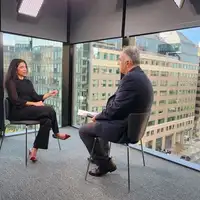
Speaking to the Financial Times, Hossein Mousavian, a former senior Iranian official now at Princeton University, warns that if there is no deal there would be an escalation with Iran enriching at 90 percent, the west triggering snapback UN sanctions and Tehran suspending its membership of the Treaty of Non-Proliferation of Nuclear Weapons.
He somehow believes Iran is ready to revive the JCPOA, or reach a deal in which Tehran reduces tensions and the US turns a blind eye to oil and petrochemical exports.
Though hard to believe given the extent of sanctions, Mousavian claims Iran expected to be set to benefit from a Russian war with Ukraine as oil and gas supplies became scarce. Hoping that would help secure a better deal, that, he says, led Iran to reject draft proposals last August.
What few analysts seem to be sufficiently aware of is Iran's worsening economic crisis, with inflation reaching 70 percent and the currency, rial, losing half its value in the past year. While Iran might be trying to use its nuclear escalation option, the United States has its foot on the regime's financial lifeline.
Moving forward, Mousavian seems to think as long as Khamenei is in power, the regime will not seek to develop a weapon. Its actions say otherwise. “If there’s a Trump school of thought, then everything would be terminated; plan A, plan B, the JCPOA, [everything] but coercion or war,” Mousavian says. “The response would be: go for nuclear to reach a deal.”
If the ageing supreme leader, now 84, were to be no more, “nobody knows what could happen after”, he said.