US Sanctions Created Real Economic Crisis In Iran – Treasury

The US Treasury Secretary Janet Yellen says Washington is mulling over new ways to strengthen its sanctions against the Islamic Republic.

The US Treasury Secretary Janet Yellen says Washington is mulling over new ways to strengthen its sanctions against the Islamic Republic.
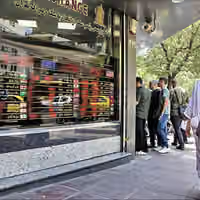
Yellen said on Thursday the United States was looking at ways to increase the efficacy of its sanctions regime, acknowledging that the punitive measures had not resulted in the behavioral or policy changes Washington seeks from Tehran.
"Our sanctions on Iran have created real economic crises in the country, and Iran is greatly suffering economically because of the sanctions ... Has that forced a change in behavior? The answer is much less than we would ideally like," Yellen told lawmakers in a hearing.
She did not specify what behavioral change Washington was expecting from Tehran, nor did she elaborate on the new ways.
Critics of crippling economic sanctions imposed by Trump administration since 2018 and largely maintained by the Biden administration, argue that Iran’s behavior has not changed as it has accelerated its nuclear program and continues to sow instability in the region.
Supporters of the sanctions say that the Iranian regime is facing a serious financial crisis, which impacts its ability to pursue its military and malign activities. They also argue that sanctions take time to have a behavioral impact, citing Russia’s continued aggression in Ukraine despite Western sanctions.
Although the Biden administration has continued issuing new sanctions against certain Iranian entities and individuals for their role in acquiring nuclear technology or money laundering, Iran has increased it oil exports since 2021.
Tweet unavailable

A group of US Republican senators has urged the European Union to designate Iran's Islamic Revolutionary Guard Corps (IRGC) a terrorist organization.
In a letter to EU Foreign Policy Chief Josep Borrell on Wednesday, 12 Republican senators led by James Risch (R., Idaho) said: "The IRGC clearly presents a threat to the EU and our collective security."
They further added that "it is long past time to cut off its resources before the next tragedy strikes", referring to attacks the organization has committed overseas, including the high profile attempted murder of author Salman Rushdie during a speaking engagement in the US.
The regime vehemently denies responsibility though said Rushdie had crossed a "red line" against Islam, tacitly approving of the incident which left him with life changing injuries.
According to a copy of the letter exclusively obtained by the Washington Free Beacon, Republicans say an EU "designation will cripple the IRGC's ability to promote terrorism and will make the world safer for Americans and Europeans alike".
The European Parliament overwhelmingly passed a resolution on January 19 calling on the EU and member states to designate the IRGC, however, several states including Germany fear designation will close the window of diplomacy regarding Iran's nuclear program may be closed.
The United States designated the IRGC as a global terrorist organization in 2019. It has carried out multiple cyber attacks and threats to the lives of Iranians abroad, including staff at Iran International based in the UK.

Iran’s foreign ministry said Tuesday that European Union and British sanctions announced Monday were intended to divert attention from serious problems in Europe.
The EU Monday imposed a new package of sanctions against Iran in response to human rights violations, adding eight individuals and one entity to its list of designations.
"In particular, the Council is sanctioning members of the judiciary responsible for handing down death sentences in unfair trials, and for the torturing of convicts," the EU said in a statement.
Foreign ministry spokesman Nasser Kanaani was quoted by the official IRNA news agency as saying that Europe “instead of intervening in the internal affairs of others should avoid violent behavior and crackdown on protesters,” referring to protests in France.
Kanaani has been regularly criticizing France for alleged violations of human rights against its citizens, saying it uses violent methods against protesters.
The United States, European Union and individual European countries have imposed several rounds of sanctions against institutions and individuals carrying out rights violations against antigovernment protesters and arresting people for simply voicing support for the Woman, Life Freedom movement.
Around 500 civilians were killed by Iran’s security forces in the first five months of the protests that began in September after Mahsa Amini, a young woman was killed in the custody of the notorious ‘hijab police.’
Kanaani, calling Western sanctions “illegal and illogical” threatened retaliation, saying Iran reserves the right to “respond” to sanctions.

The United states announced fresh sanctions Tuesday against four entities and three individuals accused of involvement in procuring parts for Iran’s drone program.
The US Treasury Department’s Office of Foreign Assets Control (OFAC), in coordination with the Federal Bureau of investigations (FBI) targeted a network in Iran and Turkey for involvement in the procurement of equipment, including European-origin engines for drones on behalf of Iran’s defense ministry and Armed Forces Logistics (MODAFL), which is already designated by the US.
Iran has been supplying hundreds of its Shahed kamikaze drones (UAVs) to Russia that have been used since October to target Ukraine’s military and civilian infrastructure. The United States and its European allies have warned Tehran to cease its military support to Russia, as they provide air defense and other weapons to Ukraine to defend itself against massive Russian bombardments.
Although the Treasury’s announcement did not mention Russia, but Western officials have repeatedly noted Iran’s drone supplies and have warned that Tehran is also contemplating to provide missiles to Moscow.
“Iran’s well-documented proliferation of UAVs and conventional weapons to its proxies continues to undermine both regional security and global stability,” Under Secretary of the Treasury for Terrorism and Financial Intelligence Brian E. Nelson said. “The United States will continue to expose foreign procurement networks in any jurisdiction that supports Iran’s military industrial complex.”
The US has intensified targeted sanctions against companies and individuals since September, when 18 months of nuclear negotiations with Iran ended in impasse. At the same time, nationwide antigovernment protests erupted in Iran followed by deadly crackdowns that killed around 500 civilians. Third, came the use of the kamikaze drones by Russia, which ended any immediate hope of more talks over the nuclear issue.
The Treasury noted that just over a week earlier it had designated a China-based network in connection with Iran’s UAV procurement efforts.
Parts of Iranian drones shot down in Ukraine show that they included hundreds of American and other Western-made parts.
In January, Canada’s Bombardier Recreational Products (BRP) submitted a report to the government on its engines ending up in Iranian-made drones used by Russia. The drones used the company’ Rotax-912 engines.
Bombardier ended supplies of the engines to Iran in 2019, although the Mahtabal company in Tehran still markets itself as official representative for Rotax engines. The date – 2019 – suggests this was a response to the United States 2018 introduction of ‘maximum pressure’ sanctions that threatened punitive action against third parties dealing with Iran.
There were reports that some engines might have been provided by a Bombardier subsidiary in Austria.
Tuesday’s Treasury action designated Defense Technology and Science Research Center in Iran, a subsidiary of MODAFL, and its commercial manager and procurement agent Amanallah Paidar. It also designated a Turkish individual and an entity for assisting Paidar and MODAFL.
Another individual in Iran named Asghar Mahmoudi was also sanctioned for assisting Paidar for facilitating supply of items, including marine electronics.

Messages by foreign officials and Iranian activists to mark Nowruz, the Persian new year, are mainly addressed to women in Iran who are leading antiregime protests since September.
US President Joe Biden and First Lady Jill Biden hosted a ceremony at the White House for the occasion on Monday and issued a statement that acknowledged Iranians' revolt for freedom.
“This year, Nowruz comes at a difficult time for many families, when hope is needed more than ever—including for the women of Iran who are fighting for their human rights and fundamental freedoms,” the Bidens said, vowing that Washington would “stand with them, and all the citizens of Iran who are inspiring the world with their conviction and courage.”
“And together with our partners, we will continue to hold Iranian officials accountable for their attacks against their people,” the statement added. President Biden said, “It’s the start of a new year that reminds us of the hope that lies ahead – even in the darkest of times.”
Secretary Of State Antony J. Blinken also decried the “brutal crackdown at the hands of the Islamic Republic," noting that “Many families face an empty chair at their Nowruz table this year, as friends and family members have been killed or detained by Iranian authorities.”
Member of the European Parliament Charlie Weimers, who has been very active to garner European leaders’ support for the protests in Iran, issued a video message wishing that “light truly overcomes darkness,” in reference to popular movement against the Islamic Republic.
Exactly at 54 minutes, 28 seconds past midnight Tehran time on March 21, the ancient Nowruz festivities began, but this year many families are bitter over the loss of a loved one or distressed by the imprisonment of a relative. Immediately after the turn of the year, many Iranians chanted slogans against the regime and its leaders with activists and celebrities releasing Nowruz messages that wished for an end to the Islamic Republic this year.
Many Iranians put pictures of those killed during the anti-regime protests and colored eggs with “Woman, Life, Freedom” slogan in their “Haft-Seen” tables. According to videos on social media, people held gatherings to keep the flame of protests burning in many cities, including Kurdish-majority city of Sanandaj, Mahabad, Bukan and Piranshahr in West Azarbaijan province, and Saqqez, the hometown of Mahsa “Jina” Amini, whose death in police custody ignited the nationwide rallies.
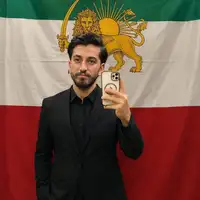
Prominent dissident figures, such as exiled prince Reza Pahlavi, Nobel Laureate Shirin Ebadi, Sunni leader Mowlavi Abdolhamid and footballer-turned-activist Ali Karimi as well as Canada-based activist Hamed Esmaeilion also talked about the political upheaval in the country, reiterating their demands for justice and calls for regime change.
"I congratulate the proud nation of Iran on the arrival of the new year. I hope that in the new year, poverty, injustice and discrimination will disappear from the country, political prisoners will be released and the noble nation of Iran will regain its rightful place in the world and achieve its rightful demands,” Abdolhamid tweeted.
In his video message addressed to the people of Iran, Pahlavi said, "In this year, you created an epic in the name of women, in the name of life and in the name of freedom against one of the most oppressive regimes in history... you made the world admire your courage and greatness.”
Several human rights groups, including Amnesty International, echoed the sentiment, issuing messages in honor of those who were killed or arrested during their fights against the violations by the Islamic Republic.

In its sixth round of sanctions over the suppression of protests in Iran, the European Union has sanctioned eight officials and one institution of the Islamic Republic.
The European Council in a statement on Monday announced that Ahmad Alamolhoda, the Friday imam of Mashhad and representative of Khorasan Razavi province in the Assembly of Experts is included in the list.
According to the Council, the firebrand cleric in his speeches has participated in the propagation of hate against women, demonstrators and religious minorities; therefore, he is responsible for serious human rights violations in Iran.
It also sanctioned three members of the judiciary responsible for handing down death sentences in unfair trials and for the torturing of convicts.
The member of the Iranian parliament and its spokesman for the cultural commission Ahmad Rastineh, the spokesman of the EU-listed Headquarters for Enjoining Right and Forbidding Evil Ali Khan Mohammadi, the Supreme Council of Cultural Revolution, a body which promoted several projects undermining the freedom of girls and women and discriminating minorities are among the people and bodies targeted.
So far 204 individuals and 34 Iranian entities have been sanctioned by the bloc. They consist of an asset freeze, a travel ban to the EU and a prohibition to make funds or economic resources available to those listed.
Alamolhoda, who is the father-in-law of President Ebrahim Raisi, is known for his ultraconservative statements, especially the one on December 30, 2009, where he was quoted as calling opponents of the Supreme Leader Ali Khamenei as party of Satan.