Iran's Handwoven Carpet Exports Lowest In 24 Years

Exports of one of Iran’s most famous products, the Persian carpet, are at its lowest levels in 24 years.

Exports of one of Iran’s most famous products, the Persian carpet, are at its lowest levels in 24 years.
Official customs reports say the weight value of Iran's handmade carpet exports in the first 11 months of the current Iranian year dropped from 3,800 to 2,900, a 24% decrease in one year alone.
But the decline has been a long time in the making. Persian carpets generated over two billion dollars for Iran in 1994, but sold only $69 million in 2019, bringing in a mere two million dollars in the second quarter of 2020.
Several factors including the challenges to global logistics chains, rising cost of products and the pandemic, account for the major drop in one of the country’s most prized national treasures, famed around the world for centuries. Sanctions have dealt local industries a fatal blow.
Faisal Mardasi, Head of Iran's National Carpet Center, told local media: “Our Indian, Chinese, Afghan, Pakistani and Turkish competitors have entered the global carpet markets by copying Iranian designs.”
Meanwhile, as purchasing power has sharply decreased and the price of hand-woven carpets soared, people are more willing to buy Afghan samples instead of Iranian.
In Iran's rural economy, carpets have been one of the country's most crucial employment opportunities for many years, providing a livelihood for millions of families.
A high value-added commodity with production that does not require large investments, it means the products can create both employment and export capacity.
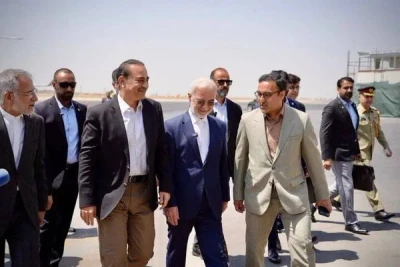
Iran will push forward at rapid speed as it forges better relations with its Arab neighbors following the recent agreement to restore ties with Saudi Arabia, according to the regime.
In a glowing article published Friday, IRNA, the state news agency, portrays the agreement with Saudi Arabia, signed a week ago in Beijing, as a historical event that heralds a new era in the Middle East.
Iran’s national security chief Ali Shamkhani, an old IRGC hand, visited the United Arab Emirates Thursday and met with members of its top leadership. However so far, there is no concrete information about details of the discussions in UAE and Iranian media.
IRNA, however, said the visit shows that once Tehran and Riyadh embark on rapprochement, Saudi allies would follow and “foreign influence” will be reduced in the region, implicitly referring to the United States.
Shamkhani met with UAE President Sheikh Mohammed bin Rashid and ruler of Dubai and other top officials Thursday. “Their talks covered regional and international issues of mutual concern, and the importance of working to support peace and co-operation in the region to enable progress and prosperity for its people,” state news agency Wam reported.
Iranian media have hinted that Shamkhani’s agenda included discussions with the UAE to help Iran overcome some of the impact of US economic sanctions, as the regional trade and banking hub.
Iran has already been using middlemen and contacts in the UAE to facilitate its illicit oil trade and money laundering efforts. But any official commitment by the UAE is hard to imagine given the potential violation of US sanctions.
Reuters quoted two unnamed Iranian officials Thursday as saying that last September, Iran's Supreme Leader Ali Khamenei lost patience with the slow pace of bilateral talks with Riyadh and summoned his team to discuss ways to accelerate the process, which led to China's involvement.
This would mean a complete about-face by Khamenei whose zealous followers attacked the Saudi embassy in Tehran in January 2016, an incident that led Riyadh to cut diplomatic ties.

Khamenei and other senior clerics have over the years repeatedly castigated the Saudi ruling family as lackeys of the United States who were harming the interests of Muslims. Khamenei has so far been silent on the agreement with Riyadh, but he is scheduled to address the nation next Tuesday on the Iranian New Year, Nowruz.
Other reports have indicated a more forceful Chinese role in persuading Tehran to offer guarantees to Riyadh to facilitate normalization.
The Wall Street Journal reported Friday that Tehran has pledged not to send arms to Yemen’s Houthis who have been fighting Saudi-led forces for nearly a decade, quoting US and Saudi officials.
Yemen is clearly the most immediate issue the Saudis want to see resolved, as without Iran’s military backing, the Houthis have to show flexibility and perhaps conclude a peace agreement in the war-torn country.
An interesting part of the report by IRNA is the reference to popular protests that erupted last September after the death of Mahsa Amini in ‘hijab police’ custody. IRNA says that good relations with neighbors will help derail enemy plans to destabilize the Islamic Republic, repeating accusations that protests were part of a Western conspiracy.
It also emphasizes the need for a “rational” foreign policy, a term so far used by critics of the hardliners in full control of the government. It says the deal with Saudi Arabia and Shamkhani’s trip to the UAE can help calm the domestic political scene. These comments clearly show how far the regime has been shaken by the popular protests and how extending a hand to its Arab neighbors is now more a necessity than choice.

Iranian media are highlighting the role of Iran’s Security chief Ali Shamkhani, a military man, in normalizing ties with Saudi Arabia and other Persian Gulf states.
The media is using the term “field diplomacy” to describe the role the military can play in securing diplomatic outcomes, because Shamkhani was a long-time senior IRGC officer and navy commander with the rank of Admiral. The term is also used to highlight the use of the military in achieving diplomatic objectives, which in this context is IRGC’s regional power projection.
Hardline daily Vatan Emrooz which speaks for the ultraconservative Paydari Party and conservative Bultan [Bulletin] News which is close to parliamentary speaker Mohammad Bagher Ghalibaf first used the term this week after a deal was reached in Beijing to restore diplomatic relations with Riyadh.
The term ‘field diplomacy’ was first used by former foreign minister Javad Zarif when IRGC Qods (Quds) Force commander Qassem Soleimani circumvented the Foreign Ministry and brought Syrian President Bashar Assad to Tehran for a meeting with Supreme Leader Ali Khamenei in February 2019.

At the time, Zarif was so deeply annoyed by the IRGC's intervention, and not even inviting him to the meeting that he resigned, but Khamenei did not approve the resignation. Zarif later once again used the term about IRGC's intervention in foreign policy in a leaked interview that put an end to his career.
Vatan Emrooz, portrayed the Tehran-Riyadh agreement as a victory for Shamkhani and ‘field diplomacy’ and even extended this victory from the realm of foreign policy to the area of economy as Shamkhani went to Abu Dhabi for a diplomatic and economic mission on Thursday. The media in Tehran said that he will be seeking the United Arab Emirates' cooperation in circumventing US sanctions, particularly the ones that have largely hindered Iran's oil exports and international banking since 2018.
However, it is not yet clear how the UAE can cooperate with Iran as long as US and other international sanctions against Tehran are in place.
Iran and the UAE have recently raised the level of their diplomatic relations from the charge d'affairs level to the ambassadorial and have named their new chief diplomats. The hardliner media said that the UAE welcomes the breakthrough in the Iran-Saudi ties as it will eliminate the threat from Yemen where Houthis last year launched the first attack on Abu Dhabi in the history of the Emirates.
Vatan Emrooz added that Iran, on the other hand looks at the UAE as the Hong Kong of West Asia and a hub that can facilitate international banking operations for Iran. Only the future can show how realistic those security and financial hopes are.
The report in Bultan News, used the term field diplomacy with some caveat. Its headline said, "The agreement with Saudi Arabia was the outcome of a realistic union between field diplomacy and foreign diplomacy," although it is clear from all Iranian and international reports that Iran’s Foreign Ministry and the minister, Hossein Amir-Abdollahian had no part in making the long-awaited deal.

The website also stressed that it was the achievements of the Iranian military and nuclear scientists that were used as leverage to change regional developments in Iran's interest. This is clearly a reference to Iran's possible attempt to get closer to developing nuclear weapons.
In the meantime, while observers have asked both sides to act cautiously and calmly, some hardliners, including military officials appear to be going too far in their ambitions. IRGC's PR Chief Ramezan Sharif told ILNA News Agency in Tehran about the far-reaching impact of the deal between Tehran and Riyadh.
Sharif was quoted as saying, "The next Qods day ceremony in Iran on April 21 will bring about the end of the Abraham Accord between Israel and Arab nations."

Iranian border guards have reportedly killed at least 11 Afghan citizens including three minors who had illegally crossed into the southeastern Sistan-Baluchestan province.
According to Afghanistan International, the bodies of the Afghan citizens, who were gunned down earlier this week, have been handed over to Taliban forces at Nimroz border crossing on Wednesday.
According to informed sources, these people were planning to enter Iran illegally on Saturday when the Iranian border guards opened fire on them.
Afghan news websites say those killed were all young Afghans from the southwestern Nimroz province.
So far, neither Taliban officials nor the Islamic Republic officials have commented on the tragic event.
In the past 11 months, the bodies of 470 Afghan immigrants, who were killed for various reasons, especially traffic accidents, have been transferred to Afghanistan.
After the Taliban's takeover of Afghanistan in 2021 and the spread of poverty and unemployment in the country, a large number of Afghans have migrated to Iran and Pakistan. Fear of Taliban reprisals and violence also prompt many people to flee.
Iranian border guards have beefed up their control on the long border with Afghanistan to prevent the influx of migrants.

Iranian media appear to be upbeat about the possibility of further breakthroughs in Iran's relations with its Arab neighbors around the Persian Gulf.
Reformist daily Shargh wrote in a commentary headlined, "A season to end disputes" that reports have been coming in since mid-day March 10 when China brokered a deal between Tehran and Riyadh to resume diplomatic ties.
An Iranian parliamentary delegation met with Bahraini counterparts in Manama on Saturday, and Iranian Security Chief Ali Shamkhani visited the United Arab Emirates on Thursday. Manama severed its ties with Tehran one day after Saudi Arabia cut its diplomatic relations in 2016.
Russian sources observed that while the deal with Saudi Arabia was brokered by China as mediator, attempts to improve ties with Bahrain and the UAE are being made through bilateral negotiations.
Officials in Bahrain have attached high importance to restoring ties with Tehran which are likely to start by resuming flights between Tehran and Manama, Shargh newspaper in Tehran wrote. It quoted Iranian West Asia watcher Hossein Amiri as saying that "Saudi satellite countries" including Libya, Maldives, Egypt and Jordan might follow suit soon. The expert told Shargh that the moves signal a new chapter in Iran's foreign policy which is now focused on regional détente.

Shargh also noted that an end to the war in Yemen is the beginning of an end to conflicts and tension in the region. In two weeks’ time, everyone in the region will remember the 9th anniversary of the war in Yemen. Iranian diplomat Ali Asghar Khaji told a visiting UN official in Tehran earlier this week that the Islamic Republic has always said that there is no military solution to the conflict in Yemen.
Mohammad Saleh Sadri, another expert on regional affairs, told Shargh that although all previous efforts to end the conflict in Yemen have failed, the agreement between Tehran and Riyadh has changed the situation. Nonetheless, he added that ending the war is no easy task.
Meanwhile, Arab media in London have pointed out that Egypt might be the first country outside the Persian Gulf region to begin to mend its ties with Tehran.
Another reformist daily, Etemad, wrote on Wednesday that Shamkhani hosted by UAE National Security Adviser Tahnoun bin Zayed Al Nahyan in Abu Dhabi, will also discuss the status of efforts to reach a nuclear deal with world powers as well as the issue of sanctions.
The UAE is usually one of the first points of reference for Iran to expand international trade.
However, it is not clear how Abu Dhabi might be able to help Iran with its troubled international trade as long as US sanctions remain in place, although according to some Iranian officials, at times, the UAE has gone out of its way to help Iran circumvent the sanctions.
Some officials in the UAE have said that Shamkhani's visit was planned long before the agreement with Saudi Arabia, but it was delayed as he went to China first to have the deal done.
Iran and the UAE have a long-standing issue over the ownership of three Persian Gulf islands, although the two side are usually reluctant to discuss it. Ironically it was brought up during President Xi Jinping’s visit Saudi Arabia in December and deeply annoyed some Iranians including state officials.
Another Etemad report suggested quoting Amwaj Media that the resumption of ties with Bahrain will be a priority for Manama as after the re-opening of the Saudi embassy in Tehran, possibly in May, Bahrain will be the only regional country without an embassy in Iran.
However, according to Amwaj Media, the two sides do not wish to do much propaganda about the resumption of their ties. The agency quoted an unnamed local official as saying "There is no serious unresolved problem between Bahrain and Iran."

Hacktivist group Edalat-e Ali (Ali's Justice) has released documents revealing an embezzlement case related to a company managed by Iranian Supreme Leader’s brother.
According to the document, Tehran's public and revolutionary prosecutor Ali Salehi has ordered the case not to be pursued after Ali Khamenei’s office pulled some strings.
The complaint was originally filed about a year ago apparently by the office of the president of Sadra Islamic Philosophy Foundation, run by Mohammad Khamenei, one of the brothers of Iran’s ruler, against one of its affiliate companies, a food transportation company called Caravan Transportation.
It is not clear why an institute financed by the government for research on Islamic philosophy owns a food transportation company, nor is it clear why the family business was thrown into shambles.
Four senior members of the transportation company, including Mohammad Khamenei’s own son Ahmad Hosseini Khamenei and son-in-law Vahidreza Taleghani, are among those who were to be prosecuted for acquisition of property through illegal means, according to the leaked document. However, the case was buried upon an order by Salehi, seemingly because more people, including the plaintiff, Mohammad Khamenei, and his daughter Zohreh Hosseini could have been implicated in the case.
The writer of the letter said that abuse of public property and bank cheques were proven and confessed in the case, but Salehi prevented the necessary follow-up. It was also revealed that a man, identified as Mohsen Afrasiabi, had tried to contact the prosecutor’s office, claiming that he had messages from the Supreme Leader himself and his brother Mohammad.
Political analyst Ali-Hossein Ghazizadeh told Iran International that the case is only a small example of the corruption by the family of the Supreme Leader, who is considered “sacred” by his zealous followers.
Late last year, the former chief of Iran's state television, who used to be a regime insider before his row with the IRGC’s intelligence organizations and Khamenei’s son, revealed harrowing facts about systematic corruption in the Iranian government.
Mohammad Sarafraz, who resigned his post as head of IRIB (Islamic Republic of Iran Broadcasting) in May 2016 due to interventions in his organization's financial operations by Khamenei's son Mojtaba and former IRGC intelligence Chief Hossein Taeb, was one of the closest persons to Khamenei until then. The Supreme Leader later appointed Sarafraz as a member of the Supreme Council of Cyberspace. But Sarafraz says he resigned this post also, although Khamenei never accepted his resignation.

In an interview conducted by one of his former aides and published on You Tube, Sarafraz said that Iranian intelligence officers can even tell judges at the court what they should decide when ruling on various cases.
Sarafraz accused the government and the banking system of systematic corruption that has led to vast income gaps among Iranians. He said most of this corruption exists in companies that enjoy the benefits of private firms but are in fact controlled by the government when they are paying taxes or reporting their financial status. These companies, he said, leave no room for competition from real private businesses.
Eighty percent of Iran’s economy is directly or indirectly controlled by the government or semi-official companies. A privatization drive that began 15 years ago mainly turned into setting up quasi-governmental firms controlled by powerful insiders who block competition and use public funds to stay afloat.