Pahlavi Calls For 'Maximum Support' By US And EU For Secular Rule In Iran

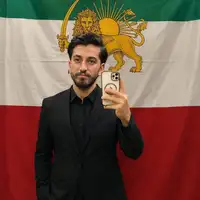
Iran’s exiled Prince Reza Pahlavi addressed lobbyists in the US this week calling for bipartisan support in the US and Europe to achieve a secular Iran.
Iran’s exiled Prince Reza Pahlavi addressed lobbyists in the US this week calling for bipartisan support in the US and Europe to achieve a secular Iran.
Speaking at an event held by the National Union for Democracy in Iran (NUFDI) trying to engage “maximum support” for the anti-regime protests in Iran, he criticized current US foreign policy.
All measures, he said, including sanctions, taken to contain the Islamic regime in Iran “is based on a false premise and expectation which was behavior change.”
“Expecting them to change their behavior is such a waste of time,” he added.
Pahlavi reiterated that talks and deals with the Islamic Republic are fruitless because “this regime has proven that its DNA, its reason to exist has nothing to do with the national interests of the country and its people; they’re there only to export their ideology at the expense of the Iranian people.” “For them to succeed, the rest of the world has to fail,” he said, explaining the mentality of the regime.
“It’s zero-sum; they [Iran] cannot have an actual coexistence with a world that is democratic and where human rights are the basis of laws and rules,” he said. He echoed the NUFDI’s call for the annulment of any talks to revive the 2015 nuclear deal with the regime, saying that the world assumes that the deal – known as the JCPOA – would work as a safety catch but a cheating regime can uncheck the safety mechanism if it wants to pull the trigger.
The NUFDI unveiled a 15-point document consisting of action plans and strategic tools for the provision of maximum support as a complement to the US policy of “maximum pressure”, which holds the promise of creating a more complete framework for US-Iran policy.
It calls for a mechanism to hold the Islamic Republic accountable through economic and diplomatic isolation, which also engages, elevates and empowers the Iranian people through the provision of much-needed moral, logistical and financial support. The two strategies work hand-in hand as the pressure on the Islamic Republic weakens the regime in the face of a growing democratic movement and strengthens the Iranian people relative to their oppressors.
In the opening speech of the event, NUFDI Policy Director Cameron Khansarinia said, “We believe that maximum pressure on the Islamic Republic is necessary; holding the regime accountable for crimes against the Iranian people is not only a movement for freedom, it’s absolutely necessary. Pressure on the Islamic Republic is a form of support of the Iranian people because it comparably weakens the regime and maximum support for the Iranian people is a form of pressure on the regime because it empowers, emboldens, and strengthens the people vis-a-vis the Islamic Republic.”
“First the US must announce a strategic policy shift in its Iran policy,” he said, adding that “the president should publicly address the American people in support of the Iranian people’s movement for a secular democracy.” “Maximum support begins with a formal strategic realignment of US policy and the president coming out formally in support of the Iranian people's right to determine their future and right to a secular democracy” he noted.
Several pundits from different think tanks, such as the Middle East Institute, American Progress and Carnegie Endowment for International Peace, as well as Member of Canada’s House of Commons Ali Ehsassi and Member of the Belgian Parliament Darya Safai were among the other participants of the event.
A popular voice for the revolutionary movement, Pahlavi said that it is futile to negotiate with the regime because only eradicating the regime can lead to true change. “Secular opposition has the answers,” he said, calling such an action “a controlled implosion” of the regime and not the “anarchy,” which many believe is making the Western powers hesitant to put more weight behind the protesters.
Pahlavi said that “the regime change is not a bad concept” only because it was mishandled somewhere else such as Iraq, emphasizing that it is futile to negotiate with the regime about the solutions for the country “because they’re part of the problem, and the secular opposition has the answers.”
Pahlavi noted that one of the most important mechanisms for the transition to a democratic Iran is using Tehran’s frozen funds in foreign countries to support strikes by workers in the oil, gas and transportation sectors.
He said one of the most significant elements that put pressure on the previous regime leading to the 1979 revolution, through which his father was overthrown, was financial support for the striking workers of the oil industry.
He underlined that the amount of money needed to support the striking workers is way lower than the funds blocked in other countries due to the US sanctions, saying that supporting workers, who would normally earn around $300 per month, for a few months would offer a manageable solution.
He called for bipartisan support in the US – and in other European countries for that matter, saying that politicians from across the spectrum should support a secular Iran and engage in dialogue with the united front of democratic opposition. "We should take a book out of the experiences that the Israelis have had,” he said, adding that “when it comes to Israel, we expect bipartisan support” from the US regardless of party affiliation. “We don’t expect anything short of bipartisan support when it comes to Iran and our freedom and human rights.”
He described supporting the protesters in Iran as a win-win situation for the world, especially the European countries. He said the immediate tangible benefits would be supplying the energy needs of Europe through Iran’s gas reserves and the stop of the flow of immigrants fleeing from the conflicts in the region to Europe, which is saturated by the number of migrants.