Iran Claims Vessel Carrying US Weapons Seized In Persian Gulf
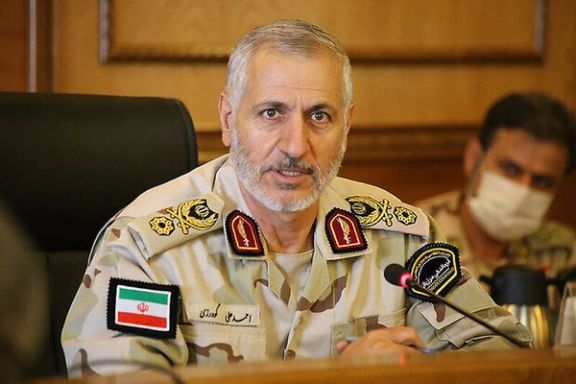
The commander of Iran’s Border Guard claim that a vessel carrying US-made weapons, including “swords” was seized in the Persian Gulf.

The commander of Iran’s Border Guard claim that a vessel carrying US-made weapons, including “swords” was seized in the Persian Gulf.
Ahmad Ali Goudarzi said the vessel was carrying more than 5,000 machetes and swords made in the United States, claiming that when more blood touches the blades, the sharper they get.
He did produce any photos, evidence or provide other details about the alleged vessel or if any crew were arrested.
Stating that Iran also seized electronic cigarettes and various harmful systems made in the United States, Goudarzi added that over 3,000 other weapons were also discovered that were supposed to be given to the “rioters” in Iran.
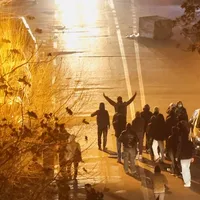
Hardliners led by the IRGC call Iranian protesters “rioters” and “thugs”. Iran has been the scene of anti-government protests since September when the 22-year-old Kurdish girl Mahsa Amini was killed in police custody.
The claims by Goudarzi come after the US military announced earlier this month that the US Navy assisted the French military in seizing thousands of assault rifles and half a million rounds of ammunition that were being transferred from Iran to Yemen in January.
US Central Command confirmed over 3,000 assault rifles, 578,000 rounds of ammunition, and 23 anti-tank guided missiles were confiscated.
It also added that the seizure is “one of four significant illicit cargo interdictions over the past two months,” which has prevented the transfer of more than 5,000 weapons and 1.6 million rounds of ammo to Yemen. Another seizure of arms was announced earlier in January.


US Deputy Attorney General held talks with UK Security Minister Tom Tugendhat and counterparts in Germany and France about recent threats to journalists critical of the Iranian regime.
According to Justice Department, Lisa Monaco and her counterparts discussed the recent closure of Iran International’s London studios following persistent threats.
Iran International network announced on Saturday that it decided to move its studio and broadcast operations to its office in Washington DC after more than three months of threats the British police reported against its journalists.
UK’s Security Minister Tom Tugendhat at the British Parliament on Monday voiced full support for Iran International TV that has been threatened by elements of Iran’s Revolutionary Guard.
He stressed that UK’s partners in Europe and the United States are facing similar threats adding that “We are working together to keep our people safe.”
“My call this afternoon with other allies was about coordinating action that we will take to protect ourselves and ensure a unified response to these threats,” added Tugendhat.
“We are the strongest when we work with our allies around the world, and the Iranian regime should be under no doubt and no illusion that we are absolutely united.”
Iran International’s broadcasts have gained special significance since popular anti-regime protests broke out in Iran last September. Iranian officials have repeatedly threatened Iran International and other Persian broadcasters based abroad since the start of protests.

Chaos reigned in financial and currency markets in Iran on Tuesday as the government scrambled to contain the damage from an unprecedented fall of the currency.
The rial, which fell to a low of 500,000 against the US dollar on Monday stayed around the same level as a string of measures were announced by the government on Tuesday, giving the Central Bank of Iran (CBI) “unprecedented powers” to contain the damage.
Officials announced that citizens will not be allowed to buy their annual share of foreign currency from official exchange bureaus, which previously was $2,000. They also said that the government will stop providing dollars to banks and official dealers for that purpose.
Meat and other prices shot up, as a general mood of panic emerged over rising inflation in the coming days.
Some underground activist groups that have organized popular protests since September issued a call for demonstrations on Wednesday at bazaars around the country.
The economic chaos can reinvigorate antigovernment protests, after large-scale government repression reduced street demonstrations in January. Iranian analysts in recent weeks were speaking of the “grey strata” in society, unwilling to come out and support younger protesters, but the economic chaos can be the catalyst for more Iranians to join the movement.

Confidential government documents obtained by Iran International Tuesday showed that the Secretary of the Supreme National Security Council, Ali Shamkhani, was warning President Ebrahim Raisi of shortages in animal feed due to lack of imports. Iran is dependent on importing millions of tons of grains and animal feed to maintain food production and supply. Any serious shortages can lead to chaos for consumers.
Mohammad Machine-Chian, a senior research scholar at the Center for Governance and Markets at the University of Pittsburgh told Iran International Tuesday that the “Supply chain of essential goods in Iran is in an extremely vulnerable and dangerous situation.” He added that the government’s foreign currency reserves are running out and it is not able to secure sufficient imports.
The government claimed that it established a new “currency exchange center” to provide dollars and other hard currencies “for legitimate needs,” leaving a trail of unanswered questions in the wake of the announcement.
Ordinary people and businesses more likely will see the move as yet another dubious government scheme, typical of the state-controlled economy.
According to official figures, well over $10 billion have been taken out of the country in the past few months. The real figure might be much higher as confidence in the economy and the government’s foreign policy seems to be at an all-time low.
The Biden administration, which was negotiating last year with Iran to resolve the dispute over Tehran’s nuclear program, not only has kept the Trump administration’s economic sanctions in place but has made attempts to strengthen their enforcement. The talks reached an impasse in September and since then Washington has repeatedly said that its focus has shifted to supporting the rights of Iranian protesters.
The mood among European powers has also shifted against the Iranian regime after it became obvious that it was supplying hundreds of kamikaze drones to Russia that are being used in Ukraine.

Iran's judiciary has sentenced Iranian-German national Jamshid Sharmahd to death on charges of "corruption on earth".
Mizan New Agency, which is affiliated with the regime judiciary, announced Monday that Sharmahd has been sentenced to death.
Sharmahd, who is also a US resident, is accused by Tehran of heading a pro-monarchist group accused of a deadly 2008 bombing and planning other attacks in the country.
In the bombing on a mosque in Shiraz 14 people were killed and 200 more were wounded, but Sharmahd and his family vehemently deny the accusation.
"His verdict can still be appealed in the supreme court," the agency added.
Sharmahd, the director of Tondar opposition group, has been held in solitary confinement for many days and he was denied an independent attorney and fair legal procedures.
The news of Sharmahd’s kidnapping in Dubai and his transfer to Tehran by Islamic Republic agents was first released in August 2020.
Based in Los Angeles, the little-known Kingdom Assembly of Iran, or Tondar, says it seeks to restore the Iranian monarchy that was overthrown by the 1979 Islamic revolution. It runs pro-Iranian opposition radio and television stations abroad.
The death sentence for Sharmahd comes as Iranian foreign ministry on Tuesday confirmed indirect talks with the United States over prisoner exchange through intermediaries.
The Islamic Republic is holding several Western prisoners in what human rights organizations have dubbed hostage diplomacy.

Reporters Without Borders (RSF) has denounced continued threats against Iranian journalists abroad urging Iran’s regime to immediately stop pressure on independent media.
Fiona O'Brien, the UK Bureau Director of the RSF said, “We condemn the ongoing threats against Iran International which have forced the channel to suspend its UK operations for safety.”
“No journalist should face such risks in connection with their work, whether in Iran, the UK, or anywhere else. We call on the Iranian authorities to immediately cease efforts to silence independent reporting, and urge the UK government to do its utmost to ensure journalists can safely do their jobs,” she added.
Iran International Television announced on Saturday that it decided to move its studio and broadcast operations to its office in Washington DC after more than three months of threats the British police reported against its journalists.
“Let’s be clear: this is not just a threat to our TV station but the British public at large,” General Manager Mahmood Enayat stated. “Day and night our journalists strive to deliver to the 85 million people of Iran and its diaspora the independent, uncensored news they deserve. We refuse to be silenced by these cowardly threats. We will continue to broadcast. We are undeterred.”
The UK government has condemned the actions of the Iranian government. UK’s Security Minister Tom Tugendhat wrote in Farsi on Twitter Monday, "Welcome to Britain. We will keep you safe."

Iran’s foreign ministry says there has been indirect negotiations with Washington over the issue of a prisoner exchange because Tehran looks at the issue from a “humanitarian viewpoint”.
Regarding the role of some countries, including Oman, the foreign ministry spokesman Nasser Kanaani said on Tuesday that “Tehran appreciates the special efforts of the Sultanate of Oman in this regard.”
NBC News reported last week that indirect negotiations were taking place over releasing US hostages in Iran possibly in exchange for $7 billion of Iran’s money frozen by South Korean banks.
Kanaani also confirmed that “the exchange of prisoners was taking place through intermediaries; but due to Washington’s false promises it did not take place.”
“Iranian citizens imprisoned in the United States have often been detained on baseless accusations of the US government, claiming they wanted to bypass sanctions,” added Kanaani.
The NBC report quoted four sources familiar with the matter as saying that Qatar and Britain are easing the talks as intermediaries.
“The negotiations have made progress, but it remains unclear if a final agreement will be reached,” one of the sources said.
This came as nuclear talks between Tehran and the world powers have been stalled for several months, as the United States and its European allies have imposed new sanctions against the clerical regime.
Iran has been arbitrarily arresting Western nationals for decades and using them as bargaining chips against their government, according to UN experts and international human rights organization.