IAEA Says It Will Never Drop Iran’s Nuclear Probe Without Answers
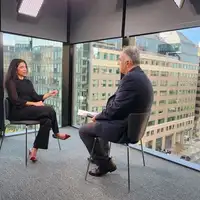
Rafael Mariano Grossi, the head of the International Atomic Energy Agency
The International Atomic Energy Agency says it will not drop its probes into Iran’s past nuclear activities, including traces of uranium found at previously undeclared sites three years ago.
Rafael Mariano Grossi, the head of the UN watchdog, told CNN on Monday, "Dropping probes is not something the IAEA does or will ever do without a proper process. The key to this lies in a very simple thing: Will Iran cooperate with us?"
He vehemently rejected the idea that the IAEA will end its probe without receiving answers, saying, "Absolutely not. We want to be able to clarify these things. So far Iran has not given us the technically credible explanations we need to explain the origin of many traces of uranium, the presence of equipment at places. This idea that politically we are going to stop doing our job is unacceptable for us.”
Rejecting the Russian lead negotiator’s remarks that the issue "seems to be settled," Grossi said that “So it’s very simple. Let us have an explanation: If there was nuclear material there, where is it now? If there was equipment there, where is it now? And at that moment we will be able to have a report saying ‘Yes, we have clarified this issue.'”
A leaked report August 19 on alleged remarks by Iran's chief nuclear negotiator Ali Bagheri-Kani listed details on the so-called "concessions" Iran claims to have received from the US, including agreement that the IAEA BoG will end the international nuclear watchdog’s probe into Iran’s past nuclear activities.
The European Union foreign policy chief said Monday he awaited the United States’ views on an EU text aimed at easing revival of the 2015 Iran nuclear deal.
Speaking at a press conference at a seminar, Quo Vadis Europa, he is directing in Santander, Spain, Josep Borrell said an Iranian response August 15 to the text, which the EU had circulated August 8, was “reasonable.”
Borrell said the August 8 text represented the “the balance that I believe we can achieve.” There have been 16 months of talks between Iran and world powers trying to renew the 2015 agreement, the JCPOA (Joint Comprehensive Plan of Action), including EU-mediated US-Iran bilateral negotiations in Qatar in June.
While the EU had hoped, Borrell said, for a meeting in Vienna – presumably of all JCPOA signatories – “last week” after a positive US response, he said such a meeting might still happen this week.
While the contents of the talks have remained largely confidential, Iranian officials have since August 15 publicly emphasized Tehran’s search for ‘guarantees’ – both over sanctions and its nuclear program – should the US again leave the JCPOA, as it did in 2018 before imposing ‘maximum pressure’ threatening punitive action against buyers of Iranian oil or those dealing with its financial sector.
“I communicated this to those participating in the negotiation – the US and Iran, but also others, like the British, French, Chinese and the Russians,” Borrell said, omitting Germany, in English rendered by the official interpreter. “There was a response from Iran that I considered reasonable. This was transmitted to the US. The US has not formally provided a response, but we are waiting for their response and I hope that there’s a response that allows us to end the negotiation…I cannot assure you that this will happen.”
‘Safer place’
Borrell reiterated the EU’s commitment to restoring the JCPOA. “The world would be a safer place if we were able to make this agreement be [back] in place…It worked well until President Donald Trump unilaterally [announced May 2018] decided to abandon it. Iran was complying with it [accepting nuclear limits], and continued to do so for a few months more [until July 2019]. Now we need to make sure that everyone complies with it and Iran stops its nuclear program and receives the financial compensations [through eased sanctions] that were foreseen in the initial agreement.”
A statement from the White House Sunday, following a telephone call between President Joe Biden with French President Emmanuel Macron, German Chancellor Olaf Scholz, and British Prime Minister Boris Johnson – referred to “ongoing negotiations over Iran’s nuclear program” as well as “joint efforts to deter and constrain Iran’s destabilizing regional activities.” Laurence Norman, the Wall Street Journal reporter, tweeted Monday that “European sources” had told him the US could “work with” the Iranian input of August 15.
Iran’s Foreign Ministry Spokesman Nasser Kanaani said Monday the US was “procrastinating.”He said the talks could be judged fruitful, or not, “once the European Union announces it has received a response from the Americans.”
JCPOA opponents have continued to call for ending talks. Israeli Prime Minister Yair Lapid last week told Biden that continuing negotiations was a sign of “weakness.”
As desperate Iranians await a nuclear deal to see economic improvement, officials have begun telling the public that lifting US sanctions will not bring about a miracle.
While many Iranians including some lawmakers complain about growing poverty, officials such as IRGC Commander Hossein Salami insist that people's economic situation is satisfactory and "Iran can now send satellites to the space, crack atoms, use artificial intelligence and Quantum and Nano technologies and be a part of the digital age."
Meanwhile, information leaked from a meeting between chief nuclear negotiator Ali Bagheri and Iranian reporters indicate that Iran's oil revenue may soon be doubled if a nuclear deal is reached, and Tehran can find access to billions of dollars of its frozen assets in other countries.
Iran's former nuclear chief Fereidoun Abbasi who is a member of parliament
Probably based on insider information, Abbasi told Entekhab news website that the agreement with the United States does not include a clause about easing Iran's international banking operations. That probably is the reason why he thinks the agreement will not be followed by an economic breakthrough.
Earlier, former government Spokesman Ali Rabiei, and centrist commentator Saeed Leylaz had pointed out that financial corruption could still adversely affect Iran’s economy even after an agreement. Meanwhile, Iranian social media users speculate that Iran might spend the lion's share of any financial windfall on strengthening its militant proxy groups in the region.
Saeed Leylaz
Abbasi also noted that even with an agreement at hand, international companies may still avoid coming and investing in Iran fearing another US unilateral withdrawal from the deal.
He added, "Although a large part of sanctions against Iran will be lifted as a result of the agreement, it does not mean that life will be a rose garden for Iranian people from the morning after. Certainly, many problems will be solved, but many challenges will also remain."
Ebrahimi particularly pointed out that prices which have skyrocketed are not going to come down because of the agreement. Another cleric had said earlier on Sunday that many things may become available in the market, but still at a high price.
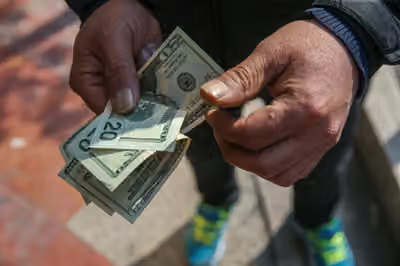
Iran is facing a 54-percent annual inflation rate and food prices have risen by more than 100 in the past year.
Economist Ehsan Soltani
Meanwhile, in a report about the impact of an agreement on Iran's economy, Rouydad24 news website quoted economist Ehsan Soltani as saying that an agreement will not totally fix Iran's economy as there are many who benefit from the rising prices. He said those who benefit control the government and they are unlikely to allow the government to bring prices down.
Soltani said the Iranian government also benefits from the rise in prices as it collects inflation-induced tax from the lower and middle-classes.
Soltani also added that despite the probable real and psychological impact of an agreement, one should note that the main problem with the Iranian economy is financial corruption and the government inefficiency.
Iran’s foreign ministry has rejected rumors that the country has given up efforts to avenge IRGC commander Qasem Soleimani death for the revival of the 2015 nuclear deal.
During his weekly briefing on Monday, foreign ministry spokesman Nasser Kanaani said that the Islamic Republic’s position regarding the killing of Soleimani is clear, and that “the government and people of Iran will never forget the cowardly assassination of the great commander by the American government.”
Soleimani, commander of the Revolutionary Guards (IRGC) extra-territorial Quds Force, was killed in Baghdad along with nine others in 2020 by a drone strike ordered by then-President Donald Trump. The Qods Force under Soleimani became deeply involved in the conflicts in Syria and Iraq. Trump claimed that the general, who was Iran’s main operative in the Middle East, was killed because he was planning attacks on US troops.
The case for the revenge against the killers of Soleimani cannot be forgotten and it will not be amenable to compromise and reconciliation, Kanaani said, noting that the Islamic Republic will exhaust all of its capabilities “to bring the killers of the general to justice.” He added that Iran acts with seriousness in this regard and that the issue is not related to the nuclear negotiations.
Israel plans to try until the very last moment to make the United States reject the nuclear deal, as Tehran claims progress has been made and claims it won important concessions.
Israeli National Security Adviser Eyal Hulata is expected to head to Washington this week for a series of meetings with US officials on Iran’s nuclear issue as part of the attempts to sway Washington to walk away from the revised accord just as Tehran hinted it may be willing to finalize the agreement.
A senior Israeli official told KAN news that the US has not made any final decision with respect to the deal, aimed at reviving the 2015 JCPOA signed with Russia, China, France, Germany and the United Kingdom.
The official, however, added that the dynamic appears to be one that is leading to a conclusion of the indirect negotiations that the European Union has been mediating between the US and Iran to revive the deal.
The leaders of Western powers engaged in Iran's nuclear talks discussed efforts to revive the JCPOA, the White House said on Sunday in a statement. US President Joe Biden, British Prime Minister Boris Johnson, French President Emmanuel Macron and German Chancellor Olaf Scholz participated in the call.
“The Europeans sent Iran a final offer, which doesn’t even meet the demands that the Americans committed to, and established that this offer was ‘take it or leave it,'” said a senior Israeli official at the highest level of decision-making last week.
The US has not replied to Iran’s latest response in the nuclear negotiations, but the talks are still on track to continue, the foreign ministry said Monday.
In his weekly briefing with reporters in Tehran Nasser Kanaani, spokesman for the foreign ministry underlined that Iran had sent its response on time to the latest European Union proposal for a nuclear agreement, but the US has not responded yet.
Speaking about the delay in a US response, Kanaani said, “American government’s internal issues, such as pressure by radicals and the Zionist lobby on the government…will not deter Iran from pursuing its priorities.”
The Biden Administration faces resistance from most Republicans and some Democrats for trying to revive the 2015 nuclear accord known as the JCPOA. Recent charges by the Jusctice Department about Iranian agents trying to assassinateformer Trump administration officials has not made the task any easier.
He gave a cautious response to a question about the success of the talks. “We can speak about whether the negotiations were fruitful once the European Union announces it has received a response from the Americans. So far, this has not happened,” Kanaani said.
He also urged the media and the public not to pay attention to unofficial accounts of the talks, “because the negotiations are sensitive and naturally, we should pass judgement based on the official views of the countries involved…”
Last week, leaks emerged from Tehran about considerable “concessions” Washington has made to Iran so far. On Sunday, the ad hoc spokesman of the negotiating team, Mohammad Marandi also gave an interview to a local paper claiming that Iran had “exceptional” results in the talks in the past one month.
“We were able to achieve huge progress in all areas, including guarantees, verification and sanctions issues, as well as issues related to the IAEA,” Marandi highlighted.
“So far, we had good progress,” Kanaani said, “but negotiations are a totality and there should be agreement on all issues. As long as there is no [overall] agreement, we cannot say we have reached a deal…although remaining issues in terms of percentage [of all issues] are small, but they are important…,” he said.
Washington has not responded to the specifics of the leaks from Tehran about Iranians getting most of what they wanted, but has dismissed talks of having made major concessions.
US President Joe Biden, British Prime Minister Boris Johnson, French President Emmanuel Macron and German Chancellor Olaf Scholz, the leaders of the four Western negotiating countries discussed the nuclear talks in a call on Sunday, that was apparently convened to discuss Ukraine.
“In addition, they discussed ongoing negotiations over Iran’s nuclear program, the need to strengthen support for partners in the Middle East region, and joint efforts to deter and constrain Iran’s destabilizing regional activities,” the White House announced.
The announcement gave no clue about a possible US response to the EU, but the emphasis on deterring Iran’s destabilizing regional activities was perhaps a sign to reassure regional allies, especially Israel that remains strongly opposed to the new agreement so far negotiated by the Biden Administration.