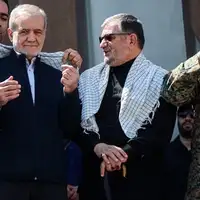
Venezuelan president Maduro with his Iranian counterpart in Tehran on June 11, 2022
An Iranian official says that Venezuela has agreed to provide one million hectares of agricultural land for Iran’s overseas cultivation projects to secure food.
Announcing the agreement last week, Ali Rezvanizadeh said Venezuela can provide a better opportunity than Brazil and Russia for Iran’s overseas agricultural projects, including growing crops of soy beans and corn.
Tehran and Caracas last month announced a 20-year cooperation plan in the fields of oil, refining, petrochemicals, defense, tourism and culture, and agriculture during President Nikolas Maduro’s visit to Iran.
Details of the agricultural agreement have not been announced and it is not clear whether Caracas has agreed to the investment of the Iranian government or its private sector.
Masoud Daneshmand, former chairman of Iran Economy House, a private sector think tank, however, says Iranian investment in production of crops such as corn and soya beans in Venezuela is not economically viable due to the very long distance between the two countries and the high cost of transportation.
Experts say the biggest advantage of overseas cultivation for Iran is preserving its precious water resources. Iran’s agriculture uses around 85 percent of all available water resources. It would also potentially contribute to the country’s food secuirty, a great concern of Supreme Leader Ali Khamenei who has been an ardent promoter of agricultural self-sufficiency over the past three decades.
"Although there is shortage of water, God willing, the same amount of rainfall that our country has will be enough for [producing enough] to feed a population four times bigger than its current population and to make the country need less from others," he said in a speech in October 2000. In two other speeches in July and August 2001, Khamenei argued that self-sufficiency in basic products such as wheat and rice should be the main goal in agriculture.
Although Iran produces a wide variety of agricultural products, the sector has been battling with serious drought and inadequate water resources for years which has given rise to water tension in some areas.
The private sector investors are mainly driven by higher profit margins in their overseas cultivation projects. According to Rezanizadeh, of the 30 million tons of all agricultural products imported, only 7 percent comes from overseas cultivation projects. This includes investment in crops such as bananas and other exotic fruit which have a much higher profit margin than strategic crops such as wheat, corn, rice, and oilseeds.
Iran imports around 90 percent of all oilseeds such as rapeseed and soya beans and around 30 percent of the rice used in the country. The country is also a huge importer of corn and barley for animal feed.
Investment in overseas agricultural projects also requires financial measures such as bartering agreements to circumvent the obstacles in international banking resulting from US sanctions.
Some other countries, officials say, have agreed to provide agricultural land for Iranian projects on a much smaller scale. Russia recently offered to provide 100,000 hectaresof for Iran’s projects, the official news agency (IRNA) reported Sunday. The report said this is only around 0.8 percent of all land under cultivation in Iran (12 million hectares).
The United States and China are among the countries with the most extensive overseas agricultural production. Iran’s southern neighbors, the United Arab Emirates and Saudi Arabia, have also invested heavily in agriculture in Africa and some Asian countries in the past decade.