Large Anti-Government Protests Rock Iran's Oil Province

Large anti-government protests again rocked Iran’s oil-rich Khuzestan province Sunday night as security forces fired tear gas and shots to disperse the crowds.
Large anti-government protests again rocked Iran’s oil-rich Khuzestan province Sunday night as security forces fired tear gas and shots to disperse the crowds.
Protests began last week, when on Monday a 10-story building collapsed in Abadan, leaving 31 people dead and an equal number missing. It quickly became apparent that the owner and builder was a powerful and well-connected businessman who had disregarded regulations and building codes, being backed by officials, who might have had their own financial interests.
As the government dispatched more anti-riot special forces to Khuzestan, south-western Iran, the atmosphere Sunday night in the city of Abadan was tense. A large crowd seemed ready to confront government forces. First, the anti-riot troops started using tear gas and guns. Shots were fired as some vodeos showed security forces poitning their guns at protesters and shooting.
News from Abadan, which is home to the Middle East’s oldest oil refinery, is sketchy because the government blocked mobile internet access to prevent news and videos from leaking out. If large protests spread to other cities and provinces, it could pose a serious danger to the Islamic Republic’s rulers.
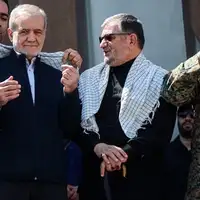
But one incident in Abadan was clear. The most senior cleric appointed by Supreme Leader Ali khameni tried to speak to the crowd but was booed, pelted and shouted down. He had to leave the scene.
Amid the tense situation in the city Sunday night, Arab tribal groups began streaming into Abadan with their banners and warned the security forces that if they shot the people, tribes would resort to weapons to defend them. Khuzestan is home to Iran’s Arab population, which live side by side with Persians and other ethnic groups. The province is the oil industry center of the country, where people from different parts of the country find jobs.
Some videos showed that at one point security forces pulled back after the warning from the tribes and crowds were marching in main streets without being attacked.
Iran International received reports of large-scale arrests in Khuzestan on Saturday, as the government tried to round-up potential protest leaders and activists.
In Masjed Soleiman, another oil industry city, people gathered to voice their support for protesters in Abadan, where grief for the victims of the building collapse and anti-government outrage have fused into a potent anger. People in Andimeshk, another Khuzestan city also marched in protest.
In previous days, there were protests also in several other cities in Khuzestan but the whole picture from Sunday night is still unclear and it is hard to say what transpired elsewhere in the province.
Security forces were also on alert outside Khuzestan, with heavy presence and patrols in Shahin Shahr, near the historic city of Esfahan in central Iran. As residents tried to gather to express solidarity with Abadan, security forces intervened to stop the gathering. Again, details are sketchy.
On Sunday, before the start of night-time protests, around one hundred film industry figures issued a statement calling on security forces to lay down their weapons and not fire at protesters. The phrase, “Lay down the gun,” from the statement quickly spread on social media.
There were unconfirmed reports on Twitter that the government began rotating some security forces, allegedly to make sure that units more willing to confront protesters would be deployed in sensitive spots.