Iran’s Police Say Volume Of Trafficked Goods Is Too High For Individual Smugglers

Iran’s Police spokesperson says the volume of goods being trafficked from and to the country is so high that cannot be carried out by individual smugglers.

Iran’s Police spokesperson says the volume of goods being trafficked from and to the country is so high that cannot be carried out by individual smugglers.
Brigadier General Mehdi Hajian said in a press conference on Sunday that 3.3 million liters of vegetable oil, over 5.3 tons of wheat and flour, 3.3 thousand tons of rice, and 2.7 thousand tons of animal feed have been discovered and confiscated from smugglers and hoarders during the past two months.
He added that 1,284 people have been arrested in connection with the smuggling, noting that the total value of the confiscated goods is estimated to be about 9,000 billion rials (about $30 million).
Saying that such figures are alarming, he called for more efficient regulations and supervision over the supply chains, implying that such amounts of goods can only be smuggled through organized crime or with the help of the authorities.
Hajian also said the volume of goods trafficked to the country is also too high to be the work of individual smugglers via border crossings.
In February, the head of Iran’s Headquarters for Combating Smuggling of Goods and Foreign Exchange said the volume of smuggled goods is at least $12.5 billion and only one-third of the goods involved is discovered.
Ali Moayedi Khorramabadi noted that due to political conditions and economic sanctions imposed on the Islamic Republic, trade is not conducted in accordance with international laws, therefore a lot of commodities are smuggled in or out of the country.
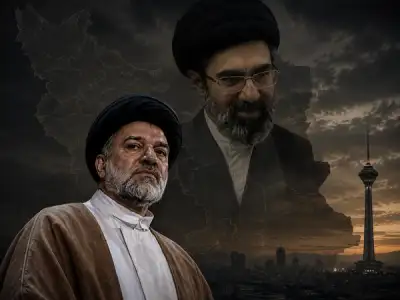

Sheikh Mohammed bin Zayed al-Nahyan, the de facto leader of United Arab Emirates widely seen as forging an anti-Iran axis with Israel, is the new UAE president.
In a consolidation of his leadership, Sheikh Mohammed, known as ‘MbZ,’ was appointed unanimously Saturday by the UAE federal council a day after the death of his half-brother President Sheikh Khalifa bin Zayed, 73. Sheikh Mohammed succeeded Sheikh Khalifa as ruler of Abu Dhabi on his death May 13.
"We congratulate him and pledge allegiance to him as do our people," said Dubai ruler Sheikh Mohammed bin Rashid al-Maktoum, UAE vice-president and premier.
At 61, MbZ became a strong figure in a growingly assertive UAE foreign policy after the regional defeat of the ‘Arab Spring’ in 2011, including armed interventions in Libya and Iraq, and in supporting military rule in Egypt, which the UAE justified as curbing the Muslim Brotherhood.
In 2020, the UAE and Bahrain ‘normalized’ relations with Israel in an agreement brokered by the United States administration of Donald Trump, breaking a long-standing Arab League policy that this should not be done until Israel recognized a viable Palestinian state in occupied territory.

Contain Iran but improve relations
While ‘normalization’ was condemned by all Palestinian groups, it was widely interpreted as a means to contain Iran. The UAE went ahead despite Saudi Arabia’s refusal to follow suit and there have also been differences between the two over the Yemen war – which began 2015 – as the UAE withdrew most of its military presence in 2019.
Both the UAE and Saudi Arabia have stood back from taking sides in the Ukraine conflict, contributing to tensions with the United States administration of President Joe Biden, and declining invitations to pump more oil to bear down on rising prices. A planned US sale of advanced F-35 fighter jets to the UAE also appears stalled partly due to American concerns over the UAE’s relationship with China.
Sheikh Mohammed will be only the third president since the UAE gained independence in 1971 as a federation of seven sheikhdoms. His primary task will be consolidating the UAE’s position as a financial and tourism hub while diversifying further from an oil-based economy.
Recent efforts to relax tension with Iran, with speculation of a visit from President Ebrahim Raisi, reflect a desire for regional stability. In December, despite Iran’s strong condemnation of the UAE’s ‘normalization’ with Israel, the UAE national security adviser Sheikh Tahnoon bin Zayed al-Nahyan met with Raisi in Tehran.
“We look forward to the acceleration of development aimed at consolidating the global sovereignty and pioneering of the Emirates,” said Dubai’s Sheikh Mohammed.
Foreign leaders – including US vice-President Kamala Harris, French President Emmanuel Macron, and Israeli President Isaac Herzog – arrive Sunday and Monday to offer condolences over Sheikh Khalifa’s death as the UAE begins 40-day mourning.

The world’s largest federation of teachers’ trade union has called for the freeing of 13 named teachers amid “dozens” jailed in Iran over demonstrations.
In a statement released Thursday, Brussels-based Education International condemned the arrests as “violations of freedom of association, the right to organize, and freedom of speech” and called for the “immediate and unconditional release” of those detained.
Among those named were Eskander Lofti, a member of the teachers’ union in Mariwan, Kurdistan province, and spokesperson for the Coordinating Council of Iranian Teachers’ Trade Association, which has organized the protests.
Given Iran’s inflation of at least 30 percent since United States ‘maximum pressure’ sanctions began in 2018, teachers like other Iranians have demanded higher salaries.
Their protests go back around two years, with recent demonstrations beginning in April. At least 28 were arrested in the build-up to protests planned for May 1. Iran also arrested May 7 Cecile Kohler, a French teaching union official in Iran with her husband.
The statement from Education International included a resolution from its executive board demanding respect for rights of education workers to organize and peacefully assemble.
The federation also called for the release of Esmail Abdi, former leader of the Tehran Teacher Association, who is in jail over “collusion against national security” with release not due until 2031 and who on May 1 began a hunger strike. Education International called his charges “trumped up” and said his “long imprisonment and ill treatment” had “severely affected his health.”

Following the sharp rise in food prices, such as vegetable oil, flour, chicken, eggs, and dairy products in Iran, the prices of animal feed have also increased five to sixfold.
The head of Cattle Farmers Association, Ahmad Moghaddasi, told ILNA on Saturday that the price of barley, corn, and soybean meal have risen from less than 10 cents to about 60 cents per kilogram.
He added that the jump in the feed prices has also increased the price of live cattle by nearly 20 percent.
Soybean meal, barley and corn for livestock and chicken feed are mainly imported from Russia and other countries. Iran annually imports around 8 million metric tons of corn, 4.2 million metric tons of soybean meal, and 400,000 metric tons of barley for animal feed. Any shortages or higher prices can push up the price of meat further.
The head of the Flour Producers Association says this year Iran must import 20 million tons of grain – including 6 to 7 million tons of wheat -- noting that the country has never been so dependent on imports.
Anti-government unrest in Iran triggered by the sudden rise in food prices spread further on Saturday as state media and officials are in denial.
The average price of food for one person is estimated to be about 9,030,000 rials (about $30) per month and for a family of four it is about 36,120,000 rials (about $120). Considering the average minimum wage that is set at about 42,000,000 to 63,000,000 rials this year (about $140 to $200), a family of three to four must spend more than 85 percent of its income on food.

Iran’s Intelligence Ministry has blocked over 9,200 accounts belonging to 454 people due to illegal or undeclared transactions of currency and digital currency.
According to a statement by the ministry on Saturday, the total amount of transactions was over 600,000 billion rials – or about $2 billion in today's exchange rates.
The statement did not provide any details about the accounts, nor did it say how much of the turnover was in digital currency and how much was in fiat money.
Several people active in the digital currency market have been arrested in Iran since last year. Iran’s cybercrime taskforce is part of the Organized Crime Investigation Center, affiliated with the intelligence organization of the Revolutionary Guards (IRGC).
Iran’s currency has recently hit a four-month low against the US dollar as soaring bread prices created political and economic uncertainty in the country.
The US dollar is hovering over 300,000 rials in Tehran, one of its highest points since early January, when the currency was marginally recovering from previous lows on optimism over nuclear negotiations with the West. After talks in Vienna came to a standstill in mid-March, the currency began gradually losing its value again.

The first Iranian female weightlifter who won medals in international tournaments has sought asylum in Germany after she left Iran’s delegation at the World Junior Weightlifting Championship in Greece.
Seventeen-year-old Yekta Jamali disappeared from the hotel they were staying in Heraklion in the Greek island of Crete on the final day of the event Thursday after winning the silver medal in the snatch and finishing fourth overall during the week.
The Iranian delegation went to the police where they were informed about the incident with the assistance of the Greek federation and the organizers.
It is not the first time Iranian athletes leave their teams during international championships and seek asylum in other countries.
About 30 Iranian athletes in recent years have defected from Iranian national teams and sought asylum in other countries, including Judo champion Saeid Mollaei, Greco-Roman national team wrestler Ali Arsalan, and many others, due to alleged threats and corruption in sports federations as well as Iran’s policy of not allowing athletes to compete against Israel. For women mandatory hijab is also an issue.
Iran is a sworn enemy of Israel, calling for its destruction and prohibits sportspeople from playing against Israeli competitors. There is no legislation banning athletes but under pressure from federation officials, they usually lose games intentionally, forfeit matches or claim injury to avoid facing Israelis.
On Saturday, Parsia Jahanfekrian, another Iranian weightlifting champion, announced on her social media page that she has also left the national team.