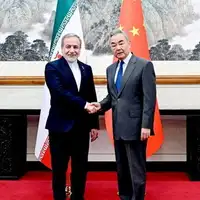
President Raisi during his televised remarks on Monday, May 9, 2022
President Ebrahim Raisi has confirmed that the price of bread will rise drastically but says his government will pay cash to most Iranians as compensation.
Until further notice, Raisi said in a televised interview Monday evening, the government will pay monthly around 4 million rials (about $15) to 30 percent of the population at the lowest-income groups, and around 3 million to 60 percent of the population. The 10 percent at the highest income level will receive no cash handouts.
This means the government must spend the equivalent of $850-900 million a month to placate an impoverished population that has already been largely deprived of many daily food staples, such as meat, fruit and dairy products. Food prices have skyrocketed in the past year, by more than 60 percent.
The $10-billion annual cash assistance means the government will print more money and create more inflation.
Iranian pundits and politicians have been warning of possible unrest as bread and other food prices suddenly jumped last week when the government removed import subsidies costing up to $20 billion a year.
The government claims it has made elaborate plans to ensure traditional flatbreads cost the same as before although bread at the subsidized rate will be rationed. Raisi said the government will issue smart bread ration cards within two to three months.
For the first three months the cash handout will go to people’s accounts that they can spend for shopping. Later the payments will go to the smart cards to be spent only for bread.
The massive jump in the price of flour after removal of its subsidies will affect the price of a wide range of foodstuffs including bread, pasta, biscuits, and cakes but the cash handout that the government will pay will not compensate for anything other than traditional flatbreads. The price of western-style baguettes and buns which are widely consumed both at home and at restaurants for instance, has already sky-rocketed by around ten-fold.
Since last week, Iranian security forces have been on high alert in anticipation of possible bread protests and riots. Authorities resorted to shutting down the internetin the southwestern province of Khuzestan where some protests were first reported on Friday.
Before the 1979 revolution, the government subsidized fuel and other necessities, but with high oil exports and better financial management it balanced the books. The Islamic Republic continued and expanded subsidies relying on oil income, which wildly fluctuated due to the war with Iraq in 1980s and later international and US sanctions.
Iran began paying cash handouts to compensate for removal of energy and other subsidies in December 2010 based on legislation proposed by President Mahmoud Ahmadinejad's government. That payment is still made but its purchasing power has declined as the national currency has lost most of its value.
Most Iranians at the time, around 68.5 million out of 75 million, signed up to benefit from the billions of dollars of handouts.
Payment of cash handouts at first brought popularity to Ahmadinejad, particularly among lower-income groups, but his government's failure in controlling inflation and ever-increasing cost of living dissipated the initial euphoria among the lower-income classes.
In a little over three years the depreciation of the national currency pushed down the purchasing power of the 450,000 rial cash handout per person by over 40 percent. The amount of cash handouts has remained the same since the introduction of the plan but the value of the national currency has hugely dropped.
In 2010, the average monthly shopping basket of urban families cost 700,000 rialsbut the same money buys just a few eggs now.