Ahmadinejad Accuses Government Of 'Sowing Discord' In Iran

Former Iranian president Mahmoud Ahmadinejad has called on the government not to create tension between regions, and answer for civilian deaths during protests.
Former Iranian president Mahmoud Ahmadinejad has called on the government not to create tension between regions, and answer for civilian deaths during protests.
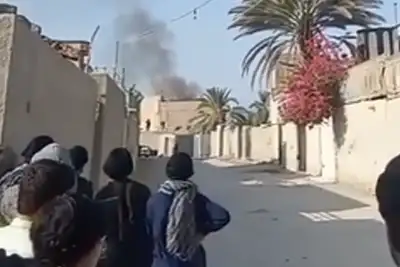
In a speech delivered on Friday at a gathering in Zanjan, Ahmadinejad said the government was deliberately sowing discord between cities and regions to hide its mismanagement. He cited protests over water shortages in Esfahan and demonstrations in neighboring regions.
Drought across the Middle East in recent years has heightened rivalries over water, both within and between countries. Esfahan province farmers this week attacked pipelines taking water to arid regions. As the government promised solutions to people in Esfahan, residents in neighboring Chaharmahal-Bakhtiari took to the streets in fear their water might be diverted.
Using a religious metaphor, Ahmadinejad said people who sowed discord, engaged in injustice and restricted the people were agents of Satan, and that some officials did not realize the ultimate result of their policies.
Ahmadinejad as president between 2005 and 2013 followed policies later criticized for exacerbating environmental declineas his successor Hassan Rouhani sought international cooperation in for example reviving Urmia lakein north-west Iran.
Ahmadinejad also alluded to the high death toll in November 2019 protests and asked who had fired guns. He said people in the streets were unarmed and demanded to know why there had never been a comprehensive investigation to identify and punish the perpetrators.
“If there was any justice in this country, [the government] would have dealt with all the issues,” he insisted, drawing attention to remarks attributed to former interior minister Abdolreza Rahmani-Fazli who supposedly told a lawmaker “We did not shoot people only in the head, we also shot them in their legs.”
Standing strong
Despite his record in office championing the Iranian nuclear program, Ahmadinejad now advocated restraint based on good leadership: “No one has the right to provoke the enemy or to create an atmosphere of war. We need to be rational and yet stand strong.”
The former president said Iran’s potential “remained idle” while some thought “a couple of slaps” would solve the country’s problems. He suggested Iran had “lost all its friends” in recent years because a group of people − presumably all governments since he left office − thought “we could do whatever we want to others, but they are not allowed to respond.”
Ahmadinejad, who has become a vocal critic of the Islamic Republic authorities since 2017 when he was not allowed to run again, remains an entertaining speaker with a popular touch who can attract large audiences, especially since the marked decline in Iran’s economy following US ‘maximum pressure’ sanctions.