Iran Wants US Sanctions-Waiver To Send Fuel To Lebanon

Iran wants to continue sending fuel to Lebanon and hopes for an agreement with Beirut, foreign minister Hossein Amir-Abdollahian said in Beirut on Friday.
Iran wants to continue sending fuel to Lebanon and hopes for an agreement with Beirut, foreign minister Hossein Amir-Abdollahian said in Beirut on Friday.
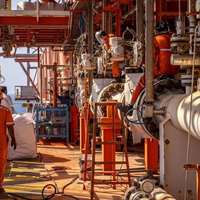
The Tehran-backed Lebanese Shi'ite Hezbollah group has been co-ordinating Iranian fuel shipments to Lebanon since August despite United States sanctions threatening punitive action against buyers of Iranian oil sales. Lebanon faces acute shortages of gasoline and diesel − the latter widely used to generate electricity – after an economic meltdown including a collapsed Lebanese pound.
Amir-Abdollahian held talks with President Michel Aoun and Prime Minister Najib Mikati Thursday. Mikati has said the Iranian fuel shipments breach his country's sovereignty.
"At any point in time if the Lebanese government asks Iran formally within the context of their brotherly ties … Iran is ready to send fuel products," Amir-Abdollahian said at a news conference.
While Hezbollah has been happy to draw kudos its role in the fuel shipments – coming by truck from Baniyas port in Syria after arriving by sea – the party’s critics and opponents say it is usurping state authority.
“Broadly speaking, fuel from a country subject to extensive sanctions like Iran is not very clearly a sustainable solution to Lebanon’s energy crisis,” US State Department spokesman Ned Price told reporters in his briefing Thursday. “This is…Hezbollah playing a public-relations game, not engaged in constructive problem solving.”
Amir-Abdollahian said Friday that given the dire situation in Lebanon – where 75 percent of the population now live in poverty – he hoped the US would waive sanctions to allow Iran to help. However Iran itself faces a serious economic crisis, with little to spare and a population that resents expenditures in foreign countries.
Flouting sanctions
Sending fuel via Syria to Hezbollah, which it can sell partly on the open market to raise money, flouts a range of US sanctions against Syria, Hezbollah and Iran.
With Lebanon – where most political groups have regional affiliations – squeezed in recent years by tensions between Saudi Arabia and Iran, Amir-Abdollahian Friday reiterated Tehran’s commitment to further talks with Riyadh, which he said had been going in the right direction.
“We and Saudi Arabia have reached some agreements in certain areas, and we welcome these talks,” he said. “Our talks with Saudi Arabia benefit the region. Iran and Saudi Arabia are two important countries that play a vital role in guaranteeing security in the region.”
The new Iranian government of President Ebrahim Raisi (Raeesi) has been talking up the importance of developing diplomatic and economic relations with its neighbors. It has attached little urgency to restarting Vienna talks over resuming its 2015 nuclear deal with world powers, talks that were prioritized by the previous government of President Hassan Rouhani.
Amir-Abdollahian said Iran would not “not waste time with negotiations” if other parties were “not serious about resuming” the Vienna process. The foreign minister has said the onus remains with the US to lift the ‘maximum pressure’ sanctions that it imposed on Iran when it left the nuclear deal in 2018. The Vienna talks have been suspended since June, ostensibly pending the transition in Tehran.