• العربية
  • فارسی
BrandBrand
  • Iran Insight
  • Politics
  • Economy
  • Analysis
  • Special Report
  • Opinion
  • Podcast
  • Live TV
  • Iran Insight
  • Politics
  • Economy
  • Analysis
  • Special Report
  • Opinion
  • Podcast
  • Live TV
  • Theme
  • Language
    • العربية
    • فارسی
  • Iran Insight
  • Politics
  • Economy
  • Analysis
  • Special Report
  • Opinion
  • Podcast
  • Live TV
All rights reserved for Volant Media UK Limited
volant media logo

Iran lawmaker warns Arab states of losses if war with US widens

Nov 20, 2026, 06:18 GMT+0

The risk of war is high, and any wider conflict could cause losses for Arab countries, a member of Iranian parliament’s national security committee said on Friday.

“I consider the likelihood of war to be high, but Arab countries in the region are deeply concerned that if the conflict widens, they too will suffer losses and be engulfed by the war,” Ahmad Bakhshayesh Ardestani said, adding that US bases in Bahrain, Kuwait and the United Arab Emirates could be targeted because those countries host American forces.

He also said the public opinion was “to some extent ready” for the country to build a nuclear weapon.

Most Viewed

Tanker loads Iranian crude in Persian Gulf as Tehran weighs resuming exports
1

Tanker loads Iranian crude in Persian Gulf as Tehran weighs resuming exports

2
ANALYSIS

A tough winter for Iran's cement industry, a tougher one for steel

3

Killing of Iranian schoolgirl sparks calls for legal reform

4

Houthi missile attack damages Riyadh’s tallest building

5

GTA 6 costs, slow internet frustrate Iranian gamers, fuel satire

Banner

Spotlight

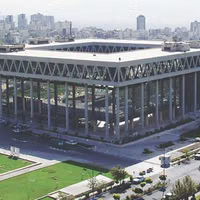
  • A test of power: Who will control Iran's state TV?
    INSIGHT

    A test of power: Who will control Iran's state TV?

  • GTA 6 costs, slow internet frustrate Iranian gamers, fuel satire

    GTA 6 costs, slow internet frustrate Iranian gamers, fuel satire

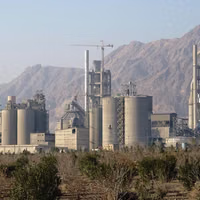
  • A tough winter for Iran's cement industry, a tougher one for steel
    ANALYSIS

    A tough winter for Iran's cement industry, a tougher one for steel

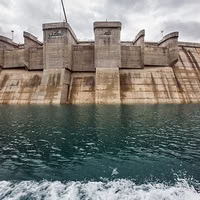
  • Tehran seizes on NYT dam report to widen retaliation threats

    Tehran seizes on NYT dam report to widen retaliation threats

  • How Iranians are turning grief into defiance
    OPINION

    How Iranians are turning grief into defiance

  • Iran could launch dirty-bomb attack, but risks make it unlikely
    ANALYSIS

    Iran could launch dirty-bomb attack, but risks make it unlikely

Banner
Banner
Banner
Banner
Banner
Banner
•
•
•

More Stories

Iraq reaches deal with Iran-backed militia over Baghdad stronghold

Nov 20, 2026, 03:36 GMT+0
100%
Members of the Iraqi armed group Kataib Hezbollah patrol a road in Jurf al-Sakhar, Babil province, Iraq, November 17, 2026. REUTERS

Iraqi authorities have reached a deal with Iran-backed Kataib Hezbollah to avert a confrontation over its stronghold south of Baghdad, with government forces expected to enter the area Friday, Reuters reported Thursday, citing three senior security officials.

Under the agreement, brokered by senior Shiite political leaders, Kataib Hezbollah fighters would relocate from Jurf al-Sakhar to other areas, Lieutenant General Saad Maan, head of Iraq's Security Media Cell, told Reuters.

The deal follows days of escalating tensions after Prime Minister Ali al-Zaidi ordered preparations for government forces to take control of Jurf al-Sakhar, a Kataib Hezbollah stronghold in Babil province, about 60 kilometers southwest of Baghdad.

Al Arabiya separately reported, citing sources, that the agreement provides for a phased withdrawal of the militia within a month, alongside the deployment of Iraqi security forces.

The militia warned Tuesday that it would resist any attempt by government forces to enter the area, which it has controlled for more than a decade.

The dispute intensified after Iraqi authorities investigated allegations that Kataib Hezbollah operated an oil-smuggling network that diverted hundreds of millions of dollars' worth of state-owned oil, Reuters reported. The militia denied the allegations.

Esmail Qaani, commander of the Revolutionary Guards' Quds Force, arrived in Baghdad on Monday to help defuse the standoff, according to Iraqi Shiite political sources cited by Reuters.

A Kataib Hezbollah spokesperson said the group's leader, Abu Hussein al-Hamidawi, met Qaani, Badr Organization chief Hadi al-Amiri and other figures in talks aimed at preventing a confrontation. Participants described the outcome as positive Thursday.

Iraq also announced that a joint security command would begin operating in Jurf al-Sakhar on Friday, bringing together army, federal police, energy police and Popular Mobilization Forces units.

Iraqi armed forces were placed on heightened alert Thursday ahead of the deployment, according to the state-run Iraqi News Agency.

Kataib Hezbollah subsequently ordered its fighters to resume normal duties after days of heightened tensions, according to a statement by the group's leader, Abu Hussein al-Hamidawi.

The standoff has tested Zaidi's efforts to bring Iran-backed militias under state authority. Kataib Hezbollah operates within Iraq's officially recognized Popular Mobilization Forces but has frequently challenged government authority.

The United States has designated Kataib Hezbollah a foreign terrorist organization since 2009.

IRGC says Iran International is among its military targets

Nov 20, 2026, 01:37 GMT+0
100%

Iran International is among the military targets of the Islamic Republic's armed forces, IRGC spokesman Hossein Mohebbi said Thursday, renewing an earlier threat against the London-based broadcaster amid a series of plots and attacks targeting its journalists.

Speaking at the University of Tehran, Mohebbi referred to an August 26 warning by senior armed forces spokesman Abolfazl Shekarchi, who threatened to designate Iran International, BBC Persian, Radio Farda and their employees as military targets.

“We have announced that some media outlets are our targets, such as Iran International,” Mohebbi said, referring to the earlier announcement by Iran's military leadership.

“They are our targets because they are acting with hostility. They are not impartial media outlets,” he added.

Shekarchi had accused the broadcasters of links to US and Israeli intelligence services without presenting evidence.

The renewed threat comes a week after two Iranian men were convicted in London of assisting a foreign intelligence service in a case involving surveillance of Iran International journalists and preparations for violence in Britain.

Mostafa Sepahvand, 41, and Farhad Javadi Manesh, 46, were convicted at Woolwich Crown Court on November 12. The court heard that the men had monitored journalists Mojtaba Pourmohsen and Kambiz Hosseini, as well as British lawyer Jonathan Turner, on behalf of Iranian intelligence.

Sepahvand was also convicted of preparing to commit serious violence against a person in Britain. Prosecutors said he had been promised up to £150,000, approximately $200,000, to carry out an attack.

Both men are due to be sentenced on December 17. A third defendant was acquitted.

British Prime Minister Andy Burnham warned Monday that Britain would respond to Iranian-sponsored attacks on journalists, Jewish communities and military airbases.

“We cannot allow Iran to have a nuclear weapon, nor to massacre their own people and threaten the region unchecked. Nor will we allow them to sponsor attacks on journalists, our Jewish communities here in Britain and airbases without response. Nor will we allow them to sponsor attacks on journalists, our Jewish communities here in Britain and airbases without response,” Burnham said at the Lord Mayor's Banquet in London.

Months of threats against Iran International

Mohebbi's remarks follow a series of threats against Iran International, its journalists and broadcasting infrastructure during the war.

In March, the government-aligned Tabnak website called for attacks on the broadcaster and people associated with it, including offices and homes of some employees and analysts in Israel.

Later that month, Iran's Khatam al-Anbiya Central Headquarters threatened facilities supporting Iran International's broadcasts, accusing the network of psychological warfare.

The Committee to Protect Journalists reported that Iranian authorities had warned Turkmenistan and Monaco over satellite services carrying the broadcaster's programming. Interference with its satellite signals was also reported.

In April, Iran International said Iranian state television had repeatedly aired calls for missile strikes against the broadcaster.

The network also reported financial and judicial measures affecting more than 100 people, including 63 of its journalists, as well as pressure on employees' families.

Three people were charged with arson with intent to endanger life following an April 15 incident in which an incendiary device was thrown towards a building near Iran International's London studios, landing in a car park.

Their trial was scheduled to begin on January 25, 2027, at London's Central Criminal Court. The Committee to Protect Journalists confirmed on November 13 that proceedings in the case remained ongoing.

Iran war could cut global oil demand by over 4% by 2035 - IEA

Nov 20, 2026, 00:04 GMT+0
100%
Strait of Hormuz, Persian Gulf. (ISNA)

Global energy markets may never return to their pre-war structure if disruption to the Strait of Hormuz persists, while energy-security responses to the Iran war could cut global oil demand by more than 4% by 2035, the International Energy Agency said Thursday.

The conflict has resulted in cumulative losses of 2.8 billion barrels of oil and 60 billion cubic metres of natural gas supplies from the Persian Gulf, according to the agency's World Energy Outlook 2026.

The Strait of Hormuz normally carries about a fifth of global oil and liquefied natural gas supplies, making it a critical route for energy exports from the Persian Gulf.

“The Hormuz crisis has delivered a huge shock to the system. While the energy sector and the global economy have shown considerable resilience, the longer the crisis lasts, the deeper the effects will be. And I don’t see any credible pathway for the energy world to return to the way it was before,” IEA Executive Director Fatih Birol said.

Hormuz disruption could redirect global oil trade

Under its Low Hormuz Case, which examines prolonged shipping risks in the Strait of Hormuz, the IEA said investments in alternative pipelines, new supply sources and measures to reduce oil demand could reduce the need for oil flows through the waterway from 20 million barrels per day before the crisis to 8.5 million by 2030 and less than 2 million by 2035.

The case is not a forecast but explores how energy markets could adapt if significant risks to shipping through Hormuz persist.

Even under that scenario, the Middle East would remain the world's largest oil-exporting region, the report said.

Energy security drives shift toward domestic supplies

The IEA said the crisis was prompting governments to reconsider energy security strategies, with renewable energy, particularly solar power, and nuclear power among the potential beneficiaries of efforts to reduce reliance on imported fuels.

Under its Additional Response Case, which examines stronger government measures to improve energy security, global oil demand would fall to 97 million barrels per day by 2035, about 4.4 million barrels per day below the agency's Stated Policies Scenario, which reflects governments' current policy intentions.

Global natural gas demand would also be more than 300 billion cubic metres lower under the Additional Response Case than under the Stated Policies Scenario.

Across its exploratory scenarios, the IEA projected faster growth in electricity demand through 2035, with electricity's share of global final energy consumption approaching 30%.

However, the IEA said energy security concerns could also encourage some Asian countries to rely on domestic coal resources for longer.

Higher fuel prices and supply shortages could undermine progress in expanding access to electricity and clean cooking, particularly in developing economies, the agency said.

The outlook also examined the possibility of a recovery in oil and natural gas supplies if the war ends and shipping disruptions ease, potentially creating a buyer's market and putting downward pressure on energy prices.

The agency said prolonged uncertainty over the war and shipping through Hormuz would make governments more likely to turn their emerging preferences for diversified supplies, domestic energy resources and electrification into lasting policy changes.

Houthi missile attack damages Riyadh’s tallest building

Nov 19, 2026, 19:33 GMT+0
100%
View of the damage (left) to the Public Investment Fund (PIF) tower, headquarters of the Saudi sovereign wealth fund (pictured in the right), following a Houthi attack in Riyadh, Saudi Arabia, November 19, 2026.

A missile attack by Yemen’s Iran-backed Houthis damaged Riyadh’s tallest building on Thursday, blowing out windows at the headquarters of Saudi Arabia’s sovereign wealth fund in the second attack on the capital’s financial district this month.

Saudi Civil Defense said the attack damaged several floors of the Public Investment Fund Tower and nearby buildings. No one was injured. Residents heard a blast before dawn, and a Reuters witness saw people being evacuated from the King Abdullah Financial District, where entrances were closed and ambulances and fire trucks had gathered.

Three people familiar with the incident told Reuters a Houthi missile struck the tower directly. The Saudi-led coalition fighting the Houthis said its initial assessment pointed to damage from falling debris after it responded to a missile fired toward Riyadh. The Houthis did not immediately claim responsibility for Thursday’s attack.

Qatar and Jordan condemned the attacks on civilian and economic facilities in Riyadh. Qatar’s foreign ministry backed Saudi Arabia’s right to take legitimate measures to protect its territory and citizens. Jordan said the strikes violated Saudi sovereignty, international law and the UN Charter.

Gulf Cooperation Council Secretary-General Jasem al-Budaiwi urged the UN Security Council to hold the Houthis accountable for attacks on civilians. Saudi Arabia’s foreign ministry called on the council’s permanent members to enforce existing resolutions and said the kingdom reserved the right to defend itself.

The 385-meter tower houses the fund at the center of Crown Prince Mohammed bin Salman’s drive to diversify the Saudi economy beyond oil. An attack on November 8 damaged a building belonging to state oil company Aramco in the same district.

On Wednesday, Houthi military spokesman Yahya Saree said the group had fired cruise missiles at Riyadh’s international airport and financial district. The Saudi-led coalition said that day it had intercepted two drones, one in the Riyadh region and another in the south. It also reported airstrikes on Houthi missile depots and drone workshops in Yemen. Houthi-run media reported further Saudi strikes on the Yemeni capital, Sanaa, early Thursday.

The exchanges came as Saudi officials warned allies that the campaign in Yemen could last another six months, Reuters reported on Wednesday. The officials said Riyadh wanted forces loyal to Yemen’s internationally recognized government to regain ground before entering negotiations with the Houthis.

Tanker loads Iranian crude in Persian Gulf as Tehran weighs resuming exports

Nov 19, 2026, 18:21 GMT+0
100%
A photo of two commercial vessels near the Strait of Hormuz released by Iran's semi-official ISNA on Nov. 16, 2026.

Iran is considering resuming oil exports in defiance of the US naval blockade, a Revolutionary Guards-affiliated outlet reported Thursday, hours after a ship-tracking service said Iran appeared to be preparing to ship crude again for the first time in four months.

In a post labeled “unofficial,” the IRGC-affiliated Sabereen News said dozens of Iranian tankers were preparing to set sail for China.

TankerTrackers co-founder Samir Madani told Reuters that one tanker was taking on Iranian crude from another vessel in the Persian Gulf on Thursday. If it cleared the blockade, he said, it would be the first successful seaborne export of Iranian crude since mid-July.

Madani declined to name the tanker but said it was not under US Treasury sanctions and had entered the region without drawing scrutiny. The Reuters report gave no destination for the cargo or indication that other tankers were preparing to sail.

In a commentary on Thursday, the Revolutionary Guards-affiliated Fars news agency urged Tehran to send a tanker convoy to China, arguing that the prospect of Iranian retaliation against oil terminals in the UAE, Saudi Arabia and Qatar could deter Washington from firing on the tankers.

Sabereen News said Tehran had warned governments across the region that it would go to war if the United States attacked Iranian tankers sailing to China.

Energy analyst Abdollah Babakhani wrote on social media that Iran could retaliate against ports and oil terminals in the region if the United States attacked or seized Iranian tankers attempting to cross the blockade.

He said the region appeared to be on the verge of a period of intense but possibly short-lived tension.

How the blockade cut oil flows to China

The United States reimposed its naval blockade on July 14. Iran continued to load tankers for several weeks, but Kpler data reviewed by Iran International showed that no new Iranian cargo had crossed the blockade and sailed toward China, Iran’s main oil buyer.

Iran loaded about 2 million barrels of crude and condensate a day in March, Reuters reported, citing estimates from Kpler and Vortexa. That fell to roughly 740,000 barrels a day in July and between 220,000 and 255,000 in August. Kpler recorded no crude or condensate loadings in September, the first full month without any since the 1979 Islamic Revolution.

Chinese refiners continued to receive Iranian oil from tankers that were already outside the blockade when it took effect. Those vessels held nearly 90 million barrels in mid-July. By October 10, only 8 million remained, according to Kpler. The stockpile was exhausted by mid-October, the Wall Street Journal later reported, citing the firm’s analysts.

The loss of its main export market also forced Iran to cut production to about 1.8 million barrels a day, roughly half its prewar output and close to what it consumes at home, Homayoun Falakshahi, Kpler’s head of crude oil analysis, told Iran International in October.

Oil payments could dry up in December

Chinese refiners typically take one to two months to pay for deliveries, allowing Tehran to keep earning foreign currency after shipments stop, Falakshahi told Iran International’s Eye for Iran podcast. He estimated that payments for the last cargoes could reach Iran by mid-December. If the blockade held, he said, Tehran stood to lose between $3 billion and $6 billion a month in oil income.

US Treasury Secretary Scott Bessent told Iran International on October 26 that Iran was running short of foreign currency under Operation Economic Outcast, Washington’s campaign to cut Tehran off from its remaining sources of revenue.

“There have been no loadings at Kharg Island. Production is starting to falter,” Bessent said. He predicted Iran’s economy would shrink by more than 25% in the year ending March 2027.

Washington has since set up Task Force Iron Gate to restrict trade through Iran’s land borders and the Caspian Sea. Tehran has made lifting the naval blockade one of its demands for talks with Washington.

On November 16, US Central Command said its forces had redirected 150 merchant vessels and disabled five since June.