• العربية
  • فارسی
BrandBrand
  • Iran Insight
  • Politics
  • Economy
  • Analysis
  • Special Report
  • Opinion
  • Podcast
  • Live TV
  • Iran Insight
  • Politics
  • Economy
  • Analysis
  • Special Report
  • Opinion
  • Podcast
  • Live TV
  • Theme
  • Language
    • العربية
    • فارسی
  • Iran Insight
  • Politics
  • Economy
  • Analysis
  • Special Report
  • Opinion
  • Podcast
  • Live TV
All rights reserved for Volant Media UK Limited
volant media logo

US aircraft carrier leaves Persian Gulf region, two remain - Bloomberg

Nov 19, 2026, 00:31 GMT+0
Nighttime operations from the flight deck of the USS George Washington in the Arabian Sea, September 12, 2026. The aircraft carrier, capable of carrying more than 5,000 personnel, is enforcing a US naval blockade against Iran and providing cover for commercial vessels transiting the Strait of Hormuz. REUTERS

One of three US aircraft carrier strike groups deployed to the Persian Gulf region to enforce the naval blockade against Iran has departed and may be returning to its home port in Japan, Bloomberg reported Wednesday, citing two US officials.

The USS George Washington strike group was believed to be heading toward its home port in Yokosuka, Japan, the officials said, speaking on condition of anonymity.

The departure leaves two US aircraft carrier strike groups in the region, including the USS Theodore Roosevelt, which arrived Monday.

Bloomberg reported that the Roosevelt's arrival had provided President Donald Trump with additional military options should he decide to resume active hostilities with Iran.

Most Viewed

How Thai clerics in Iran were recruited to attack Israeli embassy in Bangkok
1
EXCLUSIVE

How Thai clerics in Iran were recruited to attack Israeli embassy in Bangkok

2

US strikes Qeshm Island after Iran drone attack on American base in Bahrain

3

Iran's wartime rallies turn against officials, fuel political feuds

4

Killing of Iranian schoolgirl sparks calls for legal reform

5
ANALYSIS

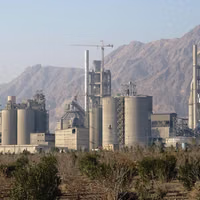
A tough winter for Iran's cement industry, a tougher one for steel

Banner

Spotlight

  • GTA 6 costs, slow internet frustrate Iranian gamers, fuel satire

    GTA 6 costs, slow internet frustrate Iranian gamers, fuel satire

  • A tough winter for Iran's cement industry, a tougher one for steel
    ANALYSIS

    A tough winter for Iran's cement industry, a tougher one for steel

  • Tehran seizes on NYT dam report to widen retaliation threats

    Tehran seizes on NYT dam report to widen retaliation threats

  • How Iranians are turning grief into defiance
    OPINION

    How Iranians are turning grief into defiance

  • A cow's sit-in: why a comedy sketch struck a nerve in Iran

    A cow's sit-in: why a comedy sketch struck a nerve in Iran

  • Iran could launch dirty-bomb attack, but risks make it unlikely
    ANALYSIS

    Iran could launch dirty-bomb attack, but risks make it unlikely

Banner
Banner
Banner
Banner
Banner
Banner
•
•
•

More Stories

Tehran threatens oil routes, wider missile strikes amid US sanctions

Nov 18, 2026, 23:16 GMT+0
100%
FILE PHOTO: Iranian missiles are displayed at the Islamic Revolutionary Guard Corps (IRGC) Aerospace Force Museum in Tehran, Iran, November 12, 2025.

US officials warned Wednesday of Iranian threats against Americans and sanctioned Tehran-linked networks, while Iranian officials threatened regional oil infrastructure, missile strikes and revenge for Ali Khamenei's killing.

In written testimony submitted to the House Homeland Security Committee, FBI Deputy Director Christopher Raia accused Iran of espionage, cyber operations and plots against American officials and dissidents, citing 18 Iran-related counterintelligence and espionage arrests since President Donald Trump returned to office.

Homeland Security Secretary Markwayne Mullin warned that Iranian cyber operatives increasingly targeted US transportation, healthcare, water, energy and financial services.

Director of National Intelligence Jay Clayton also described a substantial increase in threats from Iran, particularly plots targeting Americans at home and abroad.

Washington's response extended to Iran's regional financial networks, with the Treasury Department sanctioning a Hezbollah-linked charity and a gold-and-cash smuggling network in Lebanon and Turkey.

The department said the network transferred funds from the Revolutionary Guards' Quds Force to Lebanon on Hezbollah's behalf, while Treasury Secretary Scott Bessent pledged continued action against Tehran's financing operations.

Iranian officials warn of retaliation and wider attacks

In Tehran, officials issued a series of threats of their own. The Intelligence Ministry said it was awaiting an opportunity to avenge the killing of former Supreme Leader Ali Khamenei and other Iranian officials, while Ahmadreza Pourkhaghan, head of the armed forces' judicial organization, called for identifying and targeting US and Israeli military bases in the region.

The warnings extended to Iran's missile capabilities. Deputy Basij chief Ghasem Ghoreishi said Supreme Leader Mojtaba Khamenei had ordered the armed forces to extend their missile range, while Army Chief Amir Hatami warned of a stronger response to “adversaries' mistakes.”

Hassan Ghashghavi, spokesman for parliament's national security committee, went further, saying: “Today, the enemy does not know on which continent the Islamic Republic’s missiles will land.” He also dismissed the prospect of concessions to Washington.

Earlier Wednesday, the US military warned that vessels receiving Iranian cargo through ship-to-ship transfers could face seizure or other enforcement action under Washington's naval blockade.

Deputy Parliament Speaker Hamidreza Haji Babaei turned his attention to regional energy infrastructure, calling for attacks on oil pipelines and ship-to-ship transfers bypassing the Strait of Hormuz.

He argued that other countries should be prevented from exporting oil while Iran's exports remained blocked and threatened energy facilities in countries allowing attacks on Iran from their territory.

Wednesday's developments reflected an increasingly confrontational exchange, with Washington targeting Iranian security and financial networks while Tehran threatened to expand the geographic reach and economic consequences of any renewed conflict.

Baghdad readies for ‘zero hour’ at militia stronghold after IRGC Qaani visits Iraq

Nov 18, 2026, 23:01 GMT+0
100%
A member of the Iraqi armed group Kataib Hezbollah looks on from a vehicle in Jurf al-Sakhar, Babil province, Iraq, November 17, 2026. REUTERS

Iraq's army was awaiting orders Wednesday to take control of a stronghold of Iran-backed Kataib Hezbollah south of Baghdad, as reports emerged that IRGC Quds Force commander Esmail Qaani had met Iraqi Prime Minister Ali al-Zaidi to help defuse the escalating standoff.

“The army is awaiting zero hour to move and take control of the area of Jurf al-Sakhar,” Defense Ministry spokesperson Yahya Rasool said, according to Lebanese newspaper An-Nahar, adding that the operation would follow a plan approved by Prime Minister Ali al-Zaidi.

Rasool said security forces were coordinating their efforts and expressed hope that the operation would proceed without confrontation. According to the Defense Ministry, the army would protect energy transmission lines and help displaced residents return to the area, provided they were not wanted by judicial or security authorities.

Earlier Wednesday, Iraq's armed forces command approved a plan to deploy army, federal police and Popular Mobilization Forces (PMF) units to take control of Jurf al-Sakhar, a stronghold of Kataib Hezbollah. Under the plan, an army brigade, a federal police brigade and two PMF brigades would each take responsibility for a sector, while energy police would secure oil pipelines.

The planned deployment follows a warning Tuesday from Kataib Hezbollah that it would confront government forces if they attempted to enter Jurf al-Sakhar, which the group has controlled for more than a decade.

“If a war is imposed on us we will fight,” a Kataib Hezbollah official told journalists visiting the area, according to the Associated Press.

The standoff poses a test of Zaidi's efforts to bring Iran-backed armed groups under state control, amid concerns about possible fighting.

Two Kataib Hezbollah officials told AP Tuesday that Qaani, commander of the Islamic Revolutionary Guard Corps' Quds Force, arrived in Baghdad on Monday to help mediate the dispute between the militia and Iraqi authorities.

Iraqi Kurdish outlet Rudaw reported Wednesday, citing two senior Iraqi officials, that Qaani met Zaidi on Monday night and was told the militia must withdraw peacefully or face intervention by Iraqi security forces.

The tensions intensified after Iraqi authorities launched an investigation into allegations that Kataib Hezbollah had used Jurf al-Sakhar, in Babil province about 60 kilometers southwest of Baghdad, to smuggle oil worth tens of millions of dollars.

Iraqi lawmaker Ali Anhair told the state-run Iraqi News Agency (INA) that investigators reviewed documents and surveillance footage showing about 25 tanker trucks, each capable of carrying 36,000 liters of oil.

“The reports reviewed by the committee were shocking and included evidence and documents proving the existence of smuggling operations in Jurf al-Nasr, supported by photographs, videos and footage captured by drones,” he said.

Authorities also dismissed nine security and administrative officials and referred suspects to the judiciary.

Kataib Hezbollah denied the smuggling allegations. An official from the group told journalists visiting Jurf al-Sakhar on Tuesday that two facilities in the area refined oil solely to fuel its vehicles and electricity generators, AP reported.

The United States has backed efforts to disarm Iran-backed militias in Iraq as part of its broader push to reduce Tehran's regional influence. The United States designated Kataib Hezbollah as a foreign terrorist organization in 2009.

Tehran seizes on NYT dam report to widen retaliation threats

Nov 18, 2026, 20:56 GMT+0
•
Maryam Sinaiee
100%
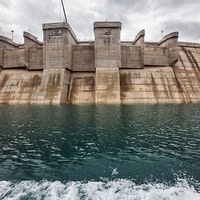
File photo: The Karun-4 Dam on the Karun River in southwestern Iran.

Iranian officials have seized on a controversial New York Times report about the possible military use of dams to broaden their threats of retaliation against US and Israeli infrastructure.

The November 16 report, titled “War May Answer Longtime Riddle of Iranian Dams Built for No Clear Reason,” raised the possibility that some Iranian water projects could support underground missile bases, citing geographical similarities between the projects and missile sites targeted in US and Israeli strikes.

The newspaper emphasized that the alleged connection remained speculative. But the report prompted a backlash on social media, with users and some experts accusing the newspaper and its authors of providing a justification for attacks on dams.

Parliament Speaker Mohammad-Bagher Ghalibaf, who is also Iran's chief negotiator, described the report on X on Tuesday as “setting the stage for the next round of attacks on civilian infrastructure.”

“Well, new rule: We apply your own logic in the same way,” he wrote. “Any dam, port, or power plant located near an American or Israeli base has a dual use.”

Iranian Foreign Ministry spokesman Esmail Baghaei described the report in a post on X on Tuesday as “yet another example of a malicious campaign to manufacture propaganda and security pretexts aimed at justifying attacks on a country's vital infrastructure.”

He warned that Iran “knows well how to respond to any act of aggression and ensure that it is met with an unforgettable response,” adding that such attacks “will have devastating consequences — not merely for the region, but for humanity as a whole.”

The New York Times has rejected the accusations, saying the article was intended to examine Iran's investment in water projects and the impact of US and Israeli strikes on civilians.

‘Tangible and intangible assets’

Hardliners have welcomed Ghalibaf's threat to apply the same logic to American and Israeli infrastructure.

Vahid Khazab, a military analyst appearing on a panel discussion titled “Will the War Be Brought to Iran's Dams?” on Iranian state television's Be Vaght-e Iran (Iran Time) program Tuesday night, described Ghalibaf's response as an appropriate and proportionate threat.

Khazab argued that the credibility of Iran's retaliation threats could deter attacks on its dams.

“What will prevent them from hitting Iran's dams? They know these threats are real,” he said, arguing that Ghalibaf's warning was backed by Iran's armed forces.

He also referred to statements by Iran's new Supreme Leader, Mojtaba Khamenei, that there would be no geographical limitations on potential targets and that American “tangible and intangible assets” could be struck. Khazab said Iranians could be confident that their infrastructure would remain safe.

Threats beyond Iran

The hardline Hamshahri newspaper, published by Tehran Municipality, described Ghalibaf's warning as demonstrating Iran's determination to deliver a “deterrent reciprocal response” to any attack on its infrastructure.

Shuaib Bahman, an international relations analyst, told Nour News, an outlet close to Iran's Supreme National Security Council, that the United States and its regional allies could not insulate themselves from the consequences of an expanding war.

He warned that American investments, commercial interests and infrastructure in the region could be affected, even if US territory was not directly involved in the conflict.

Some pro-government social media users have circulated images of the Hoover Dam in the United States, accompanied by nearly identical messages and slogans such as “Death to America.”

The posts suggested that an attack on Iranian dams could trigger retaliation against the American facility, potentially disrupting electricity supplies and causing widespread casualties.

Criticism and rebuttal

The controversy has also drawn criticism from political activists and environmental experts outside Iran.

Kaveh Madani, director of the United Nations University's Institute for Water, Environment and Health, who was quoted in the New York Times report, described the newspaper's account on X as “reductionist” and an example of “irresponsible journalism.”

He warned that such a narrative could have dangerous consequences for civilian water infrastructure.

Sanam Mahoozi, one of the report's authors, reposted the newspaper's statement defending its reporting on X.

“Neither I nor our reporting advocate or justify attacks on dams or other civilian infrastructure,” she wrote. “As a journalist, I welcome rigorous criticism, but believe it should be grounded in a fair and accurate reading of our work.”

How Iranians are turning grief into defiance

Nov 18, 2026, 17:50 GMT+0
•
Saeid Golkar, Kasra Aarabi
100%
Family members dance beside the grave of Alireza Raeisi, a 21-year-old Iranian protester executed on October 5, 2026, in connection with the January protests in Isfahan.

Iranian families are turning funerals for slain protesters into acts of defiance, using music and dance to challenge the Islamic Republic's use of mourning rituals and symbols to reinforce its authority.

A father and mother dance in the center as crowds cheer and clap to upbeat music. They are outside, surrounded by bouquets of colorful flowers and white doves. From a distance, the scene could easily be mistaken for a wedding or a birthday celebration. But it is neither. It is a funeral, taking place at the grave of their child, who was killed in the Islamic Republic's crackdown on protesters.

This seeming contradiction gives the scene its political force: while the family grieves, they refuse to do so in the language of mourning expected by the country's religious and political establishment.

“This cheering [at the grave] is not mourning; it is a ritual of revenge.”

That line, written by Iranian songwriter Mona Borzouee and performed by legendary Iranian pop star Ebi, speaks directly to the scene captured in a video circulating online.

The song and music video “Bego be Donya” (“Tell the World”) mourn the thousands of Iranian protesters killed during the January 2026 protests. But throughout the song, mourning is not simply an expression of sadness. It becomes memory, anger and, most importantly, resistance.

The song evokes images of the dead, grieving parents, graves and dancing bodies, transforming personal loss into a public act that demands to be seen and remembered. Parents confront the unbearable pain of losing a child, refusing to let death have the final word.

At funerals and 40-day memorials for protesters killed in the streets, families have begun dancing, playing music, clapping, reading poetry and celebrating the lives of their children rather than expressing grief through traditional Islamic mourning rituals.

One of the most powerful expressions of this shift came from Majid-Reza Rahnavard, a 23-year-old Iranian protester detained during the 2022 protests and subsequently executed by the Islamic Republic.

Surrounded by masked guards and blindfolded, Rahnavard appeared on state television shortly before his execution. His final words were: “I don't want anyone to mourn upon my grave. I don't want them to read the Quran or pray. Just celebrate and play celebrating, happy music.”

Rahnavard's words challenged the symbolic structure of official mourning. Through music, dance and celebration, grieving families affirm the lives of their loved ones.

In this context, the phrase “a ritual of revenge” carries a deeper symbolic and political meaning: refusing to submit, preserving the memory of the dead and continuing to live despite the government's attempts to instill fear and silence.

Historically, Shia Islam has placed great emphasis on mourning and lamentation to commemorate the deaths of its religious leaders, particularly the Imams. For some, mourning is central to Shia identity.

While the Islamic Republic did not create Shia mourning traditions, it politicized, institutionalized and incorporated them into its political identity and survival strategy.

In the run-up to the 1979 revolution, fortieth-day mourning ceremonies for protesters killed by the Shah's security forces became occasions for renewed mobilization. Since coming to power, the Islamic Republic has used this tradition to galvanize supporters and reinforce its authority.

Lamentation and the symbols of death have become part of what critics describe as the “politics of sadness and grief,” or siasat-e gham-o ghoseh in Persian.

This historical context helps explain why contemporary scenes of dancing at protesters' graves carry such political significance. Families are reclaiming mourning from a state that has long sought to dominate the interpretation of martyrdom and sacrifice.

The Islamic Republic has built a significant part of its political identity around death, martyrdom and endurance. Many ordinary Iranians, in contrast, emphasize life, joy, music, dignity and the right to choose one's path.

The protest slogan “Woman, Life, Freedom” was important partly because its central emphasis was not only politics, but life itself.

The reconceptualization of mourning is not simply a rejection of religion or tradition. It is part of a broader pattern of identity-based resistance in Iran, where resistance is expressed not only through elections, demonstrations or political slogans, but also through clothing, the body, music, social relations, humor, language and even rituals surrounding death.

These practices are political because the state has spent decades regulating and politicizing many areas of everyday life. Ideological power weakens when people reject not only a government's policies, but also the language through which that government explains the world.

A political system may retain coercive power even as its influence over ideas of virtue, sacrifice and grief fades. Dancing at a grave sends a powerful message of defiance: you may have taken this life, but you will not decide how that life is remembered.

A cow's sit-in: why a comedy sketch struck a nerve in Iran

Nov 18, 2026, 16:00 GMT+0
•
Behrouz Turani
100%
A man gestures toward a cow sitting in the middle of a Tehran street in a scene from the Iranian comedy series Taxi

A cow that has fled a slaughterhouse in Tehran sits in the middle of a busy street to protest the killing of her mate. What might otherwise pass for absurdist comedy has stirred controversy in Iran, where images of street protests carry painful memories.

The scene appears in an episode of the Iranian comedy series Taxi, written by well-known comedy writer and director Soroush Sehat.

Sehat and the series' other creators have faced accusations of ridiculing protesters, particularly those who have taken to the streets against the Islamic Republic in recent years.

The criticism comes as many Iranians are still living with the trauma of losing loved ones in the bloody crackdown on protests in January 2026.

The backlash gathered momentum after Khashayar Sepehri, an Iranian YouTuber and film critic, posted a video sharply criticizing the scene, arguing that it could be interpreted as insulting to protesters.

Bitter memories

At the center of the controversy is the cow's resemblance to a widely circulated photograph of a lone Iranian protester sitting in the road in front of security forces.

The photograph, taken during protests in Tehran, became a symbol of individual resistance, its composition recalling the iconic image of the Tank Man confronting Chinese tanks in Tiananmen Square in 1989.

In both images, a solitary figure occupies the middle of a street, refusing to move.

There is no established evidence that the filmmakers deliberately sought to belittle Iranian protesters. The episode's storyline, however, leaves the door open to that interpretation.

After the cow brings traffic to a standstill, an elderly woman approaches and offers her some vegetables, persuading her to get up and abandon her protest.

‘Sincere apology’

In a later scene, the woman appears on her balcony, seemingly satisfied with the outcome, while looking after the animal.

Critics argue that the cow's abandonment of her protest in exchange for a paltry reward diminishes the dignity of demonstrators and trivializes the sacrifices of those who have lost loved ones.

Writing in the film publication Bani Film, critic Jabbar Azin said he doubted that Sehat or producer Majid Salehi had deliberately set out to humiliate protesters, but criticized their poor judgment and lack of sensitivity to the public mood.

Even assuming the scene was not politically motivated, he wrote, a “sincere apology” from the creators was the least they could offer.

Some have defended Sehat by arguing that the sketches on which Taxi is based were written nearly two decades ago, long before January's protests.

Critics counter that Iran has a long history of anti-government demonstrations and that, regardless of when the sketch was written, its creators chose to bring it to the screen now, selecting it from dozens of others.

‘Worse than wrong’

Some defenders have also pointed to another scene in which a passenger in a taxi caught in the traffic jam asks why the cow took to the street when she knew she would eventually be slaughtered herself.

“Because she wanted to have an active part in choosing her destiny,” another passenger replies.

From that perspective, the scene could be understood as a portrayal of resistance, though the cow's eventual abandonment of her protest in exchange for food complicates that interpretation.

The filmmakers' intentions and the audience's interpretation often differ, even clash.

A solitary figure sitting in the road may be an ordinary comic device in one setting and a painful political reference in another.

But the setting here is Iran in 2026, months after a bloody crackdown on nationwide protests.

For critics, the suggestion that the creators failed to consider how the scene might be received amounts to what a Persian expression calls “an excuse worse than the wrong.”