Mossad chief returns to Israel after US talks on Iran, to brief security cabinet – Ynet

Mossad chief Roman Gofman returned to Israel on Sunday after holding talks with senior US officials about Iran and is expected to brief the country's security cabinet, Israeli news outlet Ynet reported.
During his visit to Washington, Gofman presented updated Israeli intelligence on Iran to senior Trump administration officials and CIA Director John Ratcliffe, according to the report.
Ynet said Gofman would brief ministers at a security cabinet meeting on Sunday evening before holding a separate meeting with Prime Minister Benjamin Netanyahu.
The meeting comes amid discussions in Israel over possible renewed military action against Iran.
The report said the cabinet could consider authorizing an operation against Iran, which could be designated either as a military operation or a war.
Axios reported Friday, citing three sources familiar with the matter, that Netanyahu had sent Gofman to Washington to discuss the possibility of resuming military strikes against Iran.
According to Ynet, Netanyahu has discussed potential operations against Iran with senior security officials in recent weeks, although military leaders reportedly raised objections over the timing.
The security cabinet last met on October 4, when it decided to increase preparations for possible scenarios involving Iran, including an Israeli strike or a surprise Iranian attack.












Five young men seeking jobs at an oil company in southwestern Iran were arrested after protesting over employment opportunities, prompting their mothers to stage a demonstration demanding their release, according to Iranian rights monitors and local media.
The five men, aged between 25 and 30, were detained on Saturday outside the Dana Sohrab oil company near the town of Rafi in Khuzestan province, the human rights organization HRANA reported on Sunday.
HRANA identified them as Hossein Savari, Saeed Savari, Ebrahim Savari, Hamoud Savari and Khalil Savari.
Local sources said the arrests followed a complaint by Dana Energy, with the company's site manager and head of security named as complainants.
The men's whereabouts, the charges against them and their legal status remained unknown as of Sunday.
Mothers demand release of detained protesters
The local Telegram channel Moj Ahvaz published footage on Sunday showing the mothers of the detained men gathering outside the company's premises to demand their release.
Residents of Rafi, near the Iraqi border and the Sohrab and Azadegan oil fields, have complained that oil companies operating in the area recruit workers from elsewhere in Iran instead of hiring local residents.
Dana Petro Sohrab, a subsidiary of the privately owned Dana Energy Group, operates a development project at the Sohrab oil field near Rafi and Hoor al-Azim.
A local resident quoted by Moj Ahvaz criticized officials for failing to address unemployment, saying the detained men were trying to support their families and secure their futures.
"Demanding bread and work is not a crime," the resident said.
Employment grievances fuel protests across Iran
The arrests come amid persistent protests over unemployment, discriminatory hiring practices, unpaid wages and job insecurity across Iran.
In late August, Iran International reported that police opened fire on young protesters demonstrating over hiring practices at industrial facilities in Gachsaran and Ahvaz, two cities in southwestern Iran.
Iran's deputy labor minister, Malek Hosseini, said in late October that around 2.5 million people were unemployed and warned that continued economic contraction could put another 1.4 million jobs at risk by the end of the Iranian calendar year in March.
According to HRANA's annual report, at least 2,551 protest gatherings, including 724 labor demonstrations, and 390 labor strikes were recorded across Iran during the previous Iranian calendar year, which ended in March 2026.
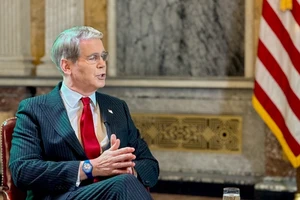
US Treasury Secretary Scott Bessent said on Sunday that Iran was experiencing one of the fastest economic collapses in history, as Washington expanded its pressure campaign beyond a naval blockade to target the country's land-based supply routes.
Speaking to Fox News, Bessent predicted that Iran's rial would lose 25% of its value between March 2026 and March 2027, comparing the pace of the decline with the economic turmoil that followed the Soviet Union's collapse.
"To put that in perspective, the Russian economy went down 22% over three years when the Soviet Union collapsed," Bessent said. "So this is one of the fastest collapses in history."
Bessent argued that the deteriorating conditions were putting increasing pressure on Iran's political and military establishment, even as senior officials remained insulated from the consequences.
"A lot of the leadership, they're like rats in a sewer pipe," he said. "They are in underground bunkers, and they don't see how bad it is up top."
He also said US restrictions had severely limited Iranian officials' ability to travel abroad.
"And we have them completely isolated. We have an airline quarantined," Bessent said.
"They can't fly to London to see their family, Paris to see their girlfriends, Geneva to visit their money."
Bessent suggested that the economic pressure was beginning to cause concern within the Islamic Republic's leadership.
"We could see from the public statements, the public statements from the politicians began in the summer. Now we're seeing the IRGC get worried," he said, referring to Iran's Revolutionary Guards.

US expands blockade to target Iran's land routes
Bessent's remarks came just over a week after the US military announced Task Force Iron Gate, an initiative designed to expand Washington's economic pressure campaign beyond its existing naval blockade.
Announced by US Central Command on November 7, the task force aims to disrupt the movement of advanced weapons, dual-use technologies, sanctioned materials and illicit revenue across Iran's land borders and the Caspian Sea.
The 20-member team, based in Tampa, Florida, will coordinate with US government agencies to restrict Tehran's access to military supplies and financial resources.
"The establishment of Task Force Iron Gate reinforces the success of our ironclad blockade against Iran at sea," CENTCOM commander Admiral Brad Cooper said.
The US military said its naval blockade had prevented Iran from exporting more than $25 billion worth of crude oil, an estimate that could not be independently verified.
President Donald Trump declared the new task force operational on November 8, saying it would further restrict Iran's access to international trade.
"Task Force Iron Gate is in full force and effect in the Islamic Republic of Iran," Trump wrote on Truth Social. "Coupled with history's greatest Naval Blockade, very little gets into, or out of, Iran!"
Pence says ending military campaign was a mistake
Former Vice President Mike Pence said on Sunday that the United States had halted its military campaign against Iran too soon and disputed Vice President JD Vance's assessment of why Republicans suffered losses in the midterm elections.
"Vice President Vance is wrong," Pence said on NBC's Meet the Press.
Pence argued that American forces had achieved substantial military successes during Operation Epic Fury, including destroying much of Iran's navy, establishing air superiority and attacking thousands of military targets.
He criticized the administration's decision to suspend operations after five weeks, describing the move as an embrace of the "politics of appeasement."
"There's an old saying that you don't make peace with your enemy, you make peace with your defeated enemy," he said.


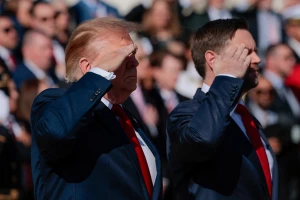
Pence pointed to continued Iranian military activity in the Persian Gulf as evidence that Tehran remained willing to confront Washington.
Vance has attributed Republican electoral losses to the Iran war and its economic consequences, including higher fuel prices. President Donald Trump, meanwhile, said on Thursday that Washington no longer needed a deal with Tehran and directed Vance to shift his attention from Iran diplomacy to domestic corruption investigations.
Bahrain reports fresh attacks as Iran vows retaliation
The dispute over Washington's strategy came as Bahrain reported intercepting further Iranian aerial attacks on Sunday, highlighting the continuing risk of military escalation despite the suspension of large-scale US strikes.
Bahrain's military said its air defenses destroyed several aerial threats before they reached their targets, following the interception of two drones Friday.
The country's Foreign Ministry condemned the attacks as violations of its sovereignty and urged the UN Security Council to take action against Tehran.
"These attacks constitute a blatant aggression against Bahrain's sovereignty and territorial integrity," the ministry said.
Iranian Foreign Ministry spokesperson Esmaeil Baghaei, asked about the strikes, said Tehran would continue responding to attacks against it.
"We have previously said that we will not leave any attack unanswered, and we will continue this approach from now on," Baghaei said on Sunday.
Former British Prime Minister Tony Blair's sister-in-law attended a conference in Iran that US authorities later identified as a platform for intelligence recruitment by the Islamic Revolutionary Guard Corps (IRGC), The Telegraph reported on Sunday.
Lauren Booth, the half-sister of Blair's wife Cherie, was a guest speaker at the New Horizon conference in Mashhad in 2018, a year before Washington sanctioned its organizers over alleged intelligence-gathering activities.
The Telegraph identified several British activists who had attended conferences organized by New Horizon, an Iranian organization that US authorities say helped the IRGC's Quds Force recruit foreign nationals and collect intelligence.
The newspaper stressed that there was no suggestion Booth or the other British attendees had been recruited as spies or worked with Iranian intelligence.
US sanctioned conference organizers over intelligence recruitment
The US Treasury sanctioned the New Horizon Organization and four associated individuals in February 2019, saying its international conferences had provided Iranian intelligence officers opportunities to recruit attendees.
The Treasury said the events served "as a platform for the IRGC-QF to recruit and collect intelligence from attendees."
It also said organizers had facilitated contact between the Revolutionary Guards and American citizens, while promoting antisemitism and Holocaust denial.
Among those sanctioned was Nader Talebzadeh, the organization's chairman and a prominent Iranian filmmaker who helped organize the conferences.
The events were also linked to the recruitment of Monica Witt, a former US Air Force counterintelligence specialist who defected to Iran in 2013 after attending New Horizon conferences.
US prosecutors subsequently charged Witt with espionage-related offenses, alleging that she disclosed classified information and assisted Iranian intelligence operations.
A 2025 report by Britain's parliamentary Intelligence and Security Committee concluded that the IRGC had almost certainly used New Horizon conferences to gain access to and recruit foreign nationals.
British activists attended Iranian conferences
The Telegraph reported that Booth was among several British figures who participated in New Horizon events.
Others included former Church of England vicar Stephen Sizer, who attended a conference in 2014, and Rabbi Ahron Cohen, a member of the anti-Zionist Neturei Karta movement, who attended in 2012.
In a 2018 blog post, Booth described the Mashhad gathering as a "rare opportunity" for journalists, former diplomats, politicians and activists to discuss geopolitical issues.
The newspaper also examined connections between conference attendees and Abrar House, a charity-owned building in London's Marylebone district that has hosted talks by several of the individuals.
Roger Macmillan, a former security director at Iran International, told The Telegraph that Western figures promoting Tehran's positions were a "gift horse" to the Islamic Republic because they could repeat the government's messaging to foreign audiences.
Jonathan Hackett, a former US intelligence agent, said Iran sought Western voices who could influence audiences more effectively than Iranian officials.
"These people can be completely unwitting and can still be just as useful to the regime," he said.
Booth rejects criticism as UK charity regulator examines concerns
Booth rejected criticism of her participation and accused The Telegraph of promoting Israeli government narratives.
She called the newspaper a "mindless mouthpiece" for Israel, challenging its characterization of Western conference attendees as unwitting promoters of Iranian propaganda.
The Abrar Islamic Foundation, which owns Abrar House, rejected suggestions that it had provided a platform for antisemitism or extremism.
It said it had no connection to the New Horizon conferences and that Booth and Cohen had spoken at events organized by third parties.
The foundation also stressed that the individuals had attended New Horizon conferences before the organization was sanctioned by Washington.
Britain's Charity Commission confirmed that it had an active regulatory compliance case involving the foundation and was examining additional information to determine whether further concerns had arisen.
The Telegraph reported that the commission had received a dossier concerning speakers and events hosted at Abrar House.
The regulator has not announced findings of wrongdoing in connection with the latest information.
At least 12 workers from a major Iranian gas processing project were killed when their bus overturned in western Iran, as authorities launched an investigation into the cause of the deadly crash.
The bus, carrying 27 workers and a driver from the Dehloran gas processing project, overturned on Saturday evening on a road between Dasht-e Abbas and Murmuri in Ilam province, near Iran's border with Iraq.
Behzad Nourmohammadi, governor of Abdanan county, told the state-run IRNA news agency that three passengers died after being transferred to medical facilities, bringing the death toll to 12.
He warned that the toll could rise because several injured passengers remained in critical condition.
Sixteen people were hospitalized, including 10 in Dezful, five in Abdanan and one in Ilam.
Investigation launched into cause of crash
Abdanan prosecutor Amrollah Misai said investigators were examining the cause of the crash and whether negligence by individuals or responsible government agencies had contributed to the accident.
The bus was transporting personnel working on the Dehloran NGL 3100 project, a natural gas liquids processing facility in southern Ilam province.
The cause of the crash has not yet been established. Iranian media quoted a driver familiar with the route as saying the bend where the bus overturned had a history of accidents.
Crash highlights Iran's road safety crisis
The accident comes amid persistently high traffic fatalities in Iran, where more than 19,000 people have died in road crashes annually for four consecutive years.
According to figures from Iran's Forensic Medicine Organization cited by the ILNA news agency, 10,357 people died in traffic accidents during the first six months of the current Iranian calendar year, which began in March.
Of those killed, 1,868 were between the ages of 18 and 24.
Iranian police officials have repeatedly raised concerns about vehicle safety and hazardous roads, calling for improvements in manufacturing standards, road infrastructure and enforcement.
The country's industry minister, Mohammad Atabak, recently requested a delay of at least one year in implementing new vehicle safety standards, citing currency shortages, emergency conditions and automakers' financial constraints.
Opposition to the Islamic Republic will remain a point of consensus in Israel regardless of who forms its next government, according to Israeli-American journalist and Iran analyst Emily Schrader.
"It's not a partisan issue in Israel," she told Iran International's Kambiz Tavana. "No one in the mainstream, from left to right, wants the Islamic Republic to continue."
Prime Minister Benjamin Netanyahu's bloc won 53 of the Knesset's 120 seats in last month's election. Although opposition leader Gadi Eisenkot's Yashar party won fewer seats than Netanyahu's Likud, Eisenkot emerged with broader parliamentary support and was tasked by President Isaac Herzog with forming a government.
Schrader said the outcome reflected domestic grievances rather than Netanyahu's record against Iran and its allies.
"Netanyahu internationally and Netanyahu domestically are very, very different equations," she said, adding that most Israelis respect how he handled the war with Iran and the fight against Hezbollah, including the pager operation.
She pointed instead to anger over the hostage negotiations, Netanyahu's corruption trial and the absence of a state commission of inquiry into the failures of Oct. 7.
Asked whether an Eisenkot government would be softer on Tehran, she said representatives of Yashar had told her they support regime change.
"If there is a unity government that would see Eisenkot and Netanyahu together, most likely we're not going to see a lot of policy changes," she said. "Probably a very similar approach to Iran, which I think will be the case anyway."
The bigger domestic change, she said, could come over the drafting of ultra-Orthodox men into the army, one of the main election issues.
'That's how desperate they are'
Schrader said the world had failed to grasp the desperation of Iranians living under the Islamic Republic.
"The Iranian public is in such a state of crisis, in such a state of desperation, that there were people who wanted their country to be bombed," she said. "Not their country, but the IRGC and the regime. But that's how desperate they are."
She criticized the UN General Assembly's Nov. 11 vote to elect Iran to its Committee for Programme and Coordination, with 144 votes, for a three-year term starting in January.
The vote came, she said, "after they massacred at least 40,000 of their own people in the streets in two days."
"Why is this not being spoken about? On what planet is that a normal thing to do?" she said, adding that the Islamic Republic was now significantly weaker, creating an opening for Iranians even if it survived.
US President Donald Trump told radio host Hugh Hewitt on Nov. 12 that it "would be a defeat" if Iran's rulers were still in power when he leaves office. Schrader said she was "cautiously optimistic" about relief for Iranians.
She said both the Trump administration and Netanyahu's government now felt pressure to deal with Iran following their respective elections, pointing to Trump's remarks to reporters the day after the US midterms, when he was asked whether Republicans had lost because of the Iran war.
Speaking to reporters on Nov. 4, after Democrats won control of both chambers of Congress, Trump said it was "largely true" that the war had hurt Republicans because it "drove the gasoline up a little bit," but added that "if I had to do it again, I'd have to do it again," Newsweek reported.
Accounts posing abroad
Schrader also addressed a recent online dispute with Persian-language accounts that accused her of working against Netanyahu during the Israeli election campaign.
She alleged that some accounts presenting themselves as users in Germany and Britain were actually operating from inside Iran during the internet shutdown.
"There were some things that were true mixed in with things that weren't true, which is a very classic tactic that we've seen from the IRGC," she said.
She acknowledged she had explained the debate over monarchy and democracy poorly, but said the two were "not mutually exclusive."
"When it comes to Iran, it's not up to me. It's up to the Iranian people," she said.
"It really breaks my heart to see how the Iranian people are crying out for help," Schrader said. "There are teenagers willing to die to free their country, for the hope of freeing their country."