Mohsen Rezaei delivers Supreme Leader's message to Putin - state media
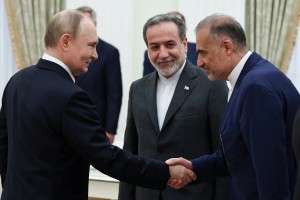
Iran’s top security official Mohsen Rezaei delivered a message from Supreme Leader Mojtaba Khamenei to Russian President Vladimir Putin in Moscow, state media reported.
Iran’s top security official Mohsen Rezaei delivered a message from Supreme Leader Mojtaba Khamenei to Russian President Vladimir Putin in Moscow, state media reported.
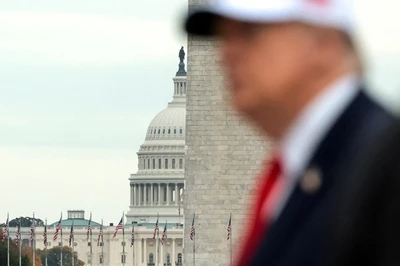







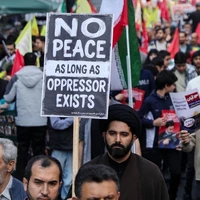


Even as Iran grapples with war, economic crisis and the threat of renewed US and Israeli attacks, its security forces are breaking up Halloween celebrations, closing cafes and detaining people for gathering in public.
Analysts say the crackdown on everyday freedoms, alongside the continued execution of protesters, serves several purposes: intimidating a discontented population, reassuring loyalists and demonstrating that the authorities remain firmly in control.
"I think they feel cornered and they feel threatened by the impending military conflict with the US and Israel," Shahin Milani, executive director of the Iran Human Rights Documentation Center, told Iran International.
"They just want to tell the population that we're staying here, we're not going to go anywhere."
On October 30, Basij paramilitary forces and plainclothes security personnel broke up Halloween celebrations on Tehran's Iranshahr Street, beating and detaining people and forcing nearby cafes to close, witnesses told Iran International.
Families spending the evening at nearby Artists Park were also ordered to leave.
The crackdown extended to other cities, where authorities shut down businesses and initiated legal proceedings against organisers of Halloween celebrations.
Social control as a means of survival
Roya Boroumand, executive director of the Abdorrahman Boroumand Center for Human Rights in Iran, said the repression reflects a longstanding feature of the Islamic Republic rather than a new wartime strategy.
She pointed to the years following the 1979 revolution, when authorities targeted cinemas, alcohol sales and women who refused compulsory veiling, even as Iran faced war with Iraq.
"They focused on these issues because this is how they keep people in their place," she told Iran International.
Omid Memarian, an Iran analyst with DAWN, said sweeping social changes in recent years have unsettled the government's conservative base, prompting hardline institutions to enforce restrictions that reassure their supporters.
"These performative acts, which might cost some Iranian citizens their time and their life and their freedoms, [are] designed to satisfy the base, the very hardline base that has been supporting the government over the past seven months," Memarian said.
He distinguished between the civilian government and powerful hardline institutions, including the judiciary, which continue to enforce ideological restrictions.
No respite from executions
The policing of social freedoms comes alongside an escalating campaign of executions following January's nationwide anti-government uprising.
On November 3, Iranian authorities executed Amirhossein Maleki and Amirhossein Ebrahimi, both 19, at Isfahan Central Prison.
Iran Human Rights said the executions brought to nine the number of defendants put to death in the Alikhani Square case, which has been marred by allegations of torture, forced confessions and serious violations of due process.
Three other defendants remain at grave risk of execution.
At least 36 protesters have been executed in connection with the January uprising since March, according to Iran Human Rights.
"They want to intimidate people and just send the message that nothing is going to change and that they're not going to give up an inch," Milani said.
Boroumand argued that international attention to military developments has given the authorities greater room to pursue repression.
"Of course, that's why they are executing so many political prisoners and protesters, because the world is focused on fuel prices and the Strait of Hormuz," she said.
But Boroumand stressed that repression is an existential issue for the Islamic Republic, regardless of whether the country is at war.
A show of strength with limits
Milani cautioned against assuming that every restriction reflects a coordinated national strategy.
"Just because the regime is dictatorial and authoritarian doesn't necessarily mean that it is efficient, even in repression," he said.
Decisions can be arbitrary, he explained, with local officials sometimes imposing restrictions independently of senior authorities.
Memarian said hardline institutions are attempting to demonstrate strength at a time when the government faces unprecedented external pressure.
But he questioned whether they could reverse the social changes that have already taken place, arguing that enforcing restrictions on the scale seen in previous decades has become increasingly difficult.
Milani pointed out that intimidation continues to have devastating consequences for families. Many who have lost children or have loved ones imprisoned may remain silent out of fear that speaking publicly could endanger other loved ones.
Boroumand warned that the consequences of January's crackdown must not disappear from international attention as the war dominates headlines.
"The war is very important, but it should not overshadow the massive and unprecedented killings of January and the repression that Iranians have been experiencing since," she said.
She also pointed to the continuing arrests of lawyers and the difficulties protesters face in securing legal representation.
For the Islamic Republic, repression remains a means of asserting authority. But while it can intimidate citizens into silence, whether it can reverse the social changes that have transformed Iranian society is another matter.
Unpaid insurance reimbursements and rising medicine and equipment prices are draining private hospitals' finances, threatening their ability to maintain services and increasing costs for patients, hospital executives said in accounts published on Thursday.
A journalist in Iran described the financial pressures facing non-government hospitals following a meeting of hospital directors, with some executives saying insurers had failed to settle bills dating back to the Iranian calendar year that ended in March 2025.
One director of a major hospital in a provincial capital said the facility had contracts with about 35 basic and supplementary insurers, welfare departments, banks and other institutions, none of which had settled their outstanding bills for that year.
The largest unpaid balances belonged to Dey and Dana Insurance, the director said.
The financial shortfalls come as hospitals face rapidly increasing costs for medicines and medical supplies, with treatment tariffs adjusted annually even as procurement prices change daily.
A director overseeing another hospital with more than 1,200 medical and administrative employees said inflation had made it increasingly difficult to replace medicines and supplies after use.
The price of Ringer's solution, a commonly used intravenous fluid, had increased by 600 percent over three years, the director said.
Insulin and widely used blood pressure medications have also risen in price by as much as 50 percent over the past month.
Some retirees said these medicines were unavailable at Social Security medical facilities, forcing them to seek supplies from other pharmacies.
Hospital costs rise faster than treatment tariffs
One private hospital with more than 300 beds and nearly 20 operating rooms has established a separate department to update medicine prices because they change daily, its director said.
The hospital is not profitable, with revenue covering only operating expenses and staff salaries, according to the director.
The mismatch between changing procurement costs and annually fixed treatment tariffs has added to the financial pressures on hospitals already waiting for overdue insurance payments.
The difficulties extend to Iran's public health insurance system.
Inflation and rising expenditure have created an imbalance between resources and spending at the Iran Health Insurance Organization since the second half of the Iranian calendar year beginning in March 2024, its chief executive Mohammad Mehdi Nasehi said on October 24.
The Health Ministry owed the organization 420 trillion rials (about $157 million), while shares worth 850 trillion rials (about $318 million) transferred to settle outstanding receivables had not been converted into cash, Nasehi said.
Those figures cover the organization's wider network of contracted providers rather than the outstanding debts owed to individual hospitals.
Iran's Social Security Organization announced on November 3 that it had paid 50 trillion rials (about $19 million) to private pharmacies, family physicians and university-affiliated and private medical facilities.
The announcement did not specify how much of the outstanding debt to hospitals remained unpaid.
Patients face higher costs and reduced coverage
Private hospital executives said rising foreign exchange rates and tighter sanctions could make obtaining medicines and medical equipment more difficult.
Patients are also facing higher treatment costs and restrictions on insurance coverage, adding to the financial pressures across Iran's healthcare system.
The removal of some injectable medicines from outpatient insurance coverage is among the changes that could increase patients' out-of-pocket expenses.
Some retirees have stopped visiting doctors or purchasing medicines because of treatment costs, retirement rights advocate Ali Akbar Eyvazi told the ILNA news agency on Thursday, November 5.
The removal of medicines from insurance coverage had extended to commonly used diabetes and blood pressure treatments, Eyvazi said.
Prices for some pharmaceutical products have increased by as much as 380 percent in recent months, while patients have described shortages and rising insulin prices.
Iranian state television broadcast live a mock hanging of US President Donald Trump as part of a pro-establishment campaign featuring public displays calling for his killing, following Republican losses in Tuesday's US midterm elections.
Footage circulated by Iranian media showed an actor wearing a Trump mask and dressed as a prisoner being subjected to a mock execution by a man in a Revolutionary Guards uniform in Tehran's Tajrish Square, as spectators watched and cheered.
The performance was part of a series of anti-American displays organized by Iranian authorities across the capital.
Banner depicting US and Israeli leaders set ablaze
Videos circulating on social media also showed a large banner depicting Trump, US Vice President JD Vance, Israeli Prime Minister Benjamin Netanyahu and US special envoy Steve Witkoff being set on fire in Tehran's Enghelab Square on Wednesday evening, November 4.
People gathered in front of the banner chanted "We will kill Trump" as it burned. Several Iranian media outlets also published the footage.
Another large billboard installed in Enghelab Square depicted Trump behind prison bars, his head bowed beneath the English-language message "We will kill Trump."
State-backed campaign targets Trump
Tehran's municipal authorities organized the prison-themed exhibition in Tajrish Square, which included a life-size cell and an actor impersonating the American president.
The displays coincided with events marking the anniversary of the 1979 seizure of the US Embassy in Tehran, during which demonstrators carried placards calling for Trump's death.
Iranian diplomatic accounts also joined the campaign following the US midterms.
The Islamic Republic's embassy account in India shared an AI-generated video depicting Trump being carried out of the White House and thrown into a dumpster marked "Hazardous waste."
Another AI-generated image portrayed a defeated Trump outside the White House, accompanied by the words "Mission Failed" and a message mocking his election losses.
Iran targets Trump after Republican election losses
The displays followed major Republican setbacks in the November 3 elections, which handed control of Congress to the Democrats.
Trump attributed much of the Republican defeat to the US-Israeli war with Iran and the resulting increases in gasoline prices and inflation, although he maintained that the war had been worthwhile.
Russia agreed to supply Iran with 90 helicopter-mounted launchers for precision-guided missiles widely used by Russian forces in Ukraine, the Financial Times reported on Thursday, revealing another dimension of Moscow's military cooperation with Tehran.
The previously unreported order adds to evidence of Russian assistance to Iran's military, including a secret program to help Tehran develop supersonic cruise missiles that could potentially threaten US Navy vessels in the Persian Gulf.
A Russian defense industry production schedule covering 2024 and 2025, obtained by the FT, identified an export order for 90 APU-L launchers from a buyer designated "K-10," a code used by Russia's state arms exporter to refer to Iran.
The documents did not establish whether the launchers were ultimately delivered.
Precision-guided weapons used in Ukraine
The launchers are designed to carry Russia's light multipurpose guided missile, known as LMUR or Izdeliye 305, a precision weapon capable of striking moving targets.
The missile entered Russian military service in 2022 and has since been widely used in Ukraine. An operator can guide it during flight, allowing adjustments to its target.
According to the US Army's Worldwide Equipment Guide, APU-L launchers are designed for Russia's Mi-28 attack helicopters and can carry two missiles each.
Iran has already acquired Russian Mi-28 helicopters. In November 2023, Iranian officials announced that arrangements for their delivery had been finalized. Images appearing online in January 2026 subsequently showed an Mi-28 at an aviation facility in Tehran, according to the FT.
The production documents were provided to the newspaper by Dallas Analytics, a Ukrainian private intelligence organization.
A May 2024 letter from Russian missile manufacturer Vympel warned another defense bureau that delays in supplying launcher components could jeopardize several contracts.
Russia also helped Iran develop supersonic cruise missiles
The latest report follows a September FT investigation revealing that Russia had secretly assisted Iran in developing supersonic cruise missile technology through a program codenamed C430L.
According to leaked Russian correspondence, travel records and military patents reviewed by the newspaper, the program began in 2023 and continued during this year's war involving Iran, the United States and Israel.
The project focused on developing a ramjet propulsion system capable of sustaining missile flight at several times the speed of sound, potentially reducing the time available for US and allied air defenses to respond.
"For the Iranians, this would give them a qualitatively new strategic weapon system that could threaten US Navy vessels," Jim Lamson, a former CIA military analyst specializing in Iran, told the FT.
Iran had built and flight-tested the propulsion system, but the newspaper found no evidence that a Russian-assisted supersonic cruise missile had entered operational service.

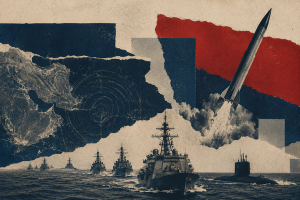
Russian engineers reportedly traveled repeatedly to Iran and later analyzed Iranian flight-test data, advising on fuel systems, combustion stability, air intake and engine design.
"This is the transfer of a highly strategically sensitive military technology from Russia that the Iranians have wanted to acquire for decades," Fabian Hinz, a senior analyst at Conflict Armament Research, told the FT in September.
Military cooperation deepens during Iran war
The launcher agreement and missile development program illustrate different aspects of Russian assistance to Tehran, ranging from supplying military equipment to transferring specialized technical knowledge.
The FT has also reported that Russia agreed to supply Iran with Verba shoulder-fired air defense systems.
The relationship has developed in both directions. Iran previously supplied Russia with Shahed attack drones used in Ukraine and helped Moscow establish domestic production.
Western intelligence officials told the FT that Moscow and Tehran had strengthened their military partnership further during this year's conflict in the Middle East, despite US President Donald Trump's assertion that Russia was doing "very little, if anything" to assist Iran.
"It is indicative of Russia's willingness to continue supplying Iran despite its own wartime demands and with far less concern about western objections than in the past," Nicole Grajewski, a scholar at the Carnegie Endowment for International Peace, told the newspaper.
Limits to Moscow's involvement
Despite growing cooperation, analysts cautioned against overstating Russia's role in the ongoing conflict.
Hanna Notte, Eurasia program director at the James Martin Center for Nonproliferation Studies, said Moscow was balancing its support for Iran against its relationships with Washington and other countries in the Middle East.
"Russia still has certain red lines when it comes to its involvement in this war," Notte told the FT.
"Which is why the support it has provided to Iran is operationally helpful but is not the game changer in this war."
US Vice President JD Vance blamed the war with Iran for Republicans' sweeping midterm election defeats, including the loss of both chambers of Congress, as President Donald Trump weighed renewed military strikes against Tehran or a negotiated settlement to end the conflict.
"The reason we lost is the war," Vance wrote on X.
"If you'd like to argue it was worth it, that losing the Senate for the next 6 years was worth it, then do so," Vance wrote on Wednesday. "But everyone knows why we lost. And any honest conversation about where we go from here must start there."
Trump acknowledged that the war had contributed to the election setbacks but defended his decision to attack Iran, saying he would make the same choice again.
Trump defends Iran war
Speaking to reporters on Wednesday, Trump said Vance's assessment was "largely true," pointing to the rise in gasoline prices following the conflict.
"We had no choice. You can't let Iran have a nuclear weapon," Trump said.
Asked when he would end the war, Trump replied: "Whenever I wanted to. But it's got to be done right, because they can't have a nuclear weapon."
In comments to The Wall Street Journal, Trump said "Iran was a piece of it," referring to the Republican losses, but reiterated that the military campaign was necessary.
Vance, who has been involved in negotiations with Tehran, also praised advice to seek a diplomatic resolution to the conflict.
The Wall Street Journal reported that Vance had opposed the war from the outset, despite publicly defending the administration's military actions.
US officials debate renewed strikes on Iran
Senior US officials are debating whether to escalate military operations against Iran or continue applying economic pressure while pursuing negotiations, according to reports by The Wall Street Journal and Axios.
The Journal reported on Wednesday that some officials were advocating an escalation of strikes, while the administration had spent weeks discussing the war's impact on the elections and whether to publicly acknowledge continuing military operations against Iran.
Axios reported that the US military was completing preparations for a possible resumption of major combat operations, including deploying additional military assets to the region.
Other senior officials favor maintaining the naval blockade of Iranian ports and economic sanctions while assessing whether Tehran is prepared to reach an agreement.
CIA Director John Ratcliffe and Treasury Secretary Scott Bessent are among those advocating continued economic and military pressure rather than an immediate return to large-scale strikes, according to Axios.
Trump has not announced a decision on whether to expand the military campaign.
Qatar seeks agreement to avert renewed fighting
The discussions in Washington come as Qatar continues efforts to secure US and Iranian approval for a proposal aimed at preventing another major escalation and potentially restarting direct negotiations.
According to Axios, Qatari mediators are working to obtain support from both sides for a draft agreement, with the possibility of direct talks in the coming days.
Vance has been among the senior officials advising Trump to pursue an agreement with Iran, warning privately about the consequences of prolonging the war, the report said.
The mediation effort has yet to produce a breakthrough. Iranian and US officials remain divided over key issues, including Tehran's nuclear program, sanctions and arrangements involving the Strait of Hormuz.
Trump's administration is also considering maintaining its current approach of a naval blockade and economic pressure without immediately resuming large-scale military operations.
Trump backs defense secretary amid scrutiny of Iran campaign
Trump also defended Defense Secretary Pete Hegseth on Wednesday as questions emerged over whether the administration might change its military leadership following the election.
Asked whether he was considering replacing Hegseth, Trump said: "No, I think he's doing a very good job."
Reuters reported that some Trump advisers had discussed the possibility of replacing Hegseth, who has been a prominent supporter of the war against Iran.
Democratic lawmakers, who won control of both chambers of Congress, have indicated that they intend to investigate the Pentagon's handling of the Iran conflict.
The Defense Department said Hegseth remained committed to serving through the end of Trump's term and defended the legality of its operations.
With no agreement yet reached between Washington and Tehran, the administration continues to weigh renewed strikes, sustained economic pressure and diplomatic efforts to end the conflict.